Visual summary
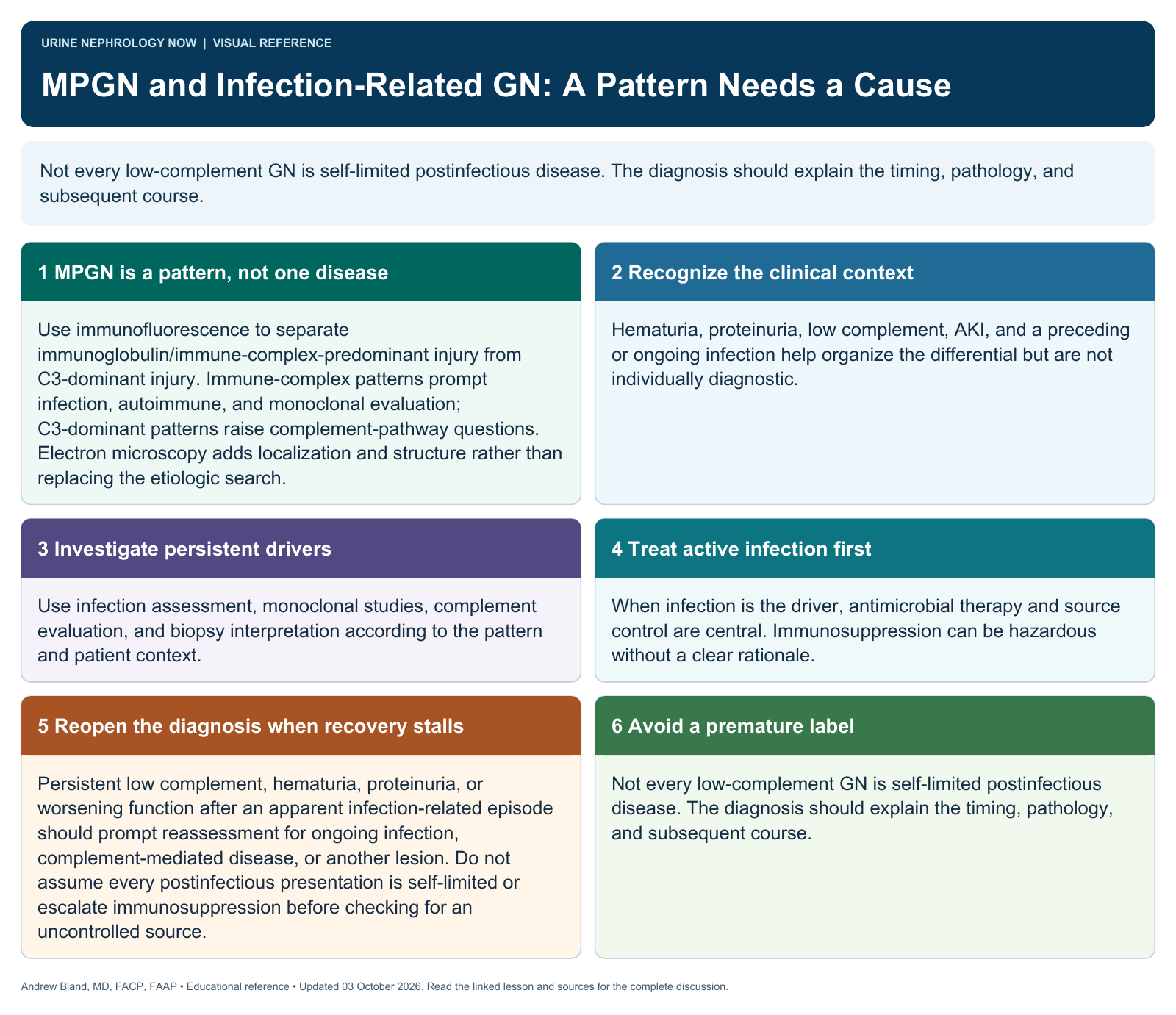
Not every low-complement GN is self-limited postinfectious disease. The diagnosis should explain the timing, pathology, and subsequent course.
Text version
Morphology is not etiology
An MPGN pattern describes structural injury. Immune-complex disease, complement dysregulation, infection, and monoclonal processes can produce related appearances.
Recognize the clinical context
Hematuria, proteinuria, low complement, AKI, and a preceding or ongoing infection help organize the differential but are not individually diagnostic.
Investigate persistent drivers
Use infection assessment, monoclonal studies, complement evaluation, and biopsy interpretation according to the pattern and patient context.
Treat active infection first
When infection is the driver, antimicrobial therapy and source control are central. Immunosuppression can be hazardous without a clear rationale.
Follow complement and kidney recovery
Persistent abnormalities can indicate ongoing infection, another cause, chronic damage, or complement-mediated disease requiring reassessment.
Avoid a premature label
Not every low-complement GN is self-limited postinfectious disease. The diagnosis should explain the timing, pathology, and subsequent course.
Continue learning
This graphic summarizes a topic. The full educational pages provide the broader discussion and references.