Visual summary
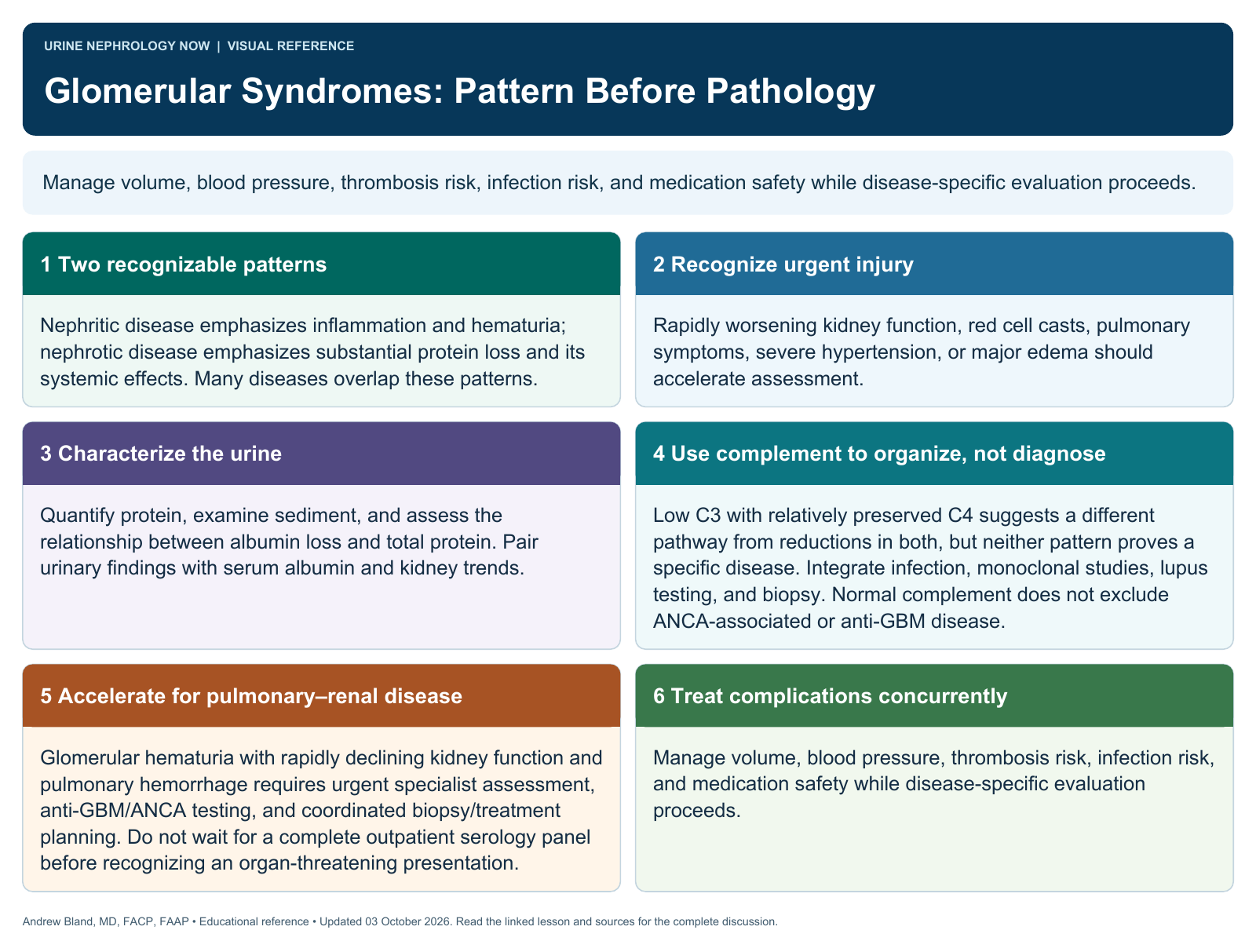
Manage volume, blood pressure, thrombosis risk, infection risk, and medication safety while disease-specific evaluation proceeds.
Text version
Two recognizable patterns
Nephritic disease emphasizes inflammation and hematuria; nephrotic disease emphasizes substantial protein loss and its systemic effects. Many diseases overlap these patterns.
Recognize urgent injury
Rapidly worsening kidney function, red cell casts, pulmonary symptoms, severe hypertension, or major edema should accelerate assessment.
Characterize the urine
Quantify protein, examine sediment, and assess the relationship between albumin loss and total protein. Pair urinary findings with serum albumin and kidney trends.
Search for the cause
History, medications, infection, systemic findings, complement, and targeted serology guide evaluation. The syndrome is not the final diagnosis.
Use tissue when it changes care
Kidney biopsy can distinguish mechanisms, activity, and chronicity that affect treatment and prognosis. Coordinate the timing and procedural risk.
Treat complications concurrently
Manage volume, blood pressure, thrombosis risk, infection risk, and medication safety while disease-specific evaluation proceeds.
Continue learning
This graphic summarizes a topic. The full educational pages provide the broader discussion and references.