Visual summary
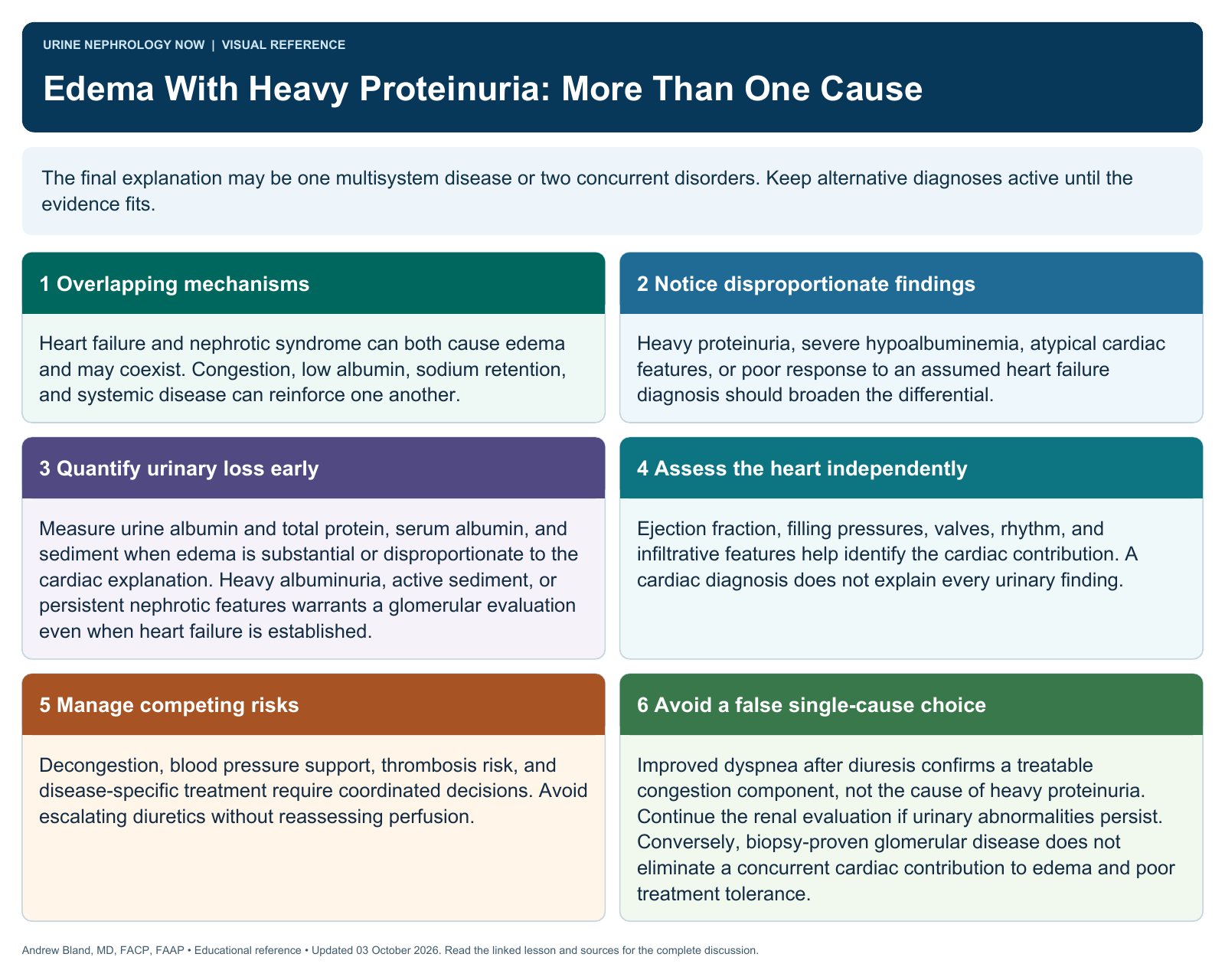
The final explanation may be one multisystem disease or two concurrent disorders. Keep alternative diagnoses active until the evidence fits.
Text version
Overlapping mechanisms
Heart failure and nephrotic syndrome can both cause edema and may coexist. Congestion, low albumin, sodium retention, and systemic disease can reinforce one another.
Notice disproportionate findings
Heavy proteinuria, severe hypoalbuminemia, atypical cardiac features, or poor response to an assumed heart failure diagnosis should broaden the differential.
Characterize the kidney signal
Quantify protein loss, examine sediment, review albumin and kidney trends, and investigate systemic or monoclonal disease when indicated.
Assess the heart independently
Ejection fraction, filling pressures, valves, rhythm, and infiltrative features help identify the cardiac contribution. A cardiac diagnosis does not explain every urinary finding.
Manage competing risks
Decongestion, blood pressure support, thrombosis risk, and disease-specific treatment require coordinated decisions. Avoid escalating diuretics without reassessing perfusion.
Unify without forcing
The final explanation may be one multisystem disease or two concurrent disorders. Keep alternative diagnoses active until the evidence fits.
Continue learning
This graphic summarizes a topic. The full educational pages provide the broader discussion and references.