Visual summary
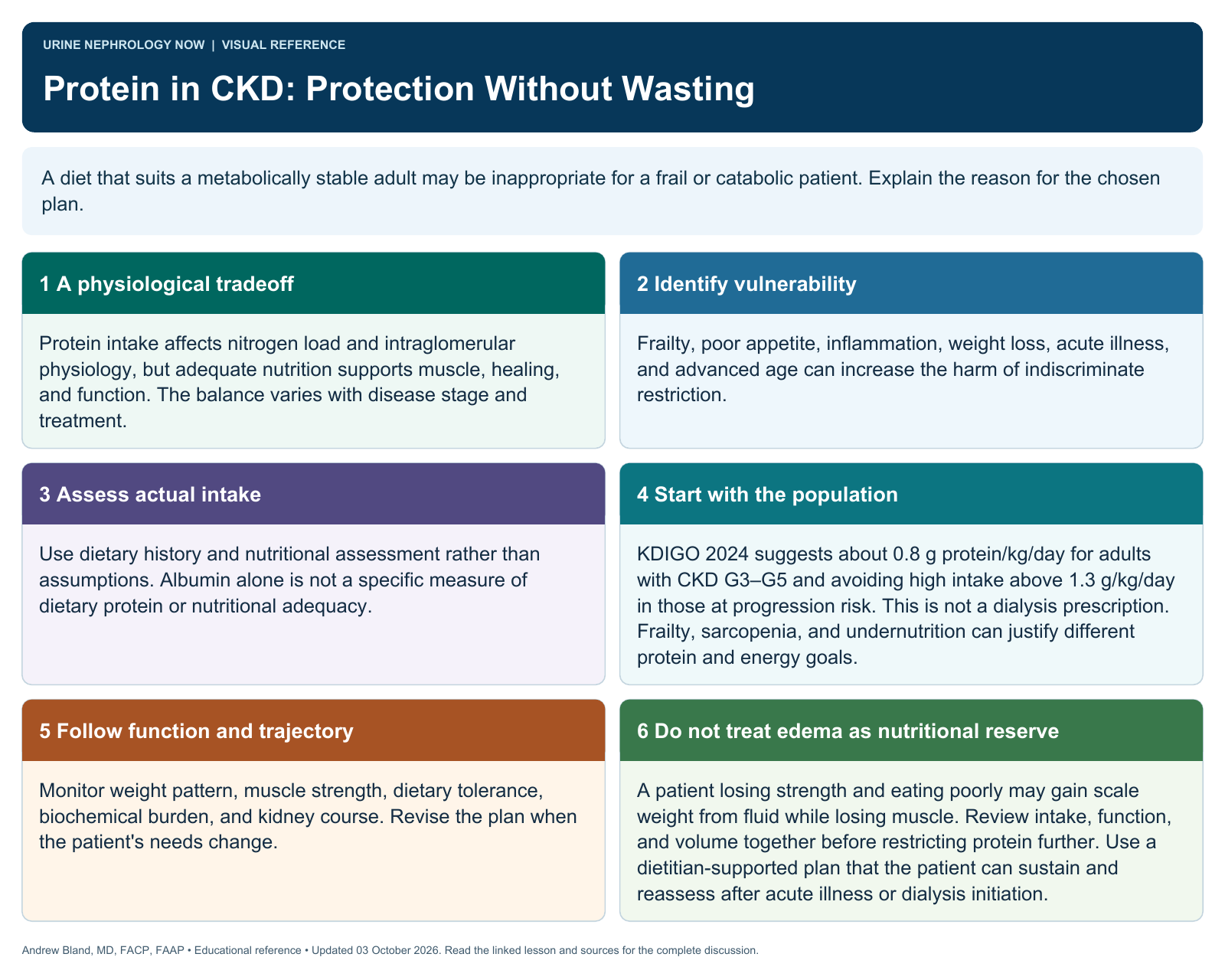
A diet that suits a metabolically stable adult may be inappropriate for a frail or catabolic patient. Explain the reason for the chosen plan.
Text version
A physiological tradeoff
Protein intake affects nitrogen load and intraglomerular physiology, but adequate nutrition supports muscle, healing, and function. The balance varies with disease stage and treatment.
Identify vulnerability
Frailty, poor appetite, inflammation, weight loss, acute illness, and advanced age can increase the harm of indiscriminate restriction.
Assess actual intake
Use dietary history and nutritional assessment rather than assumptions. Albumin alone is not a specific measure of dietary protein or nutritional adequacy.
Individualize the plan
Coordinate a renal dietitian, energy intake, food preferences, and treatment goals. Dialysis and non-dialysis CKD do not share identical protein requirements.
Follow function and trajectory
Monitor weight pattern, muscle strength, dietary tolerance, biochemical burden, and kidney course. Revise the plan when the patient's needs change.
Avoid one universal target
A diet that suits a metabolically stable adult may be inappropriate for a frail or catabolic patient. Explain the reason for the chosen plan.
Continue learning
This graphic summarizes a topic. The full educational pages provide the broader discussion and references.