Visual summary
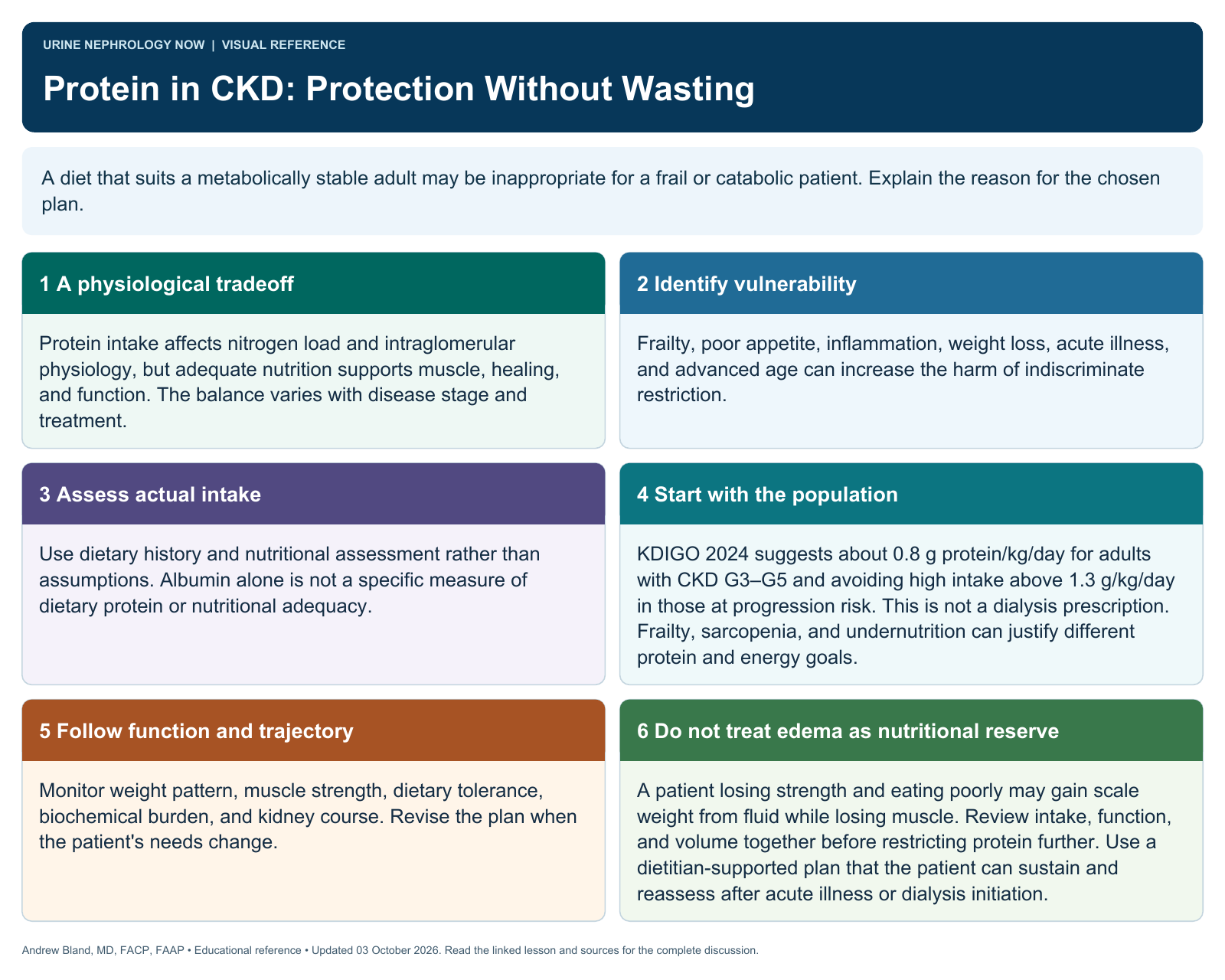
A diet that suits a metabolically stable adult may be inappropriate for a frail or catabolic patient. Explain the reason for the chosen plan.
Text version
A physiological tradeoff
Protein intake affects nitrogen load and intraglomerular physiology, but adequate nutrition supports muscle, healing, and function. The balance varies with disease stage and treatment.
Identify vulnerability
Frailty, poor appetite, inflammation, weight loss, acute illness, and advanced age can increase the harm of indiscriminate restriction.
Assess actual intake
Use dietary history and nutritional assessment rather than assumptions. Albumin alone is not a specific measure of dietary protein or nutritional adequacy.
Start with the population
KDIGO 2024 suggests about 0.8 g protein/kg/day for adults with CKD G3–G5 and avoiding high intake above 1.3 g/kg/day in those at progression risk. This is not a dialysis prescription. Frailty, sarcopenia, and undernutrition can justify different protein and energy goals.
Follow function and trajectory
Monitor weight pattern, muscle strength, dietary tolerance, biochemical burden, and kidney course. Revise the plan when the patient's needs change.
Do not treat edema as nutritional reserve
A patient losing strength and eating poorly may gain scale weight from fluid while losing muscle. Review intake, function, and volume together before restricting protein further. Use a dietitian-supported plan that the patient can sustain and reassess after acute illness or dialysis initiation.