Visual summary
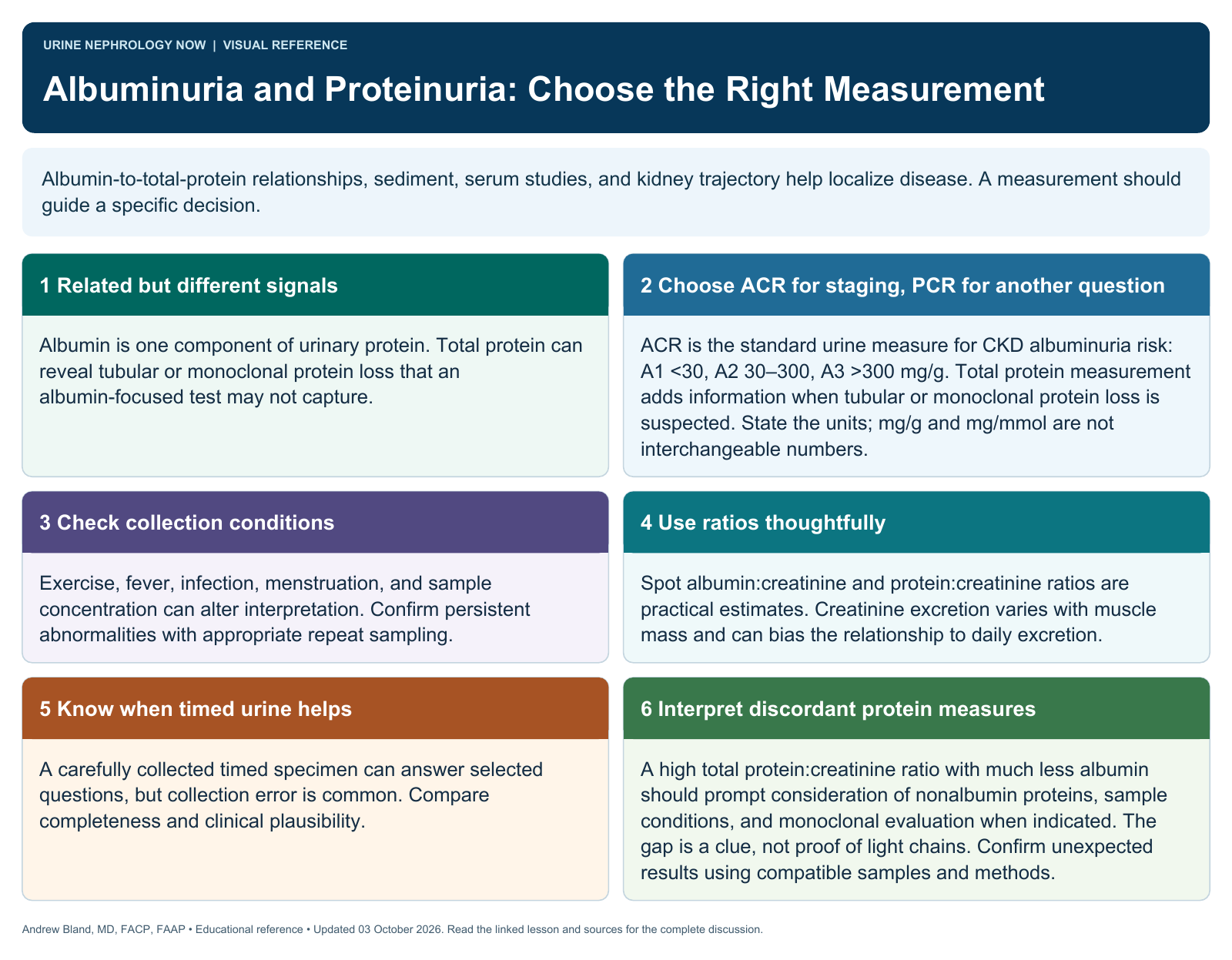
Albumin-to-total-protein relationships, sediment, serum studies, and kidney trajectory help localize disease. A measurement should guide a specific decision.
Text version
Related but different signals
Albumin is one component of urinary protein. Total protein can reveal tubular or monoclonal protein loss that an albumin-focused test may not capture.
Choose the question
CKD risk staging, suspected glomerular disease, monoclonal disorders, and monitoring therapy may require different urine measurements.
Check collection conditions
Exercise, fever, infection, menstruation, and sample concentration can alter interpretation. Confirm persistent abnormalities with appropriate repeat sampling.
Use ratios thoughtfully
Spot albumin:creatinine and protein:creatinine ratios are practical estimates. Creatinine excretion varies with muscle mass and can bias the relationship to daily excretion.
Know when timed urine helps
A carefully collected timed specimen can answer selected questions, but collection error is common. Compare completeness and clinical plausibility.
Interpret the pattern
Albumin-to-total-protein relationships, sediment, serum studies, and kidney trajectory help localize disease. A measurement should guide a specific decision.
Continue learning
This graphic summarizes a topic. The full educational pages provide the broader discussion and references.