Visual summary
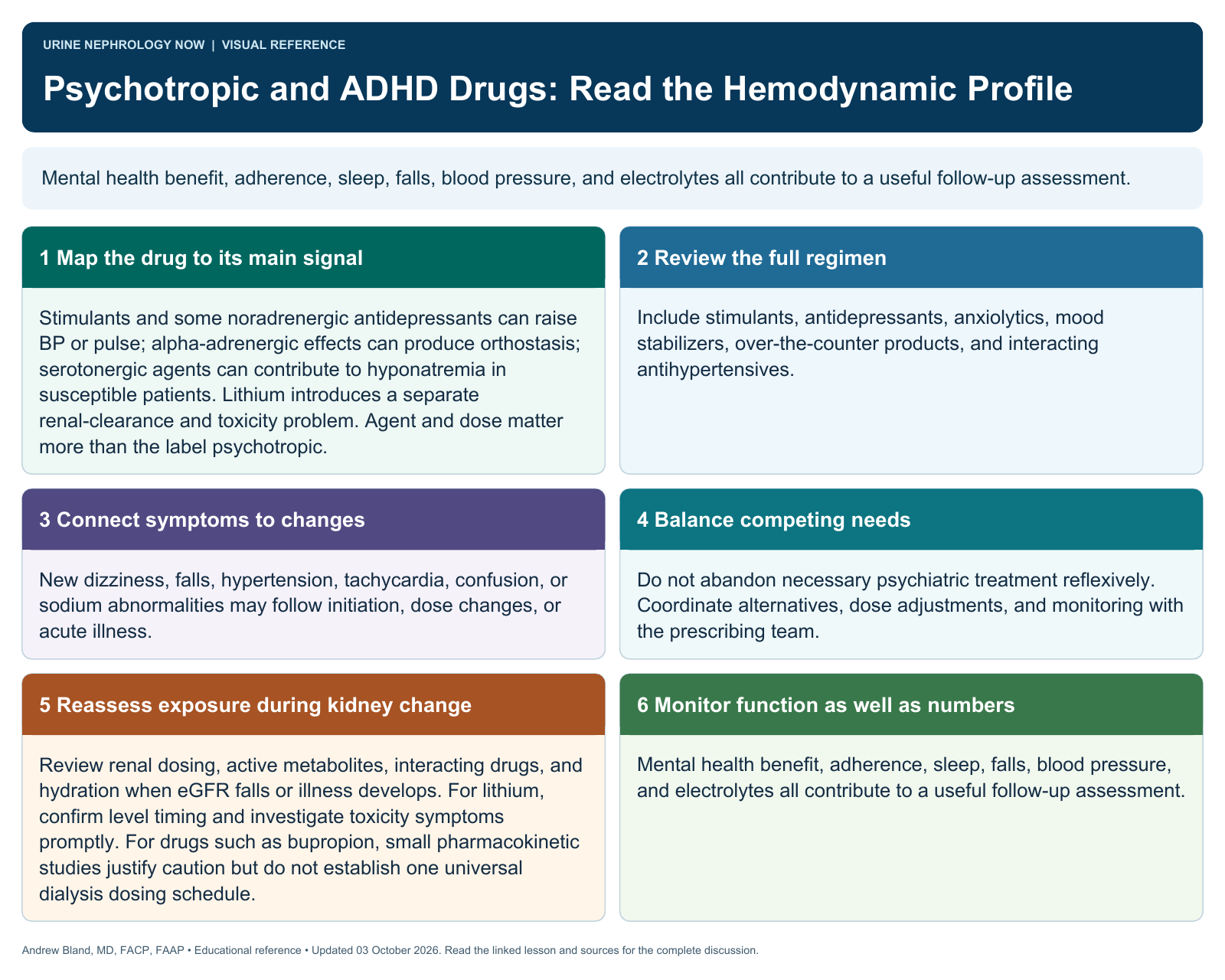
Mental health benefit, adherence, sleep, falls, blood pressure, and electrolytes all contribute to a useful follow-up assessment.
Text version
Different agents, different effects
Psychotropic and ADHD medications can affect blood pressure, heart rate, sodium balance, orthostasis, and drug exposure in CKD.
Review the full regimen
Include stimulants, antidepressants, anxiolytics, mood stabilizers, over-the-counter products, and interacting antihypertensives.
Connect symptoms to changes
New dizziness, falls, hypertension, tachycardia, confusion, or sodium abnormalities may follow initiation, dose changes, or acute illness.
Balance competing needs
Do not abandon necessary psychiatric treatment reflexively. Coordinate alternatives, dose adjustments, and monitoring with the prescribing team.
Consider kidney handling
Renal clearance, active metabolites, toxicity markers, and hydration can change drug safety. Agent-specific information is essential.
Monitor function as well as numbers
Mental health benefit, adherence, sleep, falls, blood pressure, and electrolytes all contribute to a useful follow-up assessment.
Continue learning
This graphic summarizes a topic. The full educational pages provide the broader discussion and references.