Visual summary
Mental health benefit, adherence, sleep, falls, blood pressure, and electrolytes all contribute to a useful follow-up assessment.
Text version
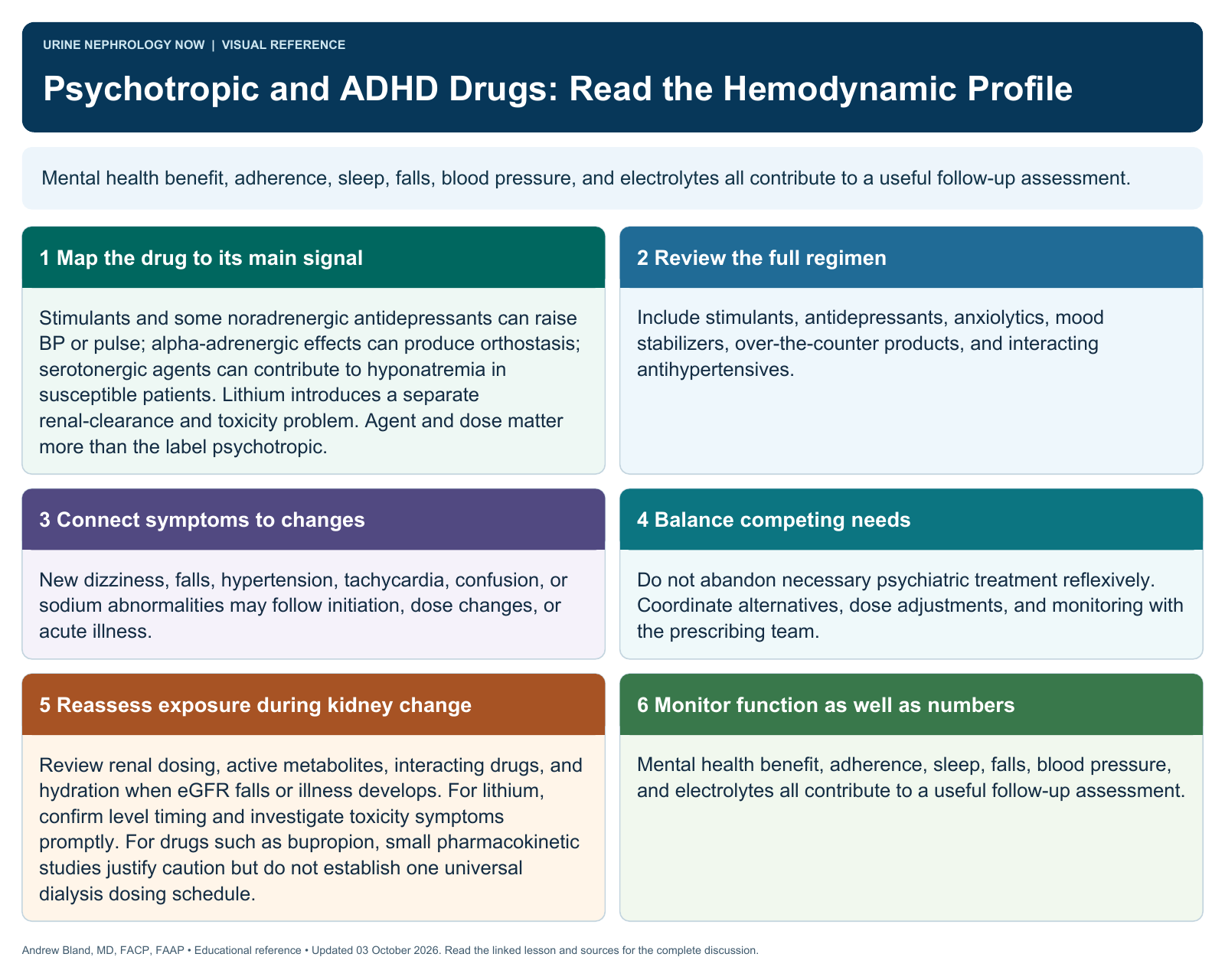
Map the drug to its main signal
Stimulants and some noradrenergic antidepressants can raise BP or pulse; alpha-adrenergic effects can produce orthostasis; serotonergic agents can contribute to hyponatremia in susceptible patients. Lithium introduces a separate renal-clearance and toxicity problem. Agent and dose matter more than the label psychotropic.
Review the full regimen
Include stimulants, antidepressants, anxiolytics, mood stabilizers, over-the-counter products, and interacting antihypertensives.
Connect symptoms to changes
New dizziness, falls, hypertension, tachycardia, confusion, or sodium abnormalities may follow initiation, dose changes, or acute illness.
Balance competing needs
Do not abandon necessary psychiatric treatment reflexively. Coordinate alternatives, dose adjustments, and monitoring with the prescribing team.
Reassess exposure during kidney change
Review renal dosing, active metabolites, interacting drugs, and hydration when eGFR falls or illness develops. For lithium, confirm level timing and investigate toxicity symptoms promptly. For drugs such as bupropion, small pharmacokinetic studies justify caution but do not establish one universal dialysis dosing schedule.
Monitor function as well as numbers
Mental health benefit, adherence, sleep, falls, blood pressure, and electrolytes all contribute to a useful follow-up assessment.