Visual summary
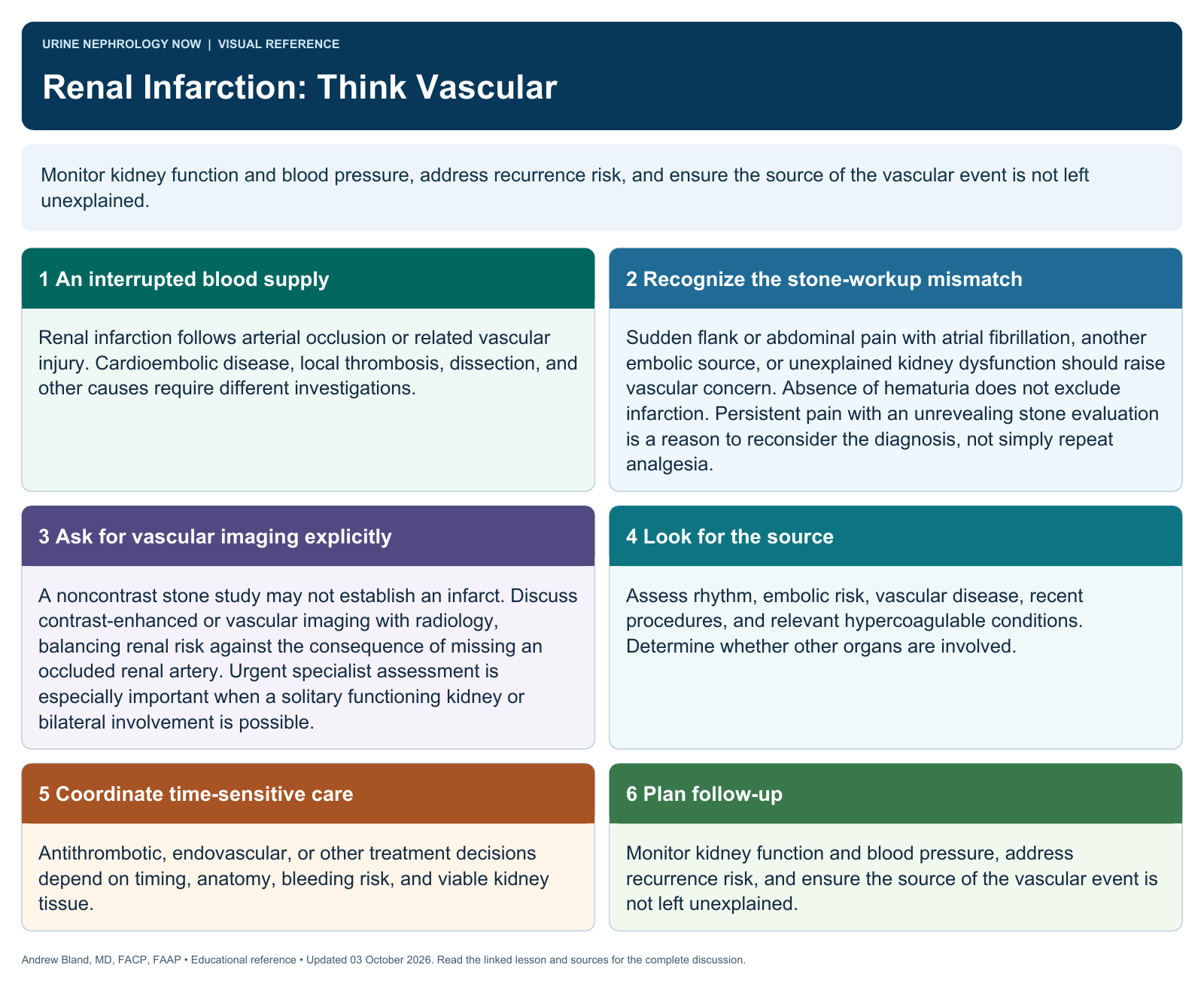
Monitor kidney function and blood pressure, address recurrence risk, and ensure the source of the vascular event is not left unexplained.
Text version
An interrupted blood supply
Renal infarction follows arterial occlusion or related vascular injury. Cardioembolic disease, local thrombosis, dissection, and other causes require different investigations.
Recognize the atypical presentation
Acute flank or abdominal pain, hematuria, kidney dysfunction, and unexplained laboratory abnormalities can resemble stones or infection.
Choose the right imaging
A test designed only to find stones may miss a vascular lesion. Communicate concern for infarction and select imaging with the clinical stakes in mind.
Look for the source
Assess rhythm, embolic risk, vascular disease, recent procedures, and relevant hypercoagulable conditions. Determine whether other organs are involved.
Coordinate time-sensitive care
Antithrombotic, endovascular, or other treatment decisions depend on timing, anatomy, bleeding risk, and viable kidney tissue.
Plan follow-up
Monitor kidney function and blood pressure, address recurrence risk, and ensure the source of the vascular event is not left unexplained.
Continue learning
This graphic summarizes a topic. The full educational pages provide the broader discussion and references.