Visual summary
Monitor kidney function and blood pressure, address recurrence risk, and ensure the source of the vascular event is not left unexplained.
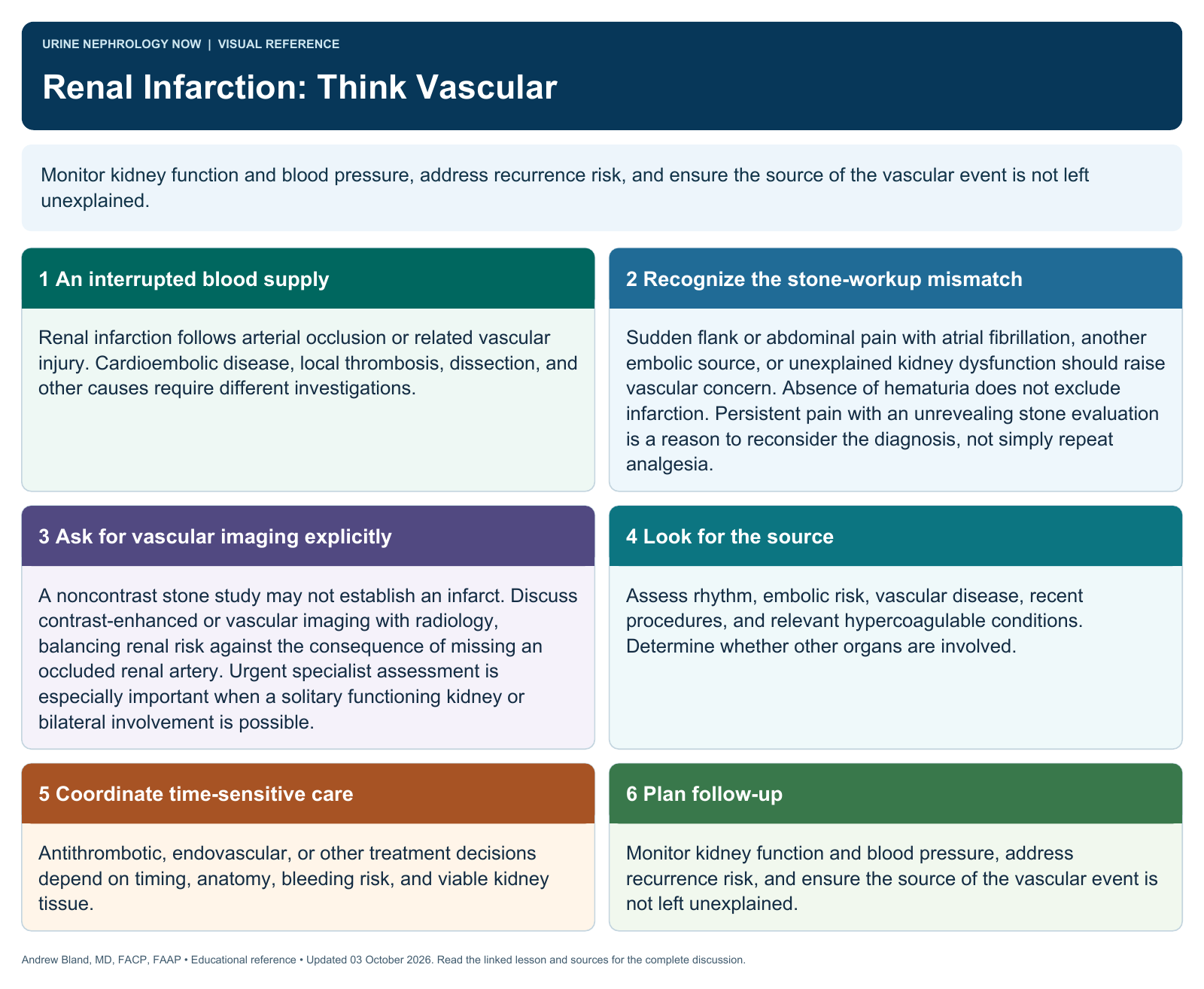
Text version
An interrupted blood supply
Renal infarction follows arterial occlusion or related vascular injury. Cardioembolic disease, local thrombosis, dissection, and other causes require different investigations.
Recognize the stone-workup mismatch
Sudden flank or abdominal pain with atrial fibrillation, another embolic source, or unexplained kidney dysfunction should raise vascular concern. Absence of hematuria does not exclude infarction. Persistent pain with an unrevealing stone evaluation is a reason to reconsider the diagnosis, not simply repeat analgesia.
Ask for vascular imaging explicitly
A noncontrast stone study may not establish an infarct. Discuss contrast-enhanced or vascular imaging with radiology, balancing renal risk against the consequence of missing an occluded renal artery. Urgent specialist assessment is especially important when a solitary functioning kidney or bilateral involvement is possible.
Look for the source
Assess rhythm, embolic risk, vascular disease, recent procedures, and relevant hypercoagulable conditions. Determine whether other organs are involved.
Coordinate time-sensitive care
Antithrombotic, endovascular, or other treatment decisions depend on timing, anatomy, bleeding risk, and viable kidney tissue.
Plan follow-up
Monitor kidney function and blood pressure, address recurrence risk, and ensure the source of the vascular event is not left unexplained.