Visual summary
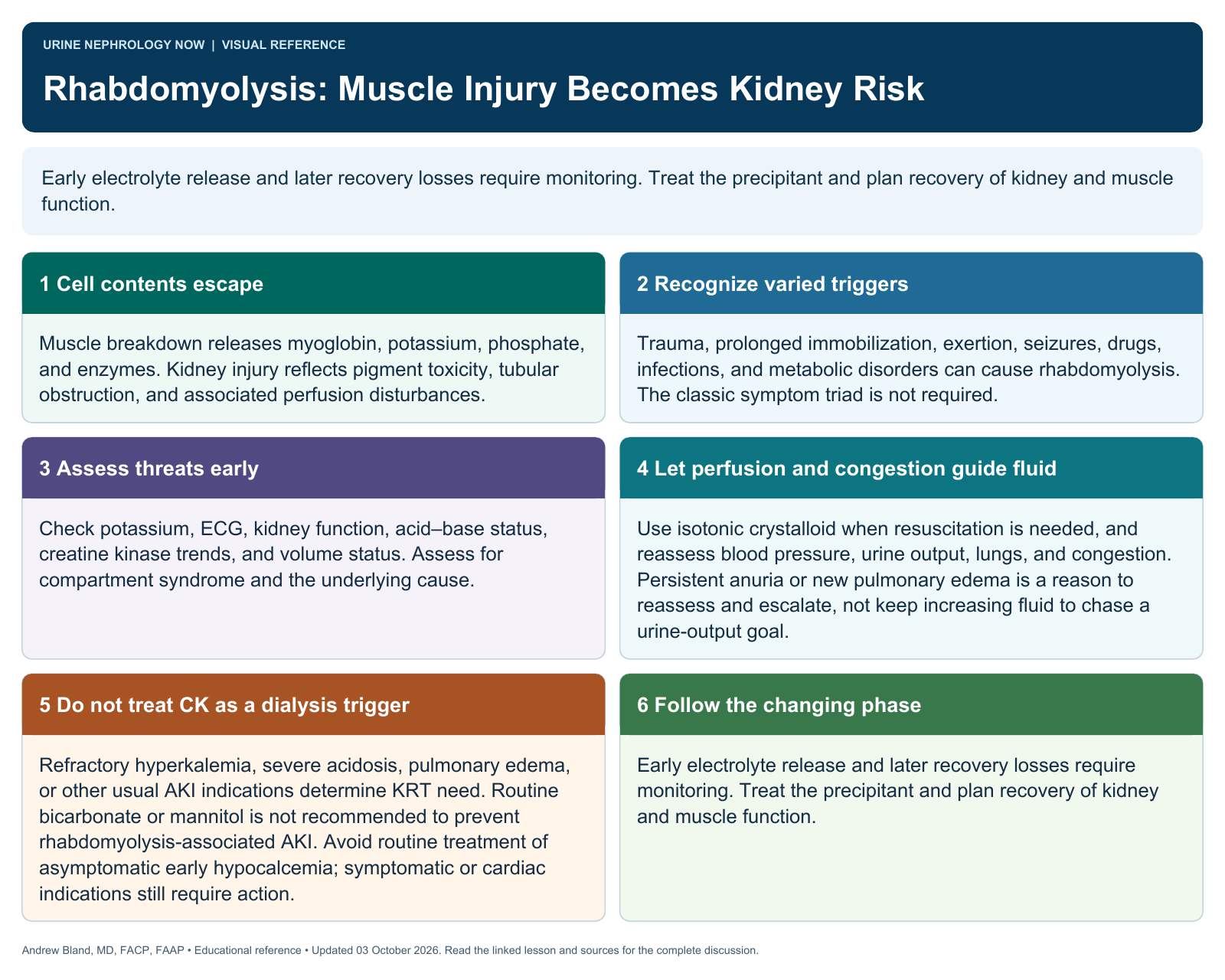
Early electrolyte release and later recovery losses require monitoring. Treat the precipitant and plan recovery of kidney and muscle function.
Text version
Cell contents escape
Muscle breakdown releases myoglobin, potassium, phosphate, and enzymes. Kidney injury reflects pigment toxicity, tubular obstruction, and associated perfusion disturbances.
Recognize varied triggers
Trauma, prolonged immobilization, exertion, seizures, drugs, infections, and metabolic disorders can cause rhabdomyolysis. The classic symptom triad is not required.
Assess threats early
Check potassium, ECG, kidney function, acid–base status, creatine kinase trends, and volume status. Assess for compartment syndrome and the underlying cause.
Tailor fluid treatment
Appropriate crystalloid can restore perfusion in depleted patients, but repeated reassessment is essential when urine output falls or congestion develops.
Avoid unsupported shortcuts
Creatine kinase alone does not dictate dialysis. Routine alkalinization or forced diuresis should not be assumed to improve outcomes in every patient.
Follow the changing phase
Early electrolyte release and later recovery losses require monitoring. Treat the precipitant and plan recovery of kidney and muscle function.
Continue learning
This graphic summarizes a topic. The full educational pages provide the broader discussion and references.