Visual summary
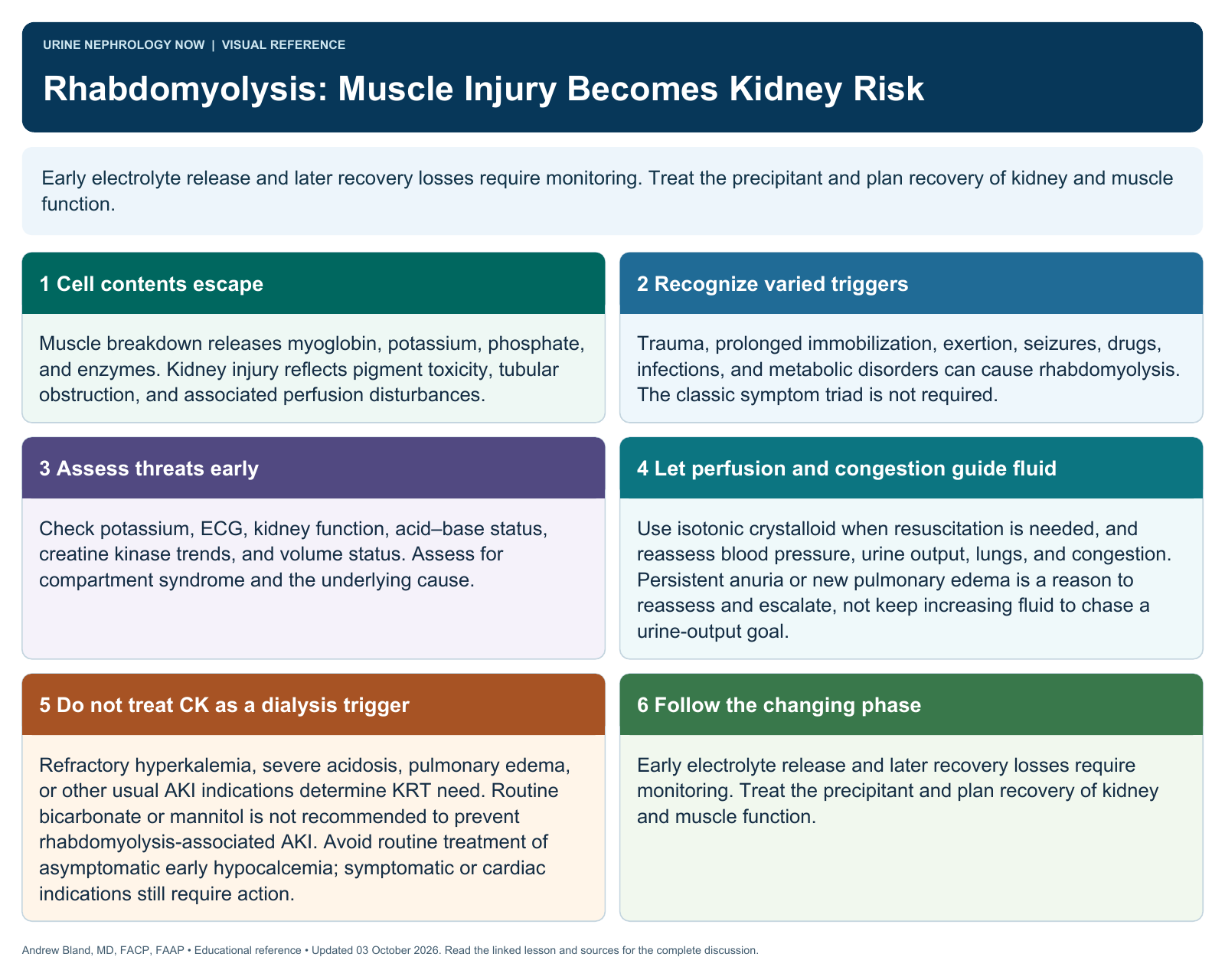
Early electrolyte release and later recovery losses require monitoring. Treat the precipitant and plan recovery of kidney and muscle function.
Text version
Cell contents escape
Muscle breakdown releases myoglobin, potassium, phosphate, and enzymes. Kidney injury reflects pigment toxicity, tubular obstruction, and associated perfusion disturbances.
Recognize varied triggers
Trauma, prolonged immobilization, exertion, seizures, drugs, infections, and metabolic disorders can cause rhabdomyolysis. The classic symptom triad is not required.
Assess threats early
Check potassium, ECG, kidney function, acid–base status, creatine kinase trends, and volume status. Assess for compartment syndrome and the underlying cause.
Let perfusion and congestion guide fluid
Use isotonic crystalloid when resuscitation is needed, and reassess blood pressure, urine output, lungs, and congestion. Persistent anuria or new pulmonary edema is a reason to reassess and escalate, not keep increasing fluid to chase a urine-output goal.
Do not treat CK as a dialysis trigger
Refractory hyperkalemia, severe acidosis, pulmonary edema, or other usual AKI indications determine KRT need. Routine bicarbonate or mannitol is not recommended to prevent rhabdomyolysis-associated AKI. Avoid routine treatment of asymptomatic early hypocalcemia; symptomatic or cardiac indications still require action.
Follow the changing phase
Early electrolyte release and later recovery losses require monitoring. Treat the precipitant and plan recovery of kidney and muscle function.