Visual summary
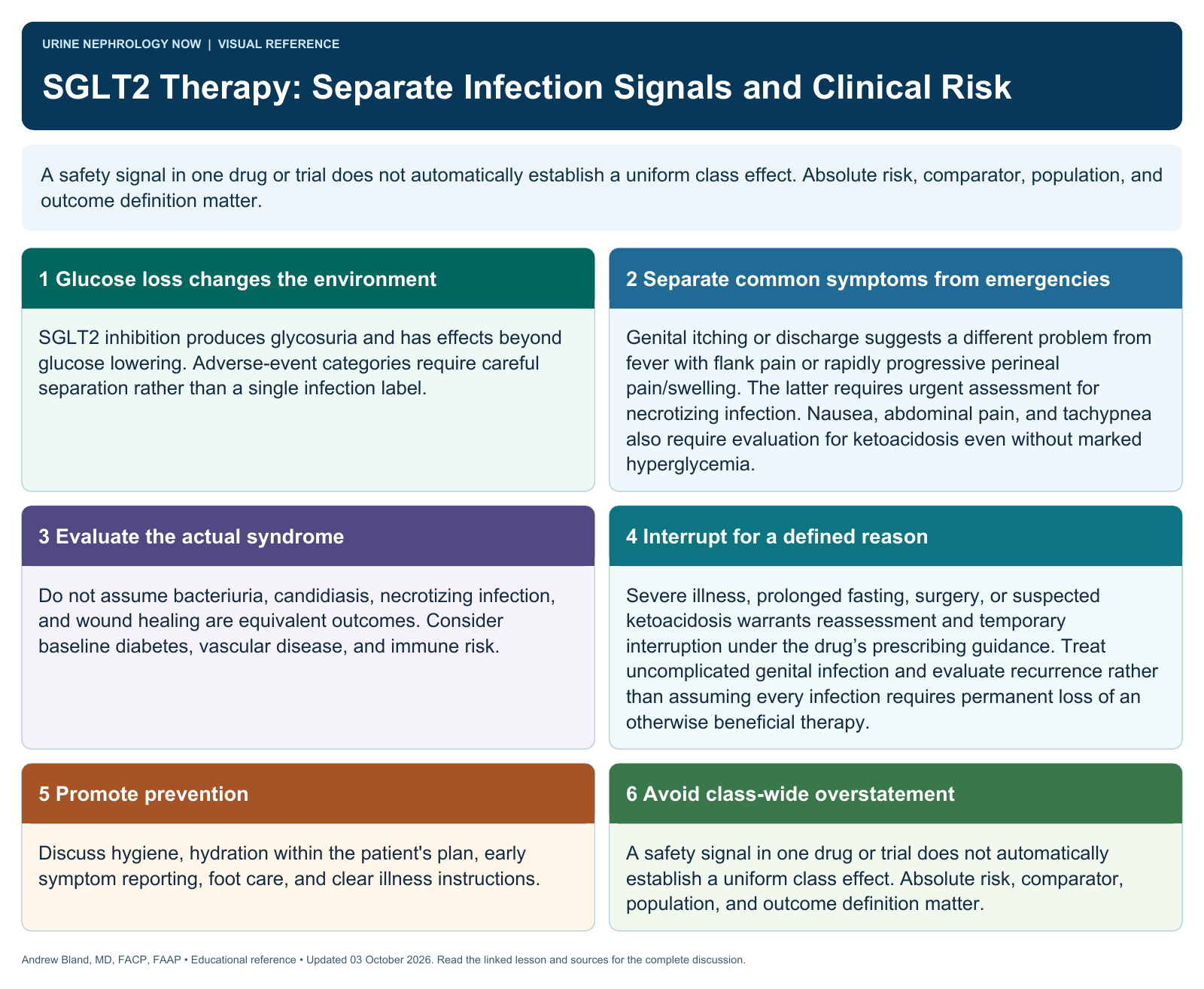
A safety signal in one drug or trial does not automatically establish a uniform class effect. Absolute risk, comparator, population, and outcome definition matter.
Text version
Glucose loss changes the environment
SGLT2 inhibition produces glycosuria and has effects beyond glucose lowering. Adverse-event categories require careful separation rather than a single infection label.
Ask about symptoms
Genital symptoms, urinary symptoms, systemic illness, foot wounds, and dehydration point to different clinical problems and levels of urgency.
Evaluate the actual syndrome
Do not assume bacteriuria, candidiasis, necrotizing infection, and wound healing are equivalent outcomes. Consider baseline diabetes, vascular disease, and immune risk.
Individualize interruption
Severe illness, suspected ketoacidosis, marked volume depletion, or major procedures can require treatment reassessment under current prescribing guidance.
Promote prevention
Discuss hygiene, hydration within the patient's plan, early symptom reporting, foot care, and clear illness instructions.
Avoid class-wide overstatement
A safety signal in one drug or trial does not automatically establish a uniform class effect. Absolute risk, comparator, population, and outcome definition matter.
Continue learning
This graphic summarizes a topic. The full educational pages provide the broader discussion and references.