Visual summary
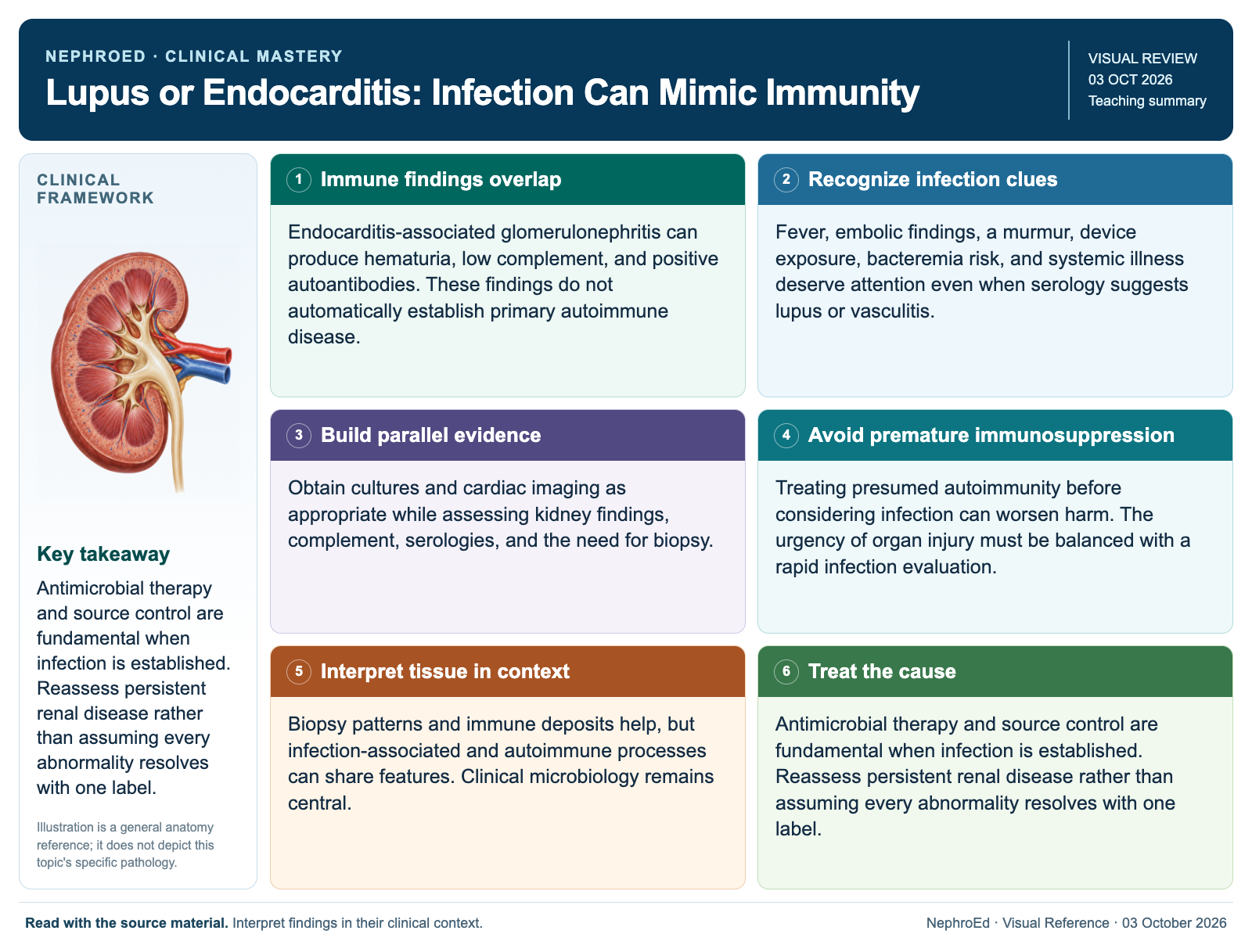
Antimicrobial therapy and source control are fundamental when infection is established. Reassess persistent renal disease rather than assuming every abnormality resolves with one label.
Text version
Immune findings overlap
Endocarditis-associated glomerulonephritis can produce hematuria, low complement, and positive autoantibodies. These findings do not automatically establish primary autoimmune disease.
Recognize infection clues
Fever, embolic findings, a murmur, device exposure, bacteremia risk, and systemic illness deserve attention even when serology suggests lupus or vasculitis.
Build parallel evidence
Obtain cultures and cardiac imaging as appropriate while assessing kidney findings, complement, serologies, and the need for biopsy.
Avoid premature immunosuppression
Treating presumed autoimmunity before considering infection can worsen harm. The urgency of organ injury must be balanced with a rapid infection evaluation.
Interpret tissue in context
Biopsy patterns and immune deposits help, but infection-associated and autoimmune processes can share features. Clinical microbiology remains central.
Treat the cause
Antimicrobial therapy and source control are fundamental when infection is established. Reassess persistent renal disease rather than assuming every abnormality resolves with one label.
Continue learning
This graphic summarizes a topic. The full educational pages provide the broader discussion and references.