Visual summary
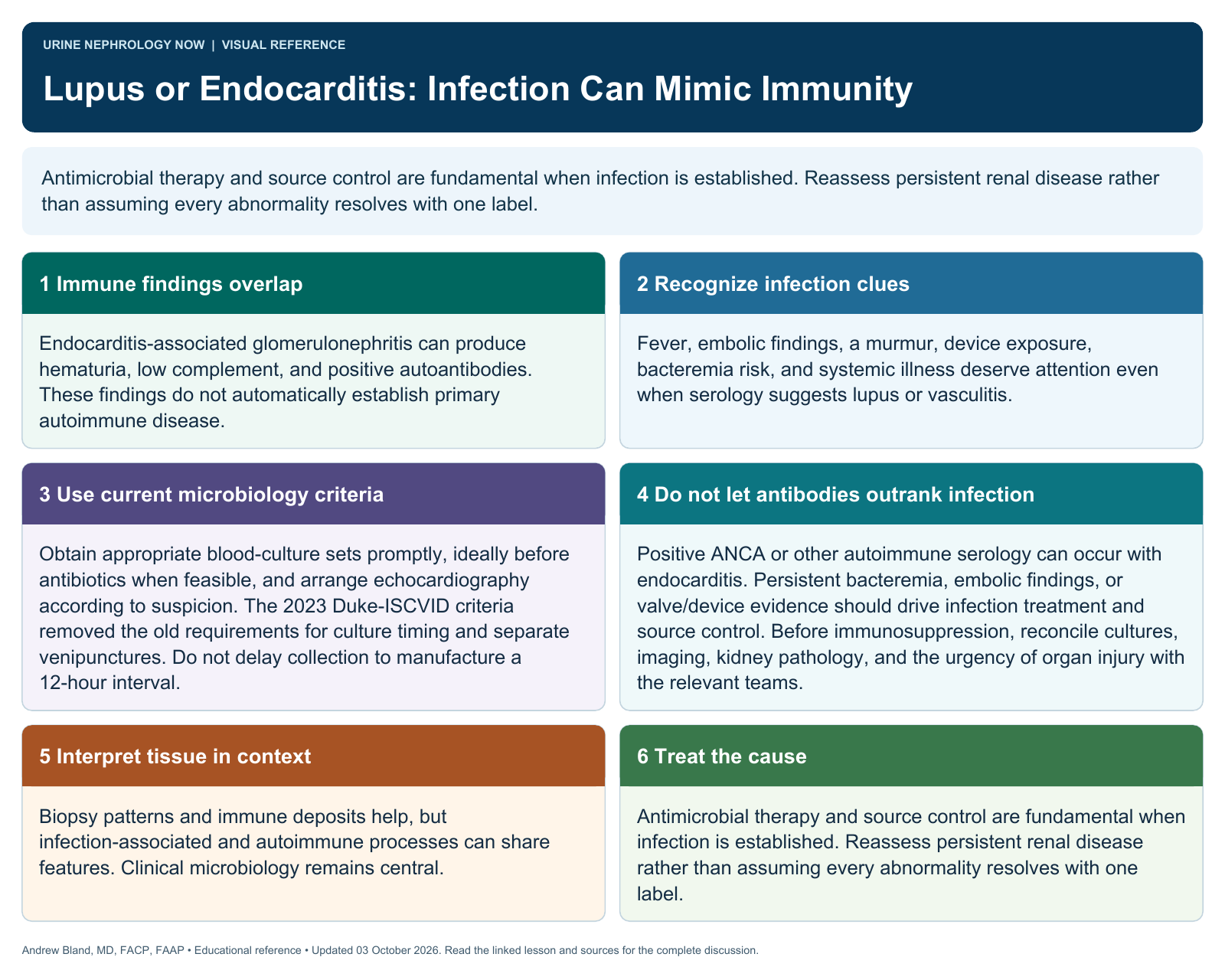
Antimicrobial therapy and source control are fundamental when infection is established. Reassess persistent renal disease rather than assuming every abnormality resolves with one label.
Text version
Immune findings overlap
Endocarditis-associated glomerulonephritis can produce hematuria, low complement, and positive autoantibodies. These findings do not automatically establish primary autoimmune disease.
Recognize infection clues
Fever, embolic findings, a murmur, device exposure, bacteremia risk, and systemic illness deserve attention even when serology suggests lupus or vasculitis.
Use current microbiology criteria
Obtain appropriate blood-culture sets promptly, ideally before antibiotics when feasible, and arrange echocardiography according to suspicion. The 2023 Duke-ISCVID criteria removed the old requirements for culture timing and separate venipunctures. Do not delay collection to manufacture a 12-hour interval.
Do not let antibodies outrank infection
Positive ANCA or other autoimmune serology can occur with endocarditis. Persistent bacteremia, embolic findings, or valve/device evidence should drive infection treatment and source control. Before immunosuppression, reconcile cultures, imaging, kidney pathology, and the urgency of organ injury with the relevant teams.
Interpret tissue in context
Biopsy patterns and immune deposits help, but infection-associated and autoimmune processes can share features. Clinical microbiology remains central.
Treat the cause
Antimicrobial therapy and source control are fundamental when infection is established. Reassess persistent renal disease rather than assuming every abnormality resolves with one label.