Visual summary
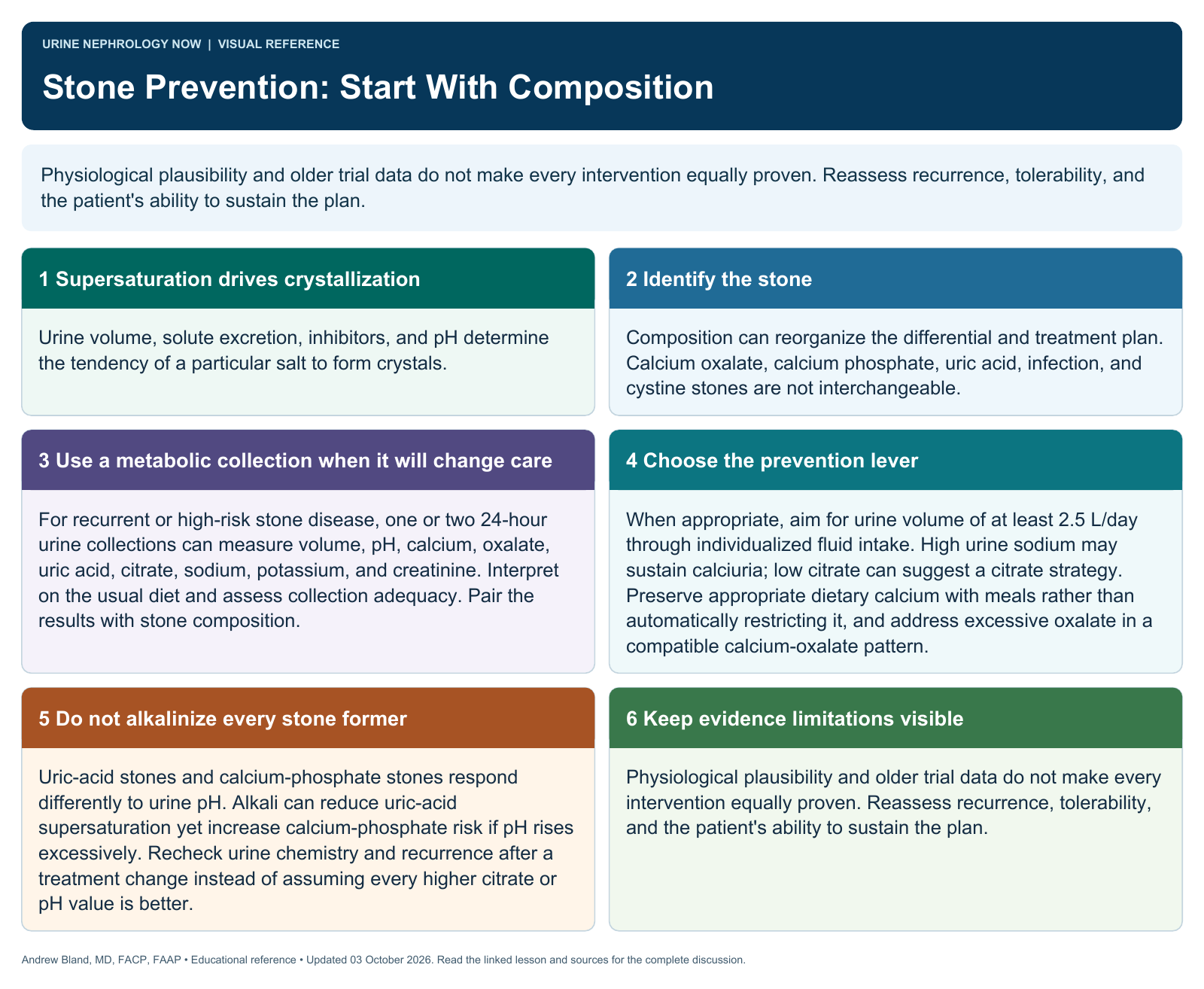
Physiological plausibility and older trial data do not make every intervention equally proven. Reassess recurrence, tolerability, and the patient's ability to sustain the plan.
Text version
Supersaturation drives crystallization
Urine volume, solute excretion, inhibitors, and pH determine the tendency of a particular salt to form crystals.
Identify the stone
Composition can reorganize the differential and treatment plan. Calcium oxalate, calcium phosphate, uric acid, infection, and cystine stones are not interchangeable.
Use a targeted workup
History, serum chemistry, urinalysis, and selected timed urine studies help identify modifiable mechanisms and unusual underlying disease.
Individualize prevention
Fluid intake, sodium, dietary calcium, oxalate, protein pattern, and medication choices should follow the stone and urine findings.
Read pH carefully
Alkalinization can help some stone types while increasing risk for others. Follow the relevant supersaturation and clinical response.
Keep evidence limitations visible
Physiological plausibility and older trial data do not make every intervention equally proven. Reassess recurrence, tolerability, and the patient's ability to sustain the plan.
Continue learning
This graphic summarizes a topic. The full educational pages provide the broader discussion and references.