Visual summary
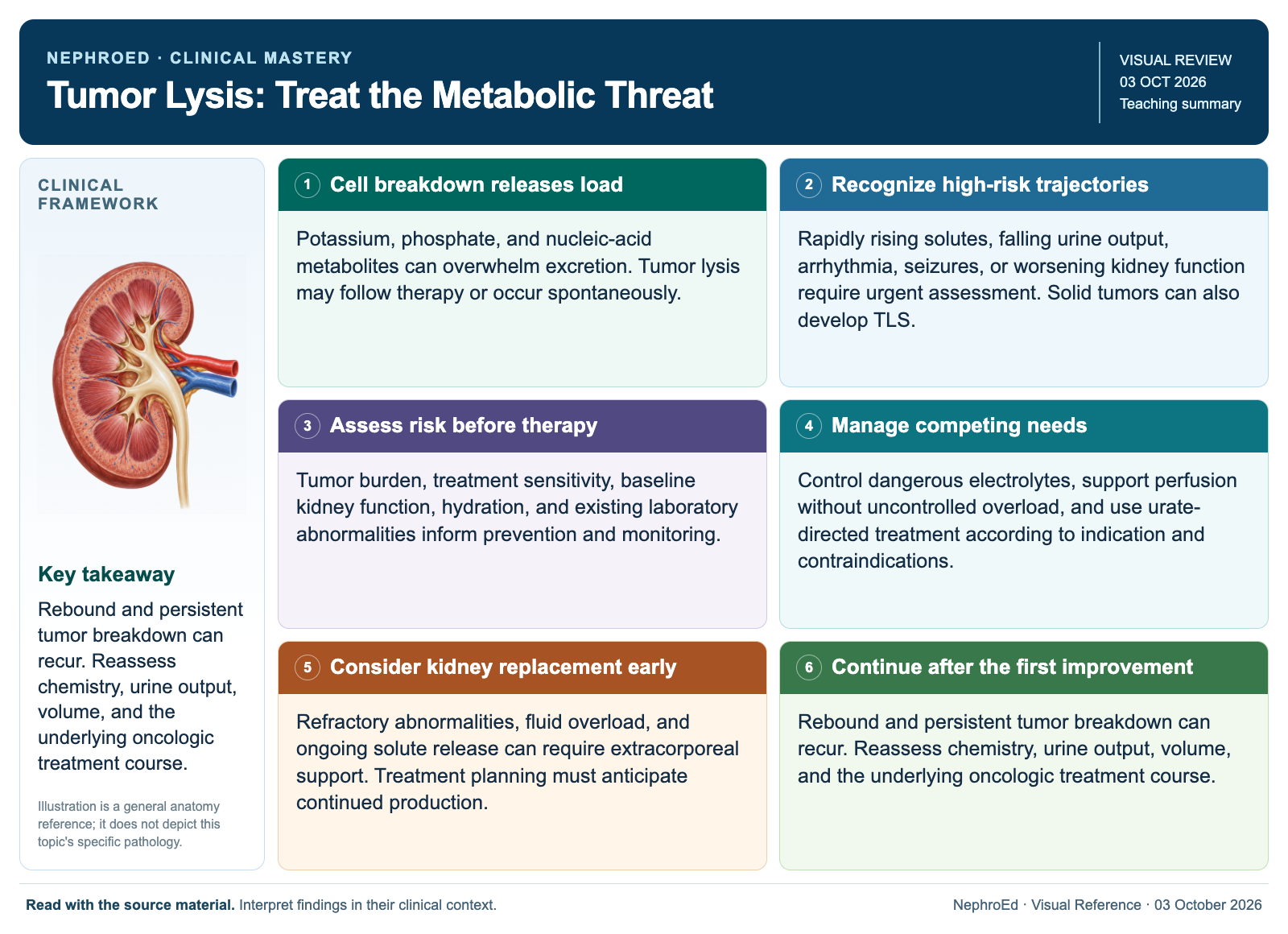
Rebound and persistent tumor breakdown can recur. Reassess chemistry, urine output, volume, and the underlying oncologic treatment course.
Text version
Cell breakdown releases load
Potassium, phosphate, and nucleic-acid metabolites can overwhelm excretion. Tumor lysis may follow therapy or occur spontaneously.
Recognize high-risk trajectories
Rapidly rising solutes, falling urine output, arrhythmia, seizures, or worsening kidney function require urgent assessment. Solid tumors can also develop TLS.
Assess risk before therapy
Tumor burden, treatment sensitivity, baseline kidney function, hydration, and existing laboratory abnormalities inform prevention and monitoring.
Manage competing needs
Control dangerous electrolytes, support perfusion without uncontrolled overload, and use urate-directed treatment according to indication and contraindications.
Consider kidney replacement early
Refractory abnormalities, fluid overload, and ongoing solute release can require extracorporeal support. Treatment planning must anticipate continued production.
Continue after the first improvement
Rebound and persistent tumor breakdown can recur. Reassess chemistry, urine output, volume, and the underlying oncologic treatment course.
Continue learning
This graphic summarizes a topic. The full educational pages provide the broader discussion and references.