Visual summary
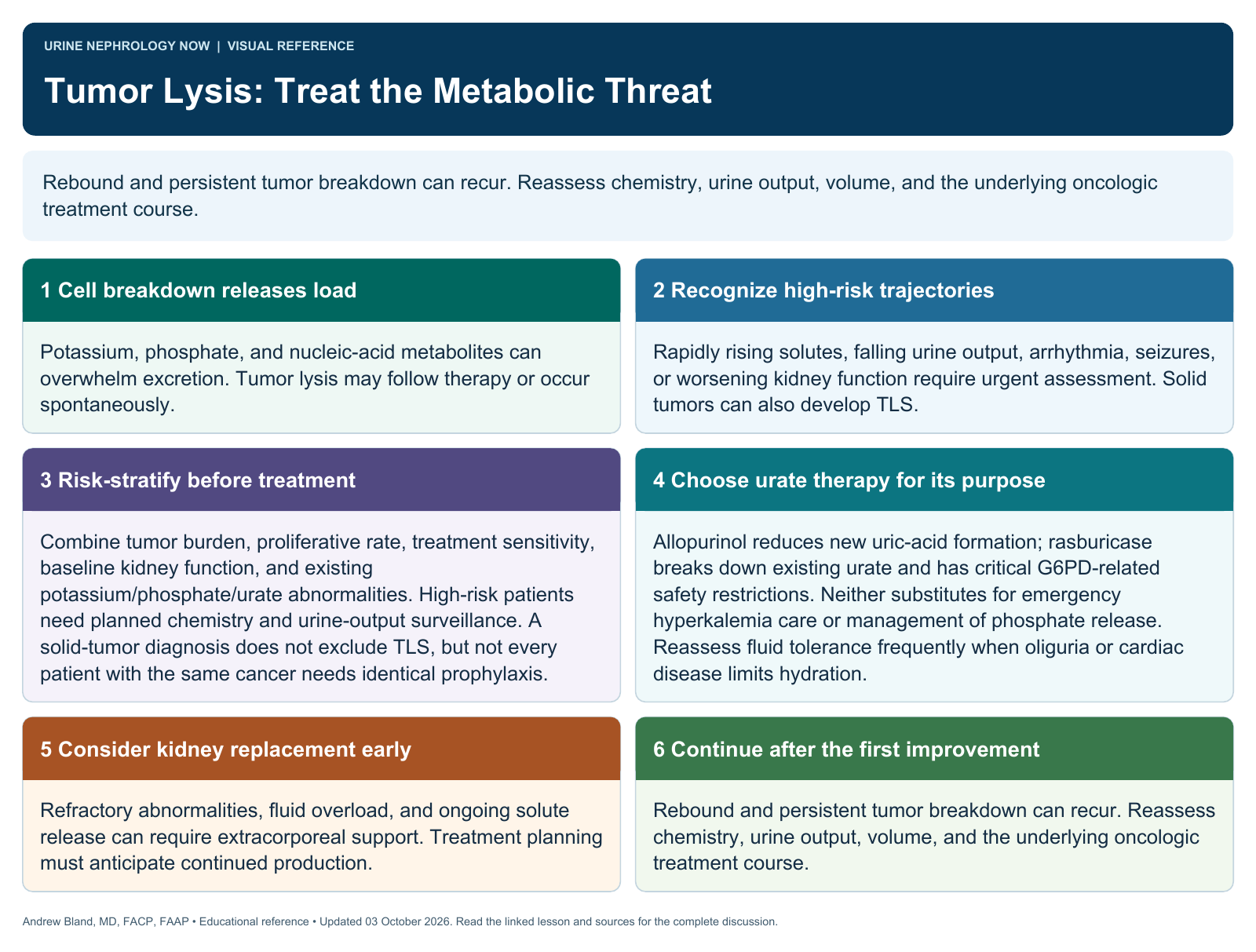
Rebound and persistent tumor breakdown can recur. Reassess chemistry, urine output, volume, and the underlying oncologic treatment course.
Text version
Cell breakdown releases load
Potassium, phosphate, and nucleic-acid metabolites can overwhelm excretion. Tumor lysis may follow therapy or occur spontaneously.
Recognize high-risk trajectories
Rapidly rising solutes, falling urine output, arrhythmia, seizures, or worsening kidney function require urgent assessment. Solid tumors can also develop TLS.
Risk-stratify before treatment
Combine tumor burden, proliferative rate, treatment sensitivity, baseline kidney function, and existing potassium/phosphate/urate abnormalities. High-risk patients need planned chemistry and urine-output surveillance. A solid-tumor diagnosis does not exclude TLS, but not every patient with the same cancer needs identical prophylaxis.
Choose urate therapy for its purpose
Allopurinol reduces new uric-acid formation; rasburicase breaks down existing urate and has critical G6PD-related safety restrictions. Neither substitutes for emergency hyperkalemia care or management of phosphate release. Reassess fluid tolerance frequently when oliguria or cardiac disease limits hydration.
Consider kidney replacement early
Refractory abnormalities, fluid overload, and ongoing solute release can require extracorporeal support. Treatment planning must anticipate continued production.
Continue after the first improvement
Rebound and persistent tumor breakdown can recur. Reassess chemistry, urine output, volume, and the underlying oncologic treatment course.