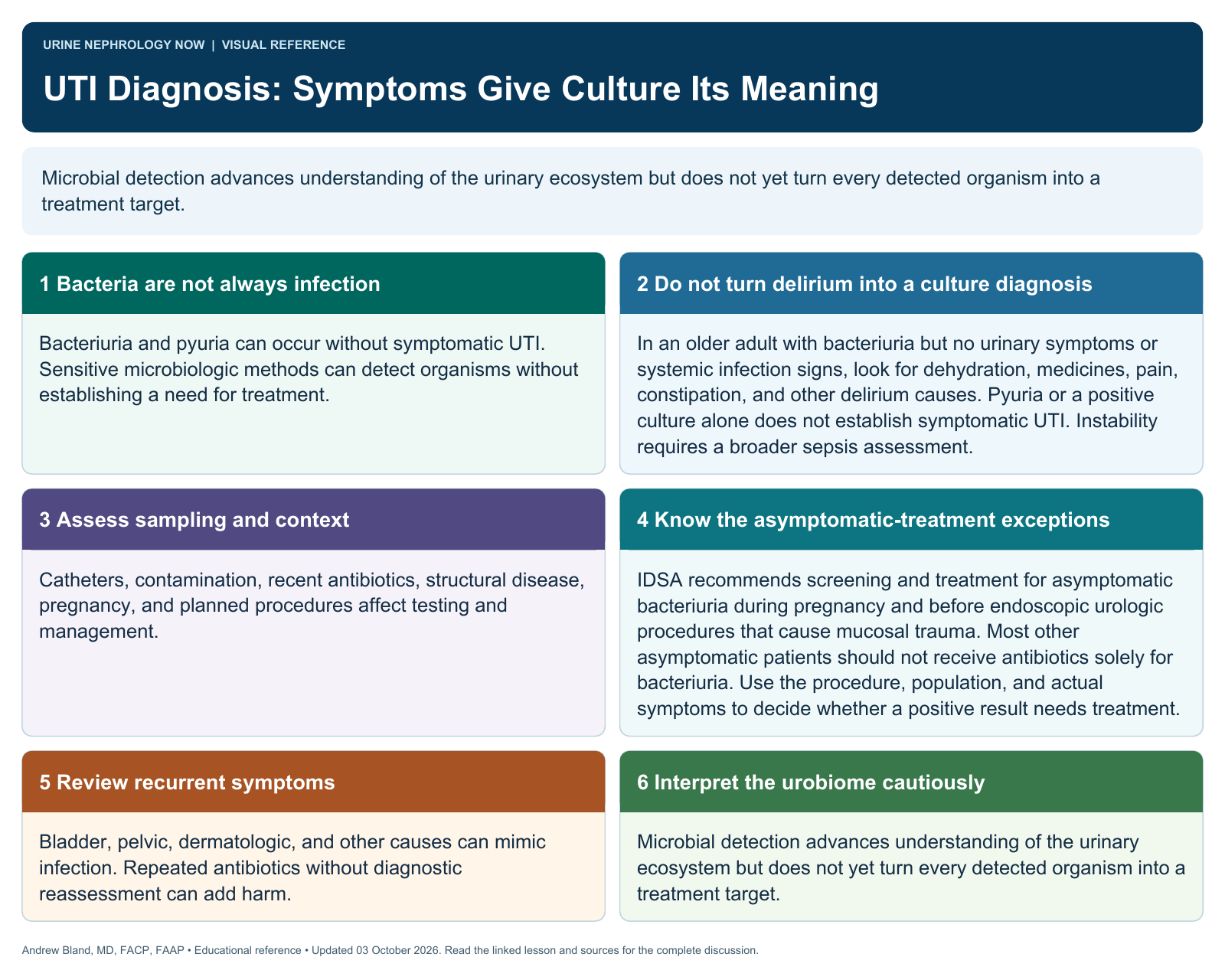
Visual summary
Microbial detection advances understanding of the urinary ecosystem but does not yet turn every detected organism into a treatment target.
Text version
Bacteria are not always infection
Bacteriuria and pyuria can occur without symptomatic UTI. Sensitive microbiologic methods can detect organisms without establishing a need for treatment.
Do not turn delirium into a culture diagnosis
In an older adult with bacteriuria but no urinary symptoms or systemic infection signs, look for dehydration, medicines, pain, constipation, and other delirium causes. Pyuria or a positive culture alone does not establish symptomatic UTI. Instability requires a broader sepsis assessment.
Assess sampling and context
Catheters, contamination, recent antibiotics, structural disease, pregnancy, and planned procedures affect testing and management.
Know the asymptomatic-treatment exceptions
IDSA recommends screening and treatment for asymptomatic bacteriuria during pregnancy and before endoscopic urologic procedures that cause mucosal trauma. Most other asymptomatic patients should not receive antibiotics solely for bacteriuria. Use the procedure, population, and actual symptoms to decide whether a positive result needs treatment.
Review recurrent symptoms
Bladder, pelvic, dermatologic, and other causes can mimic infection. Repeated antibiotics without diagnostic reassessment can add harm.
Interpret the urobiome cautiously
Microbial detection advances understanding of the urinary ecosystem but does not yet turn every detected organism into a treatment target.