Visual summary
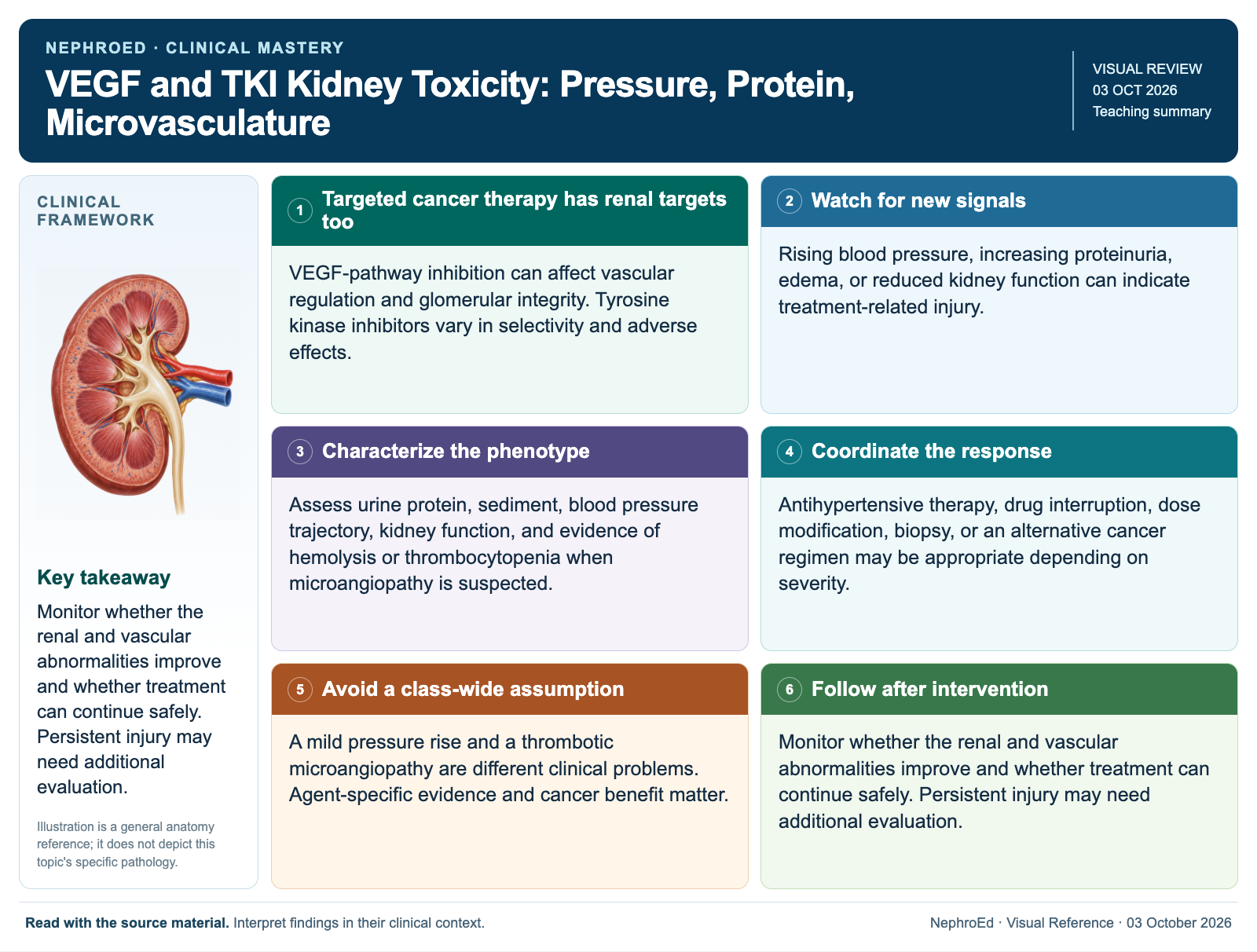
Monitor whether the renal and vascular abnormalities improve and whether treatment can continue safely. Persistent injury may need additional evaluation.
Text version
Targeted cancer therapy has renal targets too
VEGF-pathway inhibition can affect vascular regulation and glomerular integrity. Tyrosine kinase inhibitors vary in selectivity and adverse effects.
Watch for new signals
Rising blood pressure, increasing proteinuria, edema, or reduced kidney function can indicate treatment-related injury.
Characterize the phenotype
Assess urine protein, sediment, blood pressure trajectory, kidney function, and evidence of hemolysis or thrombocytopenia when microangiopathy is suspected.
Coordinate the response
Antihypertensive therapy, drug interruption, dose modification, biopsy, or an alternative cancer regimen may be appropriate depending on severity.
Avoid a class-wide assumption
A mild pressure rise and a thrombotic microangiopathy are different clinical problems. Agent-specific evidence and cancer benefit matter.
Follow after intervention
Monitor whether the renal and vascular abnormalities improve and whether treatment can continue safely. Persistent injury may need additional evaluation.
Continue learning
This graphic summarizes a topic. The full educational pages provide the broader discussion and references.