Visual summary
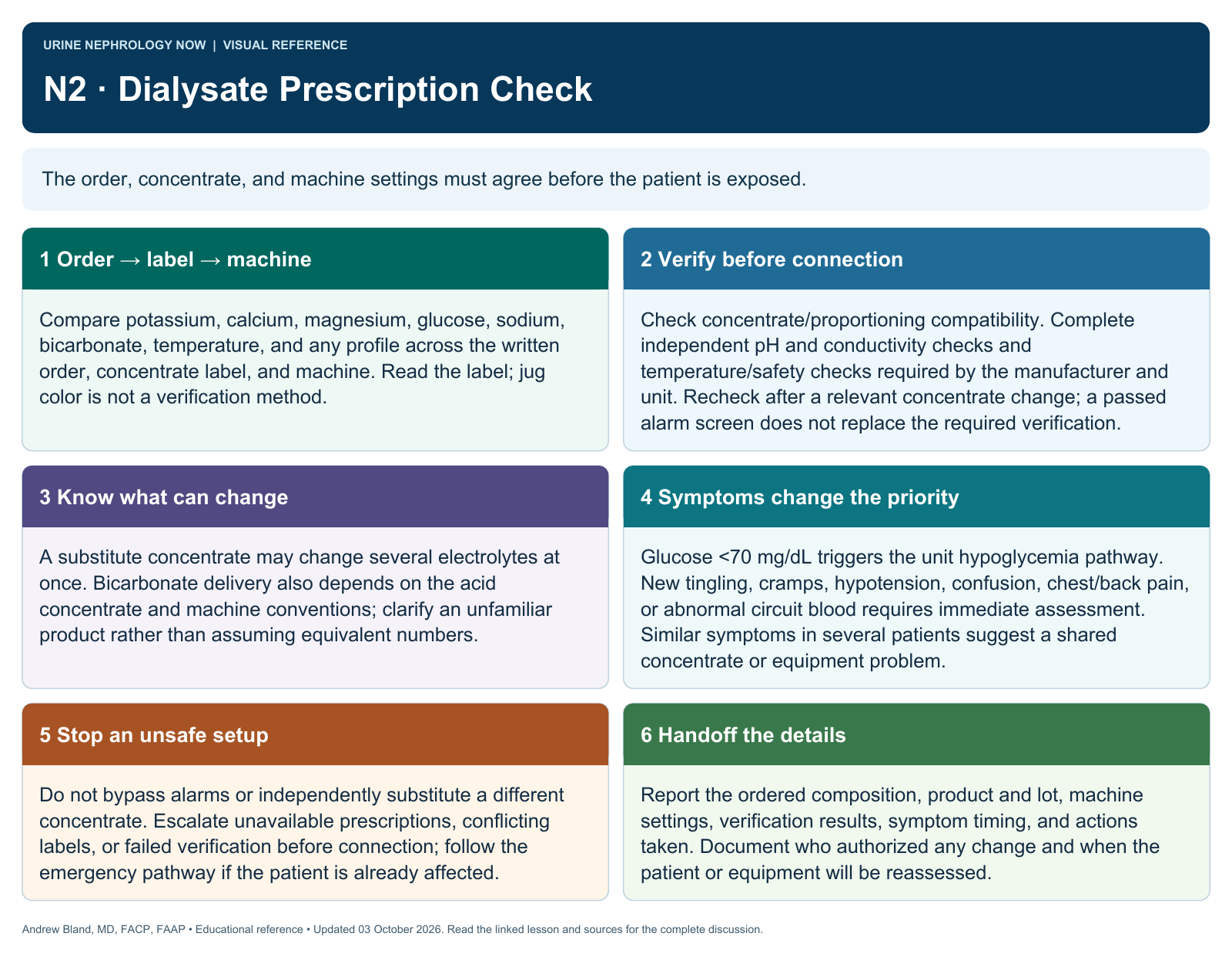
The order, concentrate, and machine settings must agree before the patient is exposed.
Text version
Order → label → machine
Compare potassium, calcium, magnesium, glucose, sodium, bicarbonate, temperature, and any profile across the written order, concentrate label, and machine. Read the label; jug color is not a verification method.
Verify before connection
Check concentrate/proportioning compatibility. Complete independent pH and conductivity checks and temperature/safety checks required by the manufacturer and unit. Recheck after a relevant concentrate change; a passed alarm screen does not replace the required verification.
Know what can change
A substitute concentrate may change several electrolytes at once. Bicarbonate delivery also depends on the acid concentrate and machine conventions; clarify an unfamiliar product rather than assuming equivalent numbers.
Symptoms change the priority
Glucose <70 mg/dL triggers the unit hypoglycemia pathway. New tingling, cramps, hypotension, confusion, chest/back pain, or abnormal circuit blood requires immediate assessment. Similar symptoms in several patients suggest a shared concentrate or equipment problem.
Stop an unsafe setup
Do not bypass alarms or independently substitute a different concentrate. Escalate unavailable prescriptions, conflicting labels, or failed verification before connection; follow the emergency pathway if the patient is already affected.
Handoff the details
Report the ordered composition, product and lot, machine settings, verification results, symptom timing, and actions taken. Document who authorized any change and when the patient or equipment will be reassessed.