Visual summary
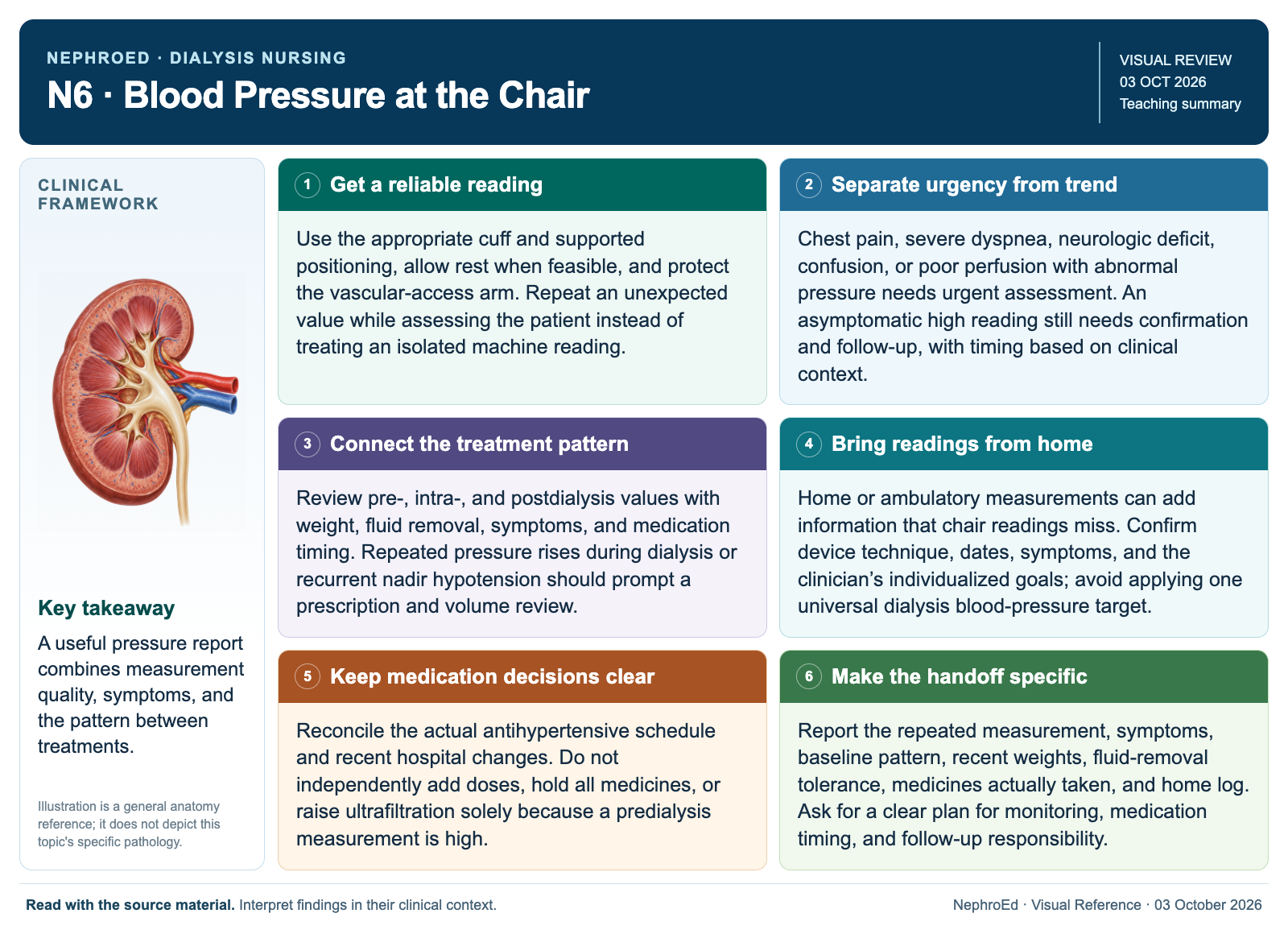
A useful pressure report combines measurement quality, symptoms, and the pattern between treatments.
Text version
Get a reliable reading
Use the appropriate cuff and supported positioning, allow rest when feasible, and protect the vascular-access arm. Repeat an unexpected value while assessing the patient instead of treating an isolated machine reading.
Separate urgency from trend
Chest pain, severe dyspnea, neurologic deficit, confusion, or poor perfusion with abnormal pressure needs urgent assessment. An asymptomatic high reading still needs confirmation and follow-up, with timing based on clinical context.
Connect the treatment pattern
Review pre-, intra-, and postdialysis values with weight, fluid removal, symptoms, and medication timing. Repeated pressure rises during dialysis or recurrent nadir hypotension should prompt a prescription and volume review.
Bring readings from home
Home or ambulatory measurements can add information that chair readings miss. Confirm device technique, dates, symptoms, and the clinician’s individualized goals; avoid applying one universal dialysis blood-pressure target.
Keep medication decisions clear
Reconcile the actual antihypertensive schedule and recent hospital changes. Do not independently add doses, hold all medicines, or raise ultrafiltration solely because a predialysis measurement is high.
Make the handoff specific
Report the repeated measurement, symptoms, baseline pattern, recent weights, fluid-removal tolerance, medicines actually taken, and home log. Ask for a clear plan for monitoring, medication timing, and follow-up responsibility.
Continue learning
This graphic summarizes a topic. The full educational pages provide the broader discussion and references.