Visual summary
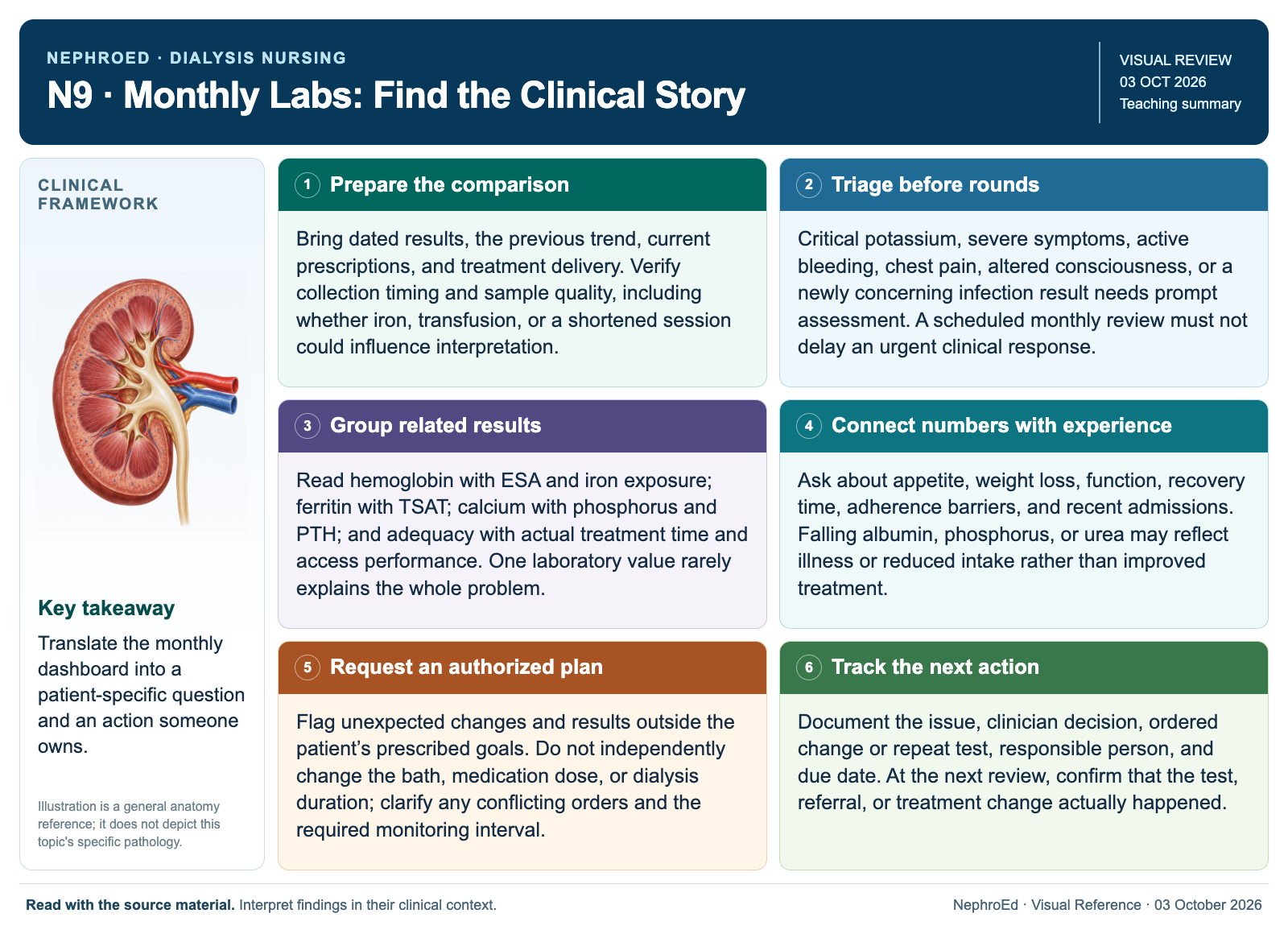
Translate the monthly dashboard into a patient-specific question and an action someone owns.
Text version
Prepare the comparison
Bring dated results, the previous trend, current prescriptions, and treatment delivery. Verify collection timing and sample quality, including whether iron, transfusion, or a shortened session could influence interpretation.
Triage before rounds
Critical potassium, severe symptoms, active bleeding, chest pain, altered consciousness, or a newly concerning infection result needs prompt assessment. A scheduled monthly review must not delay an urgent clinical response.
Group related results
Read hemoglobin with ESA and iron exposure; ferritin with TSAT; calcium with phosphorus and PTH; and adequacy with actual treatment time and access performance. One laboratory value rarely explains the whole problem.
Connect numbers with experience
Ask about appetite, weight loss, function, recovery time, adherence barriers, and recent admissions. Falling albumin, phosphorus, or urea may reflect illness or reduced intake rather than improved treatment.
Request an authorized plan
Flag unexpected changes and results outside the patient’s prescribed goals. Do not independently change the bath, medication dose, or dialysis duration; clarify any conflicting orders and the required monitoring interval.
Track the next action
Document the issue, clinician decision, ordered change or repeat test, responsible person, and due date. At the next review, confirm that the test, referral, or treatment change actually happened.
Continue learning
This graphic summarizes a topic. The full educational pages provide the broader discussion and references.