Visual summary
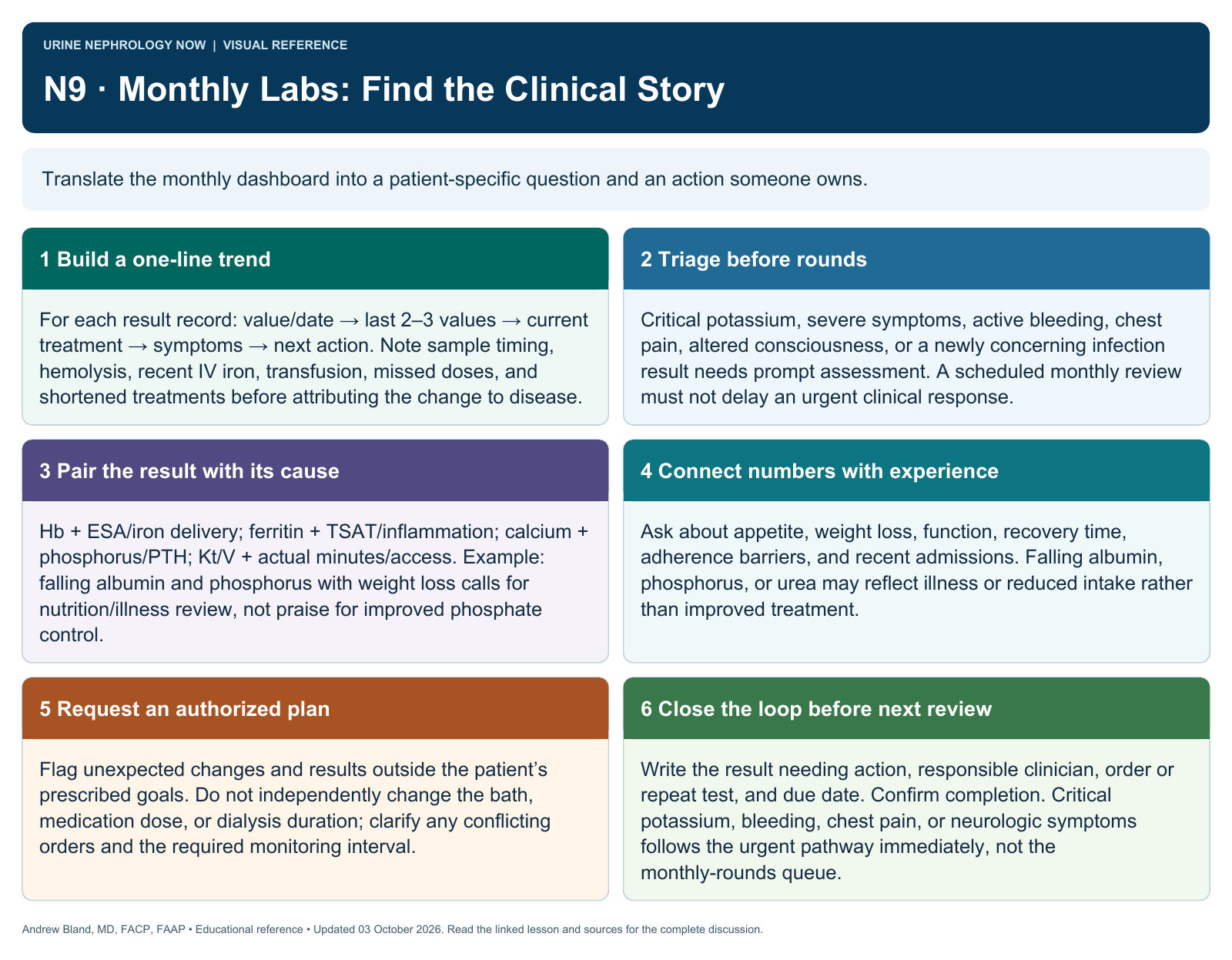
Translate the monthly dashboard into a patient-specific question and an action someone owns.
Text version
Build a one-line trend
For each result record: value/date → last 2–3 values → current treatment → symptoms → next action. Note sample timing, hemolysis, recent IV iron, transfusion, missed doses, and shortened treatments before attributing the change to disease.
Triage before rounds
Critical potassium, severe symptoms, active bleeding, chest pain, altered consciousness, or a newly concerning infection result needs prompt assessment. A scheduled monthly review must not delay an urgent clinical response.
Pair the result with its cause
Hb + ESA/iron delivery; ferritin + TSAT/inflammation; calcium + phosphorus/PTH; Kt/V + actual minutes/access. Example: falling albumin and phosphorus with weight loss calls for nutrition/illness review, not praise for improved phosphate control.
Connect numbers with experience
Ask about appetite, weight loss, function, recovery time, adherence barriers, and recent admissions. Falling albumin, phosphorus, or urea may reflect illness or reduced intake rather than improved treatment.
Request an authorized plan
Flag unexpected changes and results outside the patient’s prescribed goals. Do not independently change the bath, medication dose, or dialysis duration; clarify any conflicting orders and the required monitoring interval.
Close the loop before next review
Write the result needing action, responsible clinician, order or repeat test, and due date. Confirm completion. Critical potassium, bleeding, chest pain, or neurologic symptoms follows the urgent pathway immediately, not the monthly-rounds queue.