Visual summary
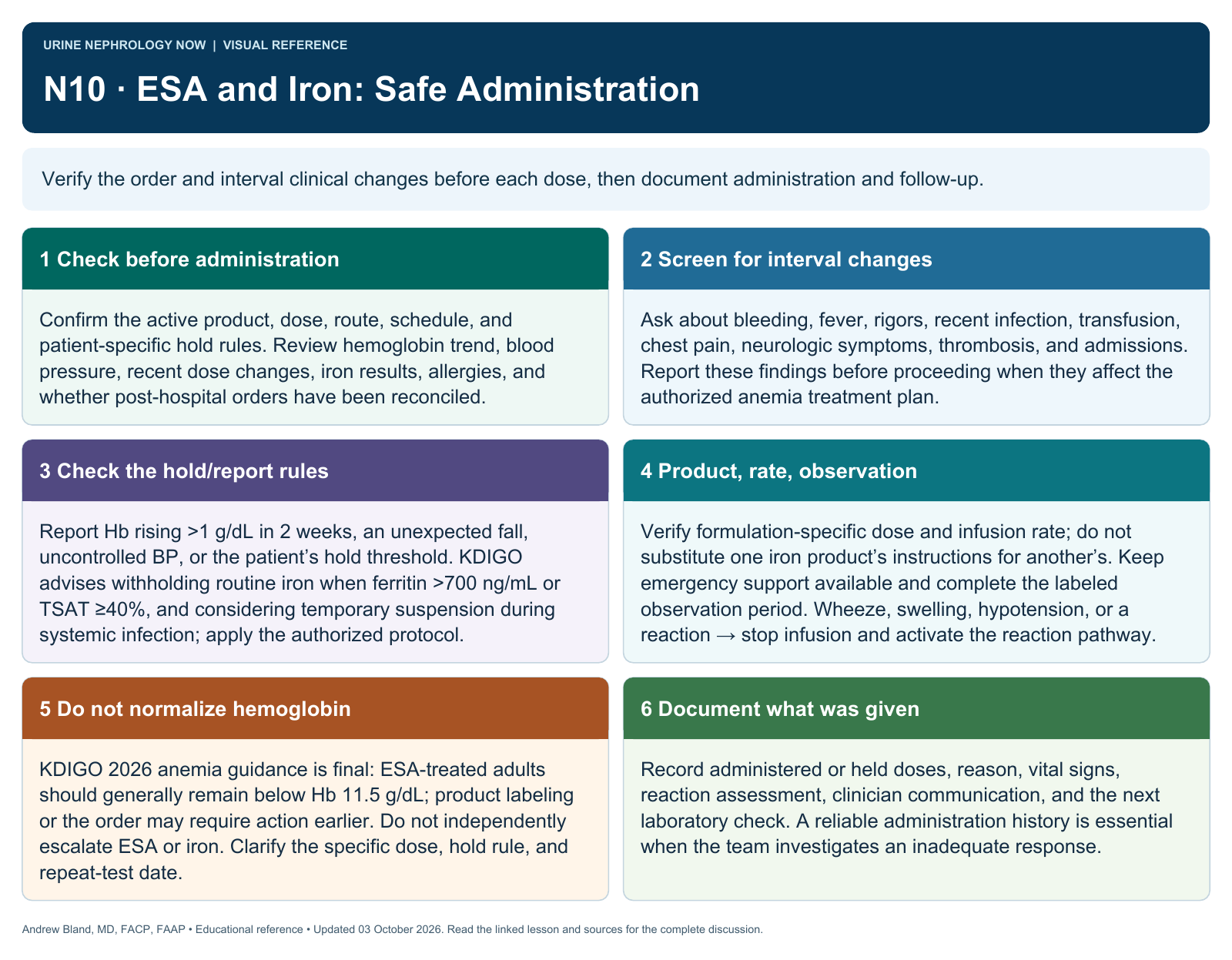
Verify the order and interval clinical changes before each dose, then document administration and follow-up.
Text version
Check before administration
Confirm the active product, dose, route, schedule, and patient-specific hold rules. Review hemoglobin trend, blood pressure, recent dose changes, iron results, allergies, and whether post-hospital orders have been reconciled.
Screen for interval changes
Ask about bleeding, fever, rigors, recent infection, transfusion, chest pain, neurologic symptoms, thrombosis, and admissions. Report these findings before proceeding when they affect the authorized anemia treatment plan.
Escalate a conflicting result
A rapid hemoglobin rise, unexpected fall, persistent poor response, uncontrolled hypertension, active infection, or a reached hold threshold needs prescriber review under the protocol. Symptoms and instability can be urgent regardless of hemoglobin.
Give the correct formulation
Use the product-specific administration rate and required observation period. Keep emergency support available for infusion reactions; stop and follow the reaction pathway for new wheeze, swelling, hypotension, or other concerning symptoms.
Avoid dose chasing
Do not independently increase ESA or iron to normalize hemoglobin. KDIGO 2026 anemia guidance is published final guidance; the individualized order, product labeling, response, and adverse effects guide bedside administration.
Document what was given
Record administered or held doses, reason, vital signs, reaction assessment, clinician communication, and the next laboratory check. A reliable administration history is essential when the team investigates an inadequate response.
Continue learning
This graphic summarizes a topic. The full educational pages provide the broader discussion and references.