Visual summary
Recognize the event, activate trained help, and match the response to the patient and circuit findings.
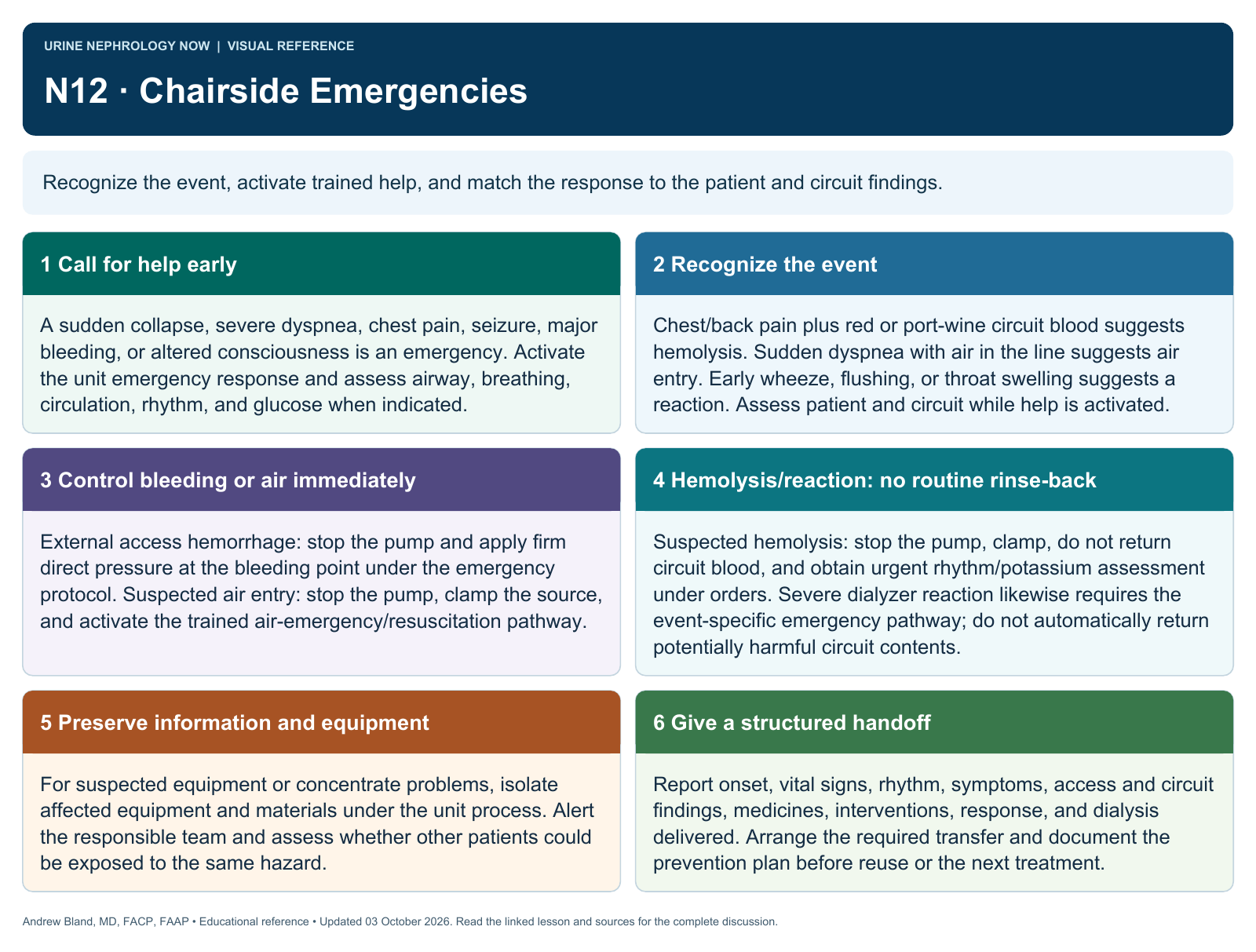
Text version
Call for help early
A sudden collapse, severe dyspnea, chest pain, seizure, major bleeding, or altered consciousness is an emergency. Activate the unit emergency response and assess airway, breathing, circulation, rhythm, and glucose when indicated.
Recognize the event
Chest/back pain plus red or port-wine circuit blood suggests hemolysis. Sudden dyspnea with air in the line suggests air entry. Early wheeze, flushing, or throat swelling suggests a reaction. Assess patient and circuit while help is activated.
Control bleeding or air immediately
External access hemorrhage: stop the pump and apply firm direct pressure at the bleeding point under the emergency protocol. Suspected air entry: stop the pump, clamp the source, and activate the trained air-emergency/resuscitation pathway.
Hemolysis/reaction: no routine rinse-back
Suspected hemolysis: stop the pump, clamp, do not return circuit blood, and obtain urgent rhythm/potassium assessment under orders. Severe dialyzer reaction likewise requires the event-specific emergency pathway; do not automatically return potentially harmful circuit contents.
Preserve information and equipment
For suspected equipment or concentrate problems, isolate affected equipment and materials under the unit process. Alert the responsible team and assess whether other patients could be exposed to the same hazard.
Give a structured handoff
Report onset, vital signs, rhythm, symptoms, access and circuit findings, medicines, interventions, response, and dialysis delivered. Arrange the required transfer and document the prevention plan before reuse or the next treatment.