Visual summary
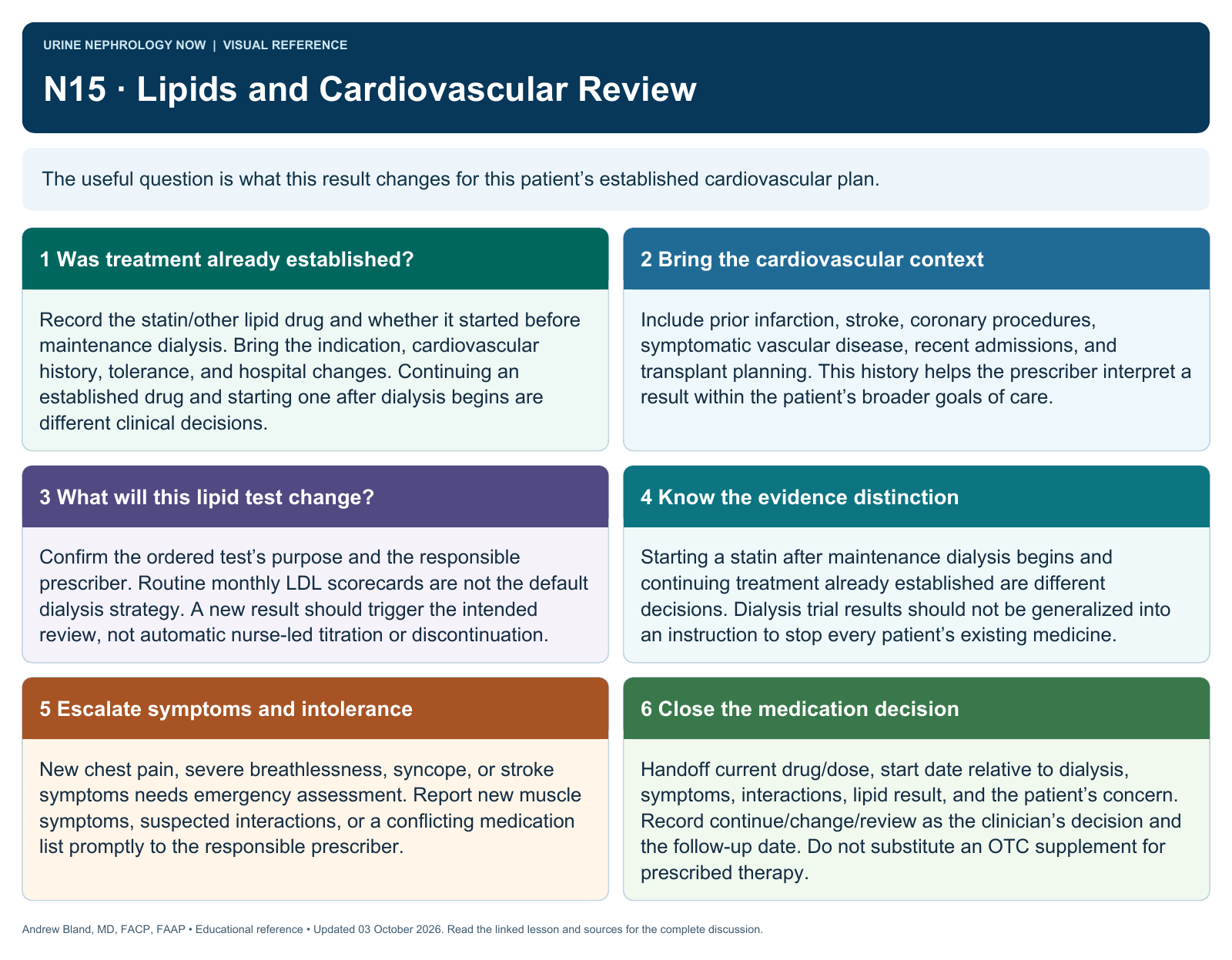
The useful question is what this result changes for this patient’s established cardiovascular plan.
Text version
Start with the treatment history
Record the lipid-lowering drug, dose, prescriber, tolerance, and when it began relative to dialysis. Reconcile hospital changes and ask about access to medicines, missed doses, and nonprescription supplements.
Bring the cardiovascular context
Include prior infarction, stroke, coronary procedures, symptomatic vascular disease, recent admissions, and transplant planning. This history helps the prescriber interpret a result within the patient’s broader goals of care.
Clarify the reason for testing
Ask what decision the lipid panel is meant to inform. A routine monthly LDL scorecard is not the default maintenance-dialysis strategy; an unexpected value should be reviewed with the clinical context.
Know the evidence distinction
Starting a statin after maintenance dialysis begins and continuing treatment already established are different decisions. Dialysis trial results should not be generalized into an instruction to stop every patient’s existing medicine.
Escalate symptoms and intolerance
New chest pain, severe breathlessness, syncope, or stroke symptoms needs emergency assessment. Report new muscle symptoms, suspected interactions, or a conflicting medication list promptly to the responsible prescriber.
Make the handoff actionable
Send current therapy, start date, tolerance, cardiovascular history, result and trend, reason for testing, and the patient’s concerns. Confirm the agreed medication plan and follow-up; do not independently titrate to a single laboratory value.
Continue learning
This graphic summarizes a topic. The full educational pages provide the broader discussion and references.