Visual summary
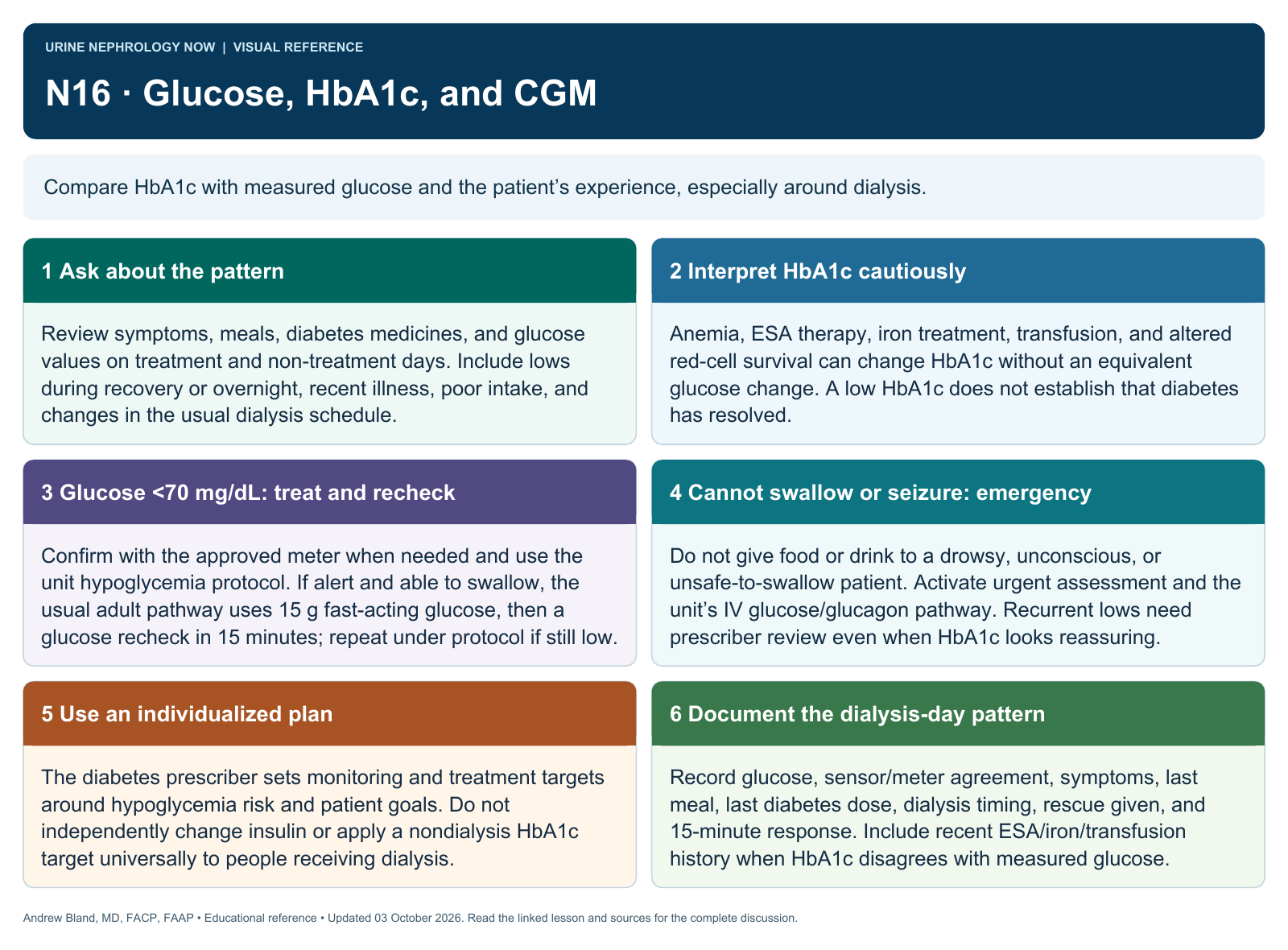
Compare HbA1c with measured glucose and the patient’s experience, especially around dialysis.
Text version
Ask about the pattern
Review symptoms, meals, diabetes medicines, and glucose values on treatment and non-treatment days. Include lows during recovery or overnight, recent illness, poor intake, and changes in the usual dialysis schedule.
Interpret HbA1c cautiously
Anemia, ESA therapy, iron treatment, transfusion, and altered red-cell survival can change HbA1c without an equivalent glucose change. A low HbA1c does not establish that diabetes has resolved.
Check symptoms promptly
For suspected hypoglycemia, measure glucose and use the unit treatment and recheck pathway. Confirm a sensor result that conflicts with symptoms using the approved meter method, while responding promptly to concerning symptoms.
Escalate dangerous changes
Altered consciousness, seizure, inability to swallow, or persistent symptoms requires urgent assessment. Recurrent lows or marked hyperglycemia with illness needs clinician review even if the recent HbA1c appears acceptable.
Use an individualized plan
The diabetes prescriber sets monitoring and treatment targets around hypoglycemia risk and patient goals. Do not independently change insulin or apply a nondialysis HbA1c target universally to people receiving dialysis.
Handoff timing and response
Report glucose or CGM values, confirmation method, symptoms, food intake, medicine timing, dialysis timing, and treatment response. Include recent anemia therapies and transfusions, then name the needed prescription or monitoring review.
Continue learning
This graphic summarizes a topic. The full educational pages provide the broader discussion and references.