Visual summary
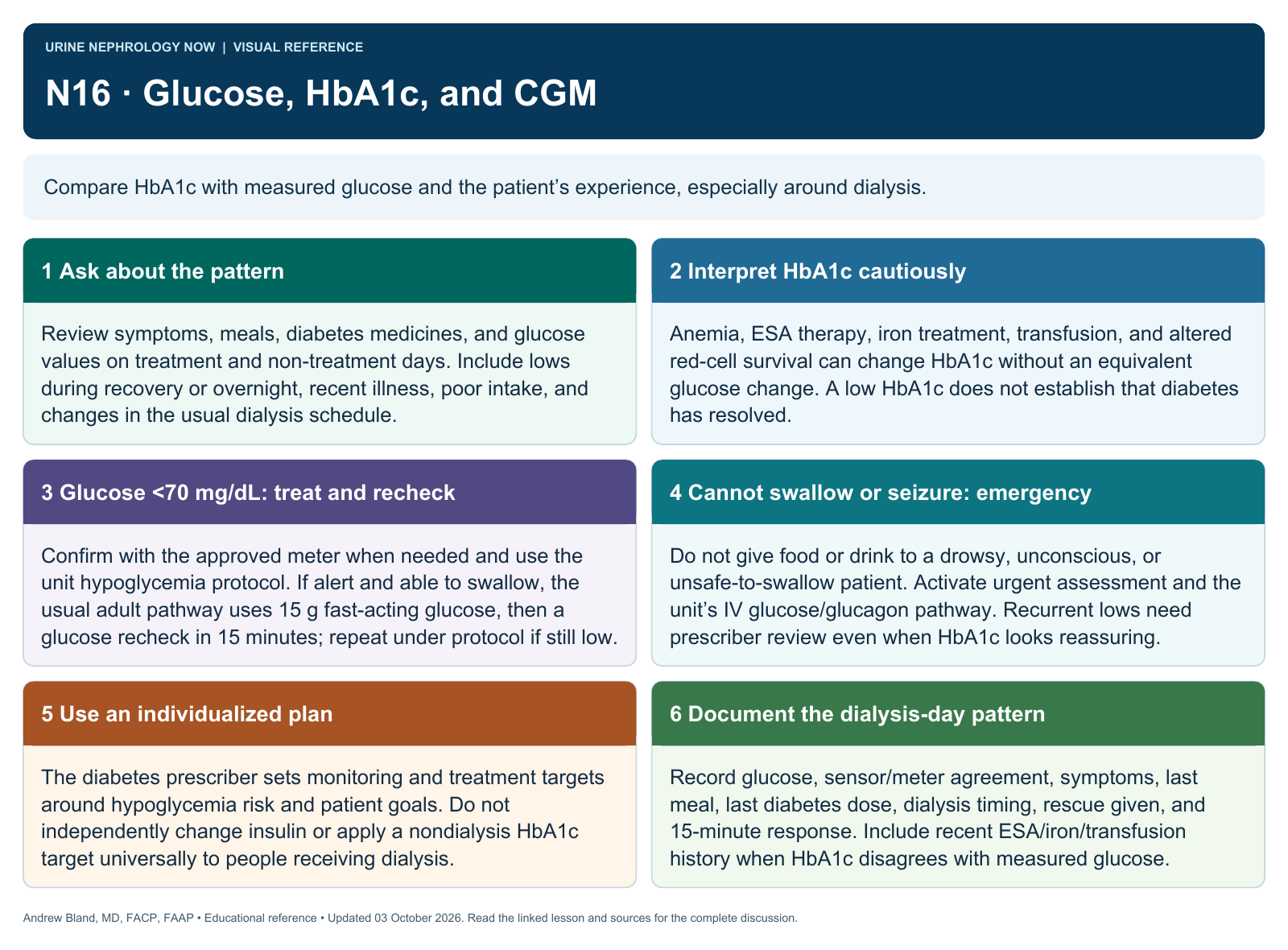
Compare HbA1c with measured glucose and the patient’s experience, especially around dialysis.
Text version
Ask about the pattern
Review symptoms, meals, diabetes medicines, and glucose values on treatment and non-treatment days. Include lows during recovery or overnight, recent illness, poor intake, and changes in the usual dialysis schedule.
Interpret HbA1c cautiously
Anemia, ESA therapy, iron treatment, transfusion, and altered red-cell survival can change HbA1c without an equivalent glucose change. A low HbA1c does not establish that diabetes has resolved.
Glucose <70 mg/dL: treat and recheck
Confirm with the approved meter when needed and use the unit hypoglycemia protocol. If alert and able to swallow, the usual adult pathway uses 15 g fast-acting glucose, then a glucose recheck in 15 minutes; repeat under protocol if still low.
Cannot swallow or seizure: emergency
Do not give food or drink to a drowsy, unconscious, or unsafe-to-swallow patient. Activate urgent assessment and the unit’s IV glucose/glucagon pathway. Recurrent lows need prescriber review even when HbA1c looks reassuring.
Use an individualized plan
The diabetes prescriber sets monitoring and treatment targets around hypoglycemia risk and patient goals. Do not independently change insulin or apply a nondialysis HbA1c target universally to people receiving dialysis.
Document the dialysis-day pattern
Record glucose, sensor/meter agreement, symptoms, last meal, last diabetes dose, dialysis timing, rescue given, and 15-minute response. Include recent ESA/iron/transfusion history when HbA1c disagrees with measured glucose.