Visual summary
Treat the calcium–phosphorus–PTH pattern in its nutrition and medication context.
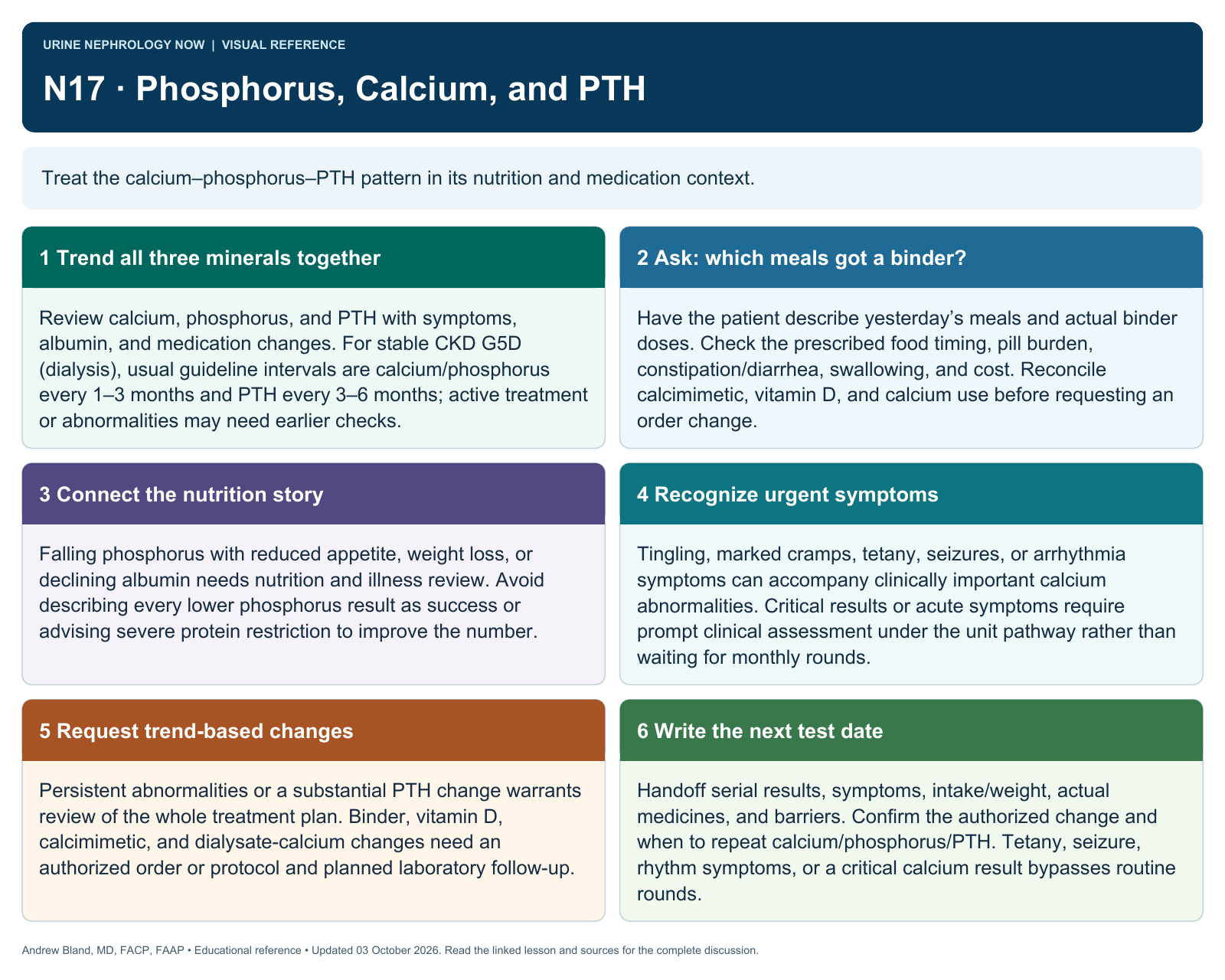
Text version
Review the values together
Bring serial calcium, phosphorus, and PTH results with dates and the laboratory range. Add albumin, alkaline phosphatase when available, symptoms, dialysis delivery, and recent medication changes before interpreting an isolated abnormality.
Understand actual medicine use
Ask how phosphate binders are taken with food and whether pill burden, swallowing, cost, or adverse effects interfere. Reconcile vitamin D, calcium supplements, and calcimimetics with the active prescription.
Connect the nutrition story
Falling phosphorus with reduced appetite, weight loss, or declining albumin needs nutrition and illness review. Avoid describing every lower phosphorus result as success or advising severe protein restriction to improve the number.
Recognize urgent symptoms
Tingling, marked cramps, tetany, seizures, or arrhythmia symptoms can accompany clinically important calcium abnormalities. Critical results or acute symptoms require prompt clinical assessment under the unit pathway rather than waiting for monthly rounds.
Request trend-based changes
Persistent abnormalities or a substantial PTH change warrants review of the whole treatment plan. Binder, vitamin D, calcimimetic, and dialysate-calcium changes need an authorized order or protocol and planned laboratory follow-up.
Handoff the practical details
Provide trends, symptoms, nutrition changes, prescribed and actual medicine use, recent changes, and barriers. Document the team’s decision, repeat-test date, and who will check whether the revised plan was implemented.
Continue learning
This graphic summarizes a topic. The full educational pages provide the broader discussion and references.