Visual summary
Treat the calcium–phosphorus–PTH pattern in its nutrition and medication context.
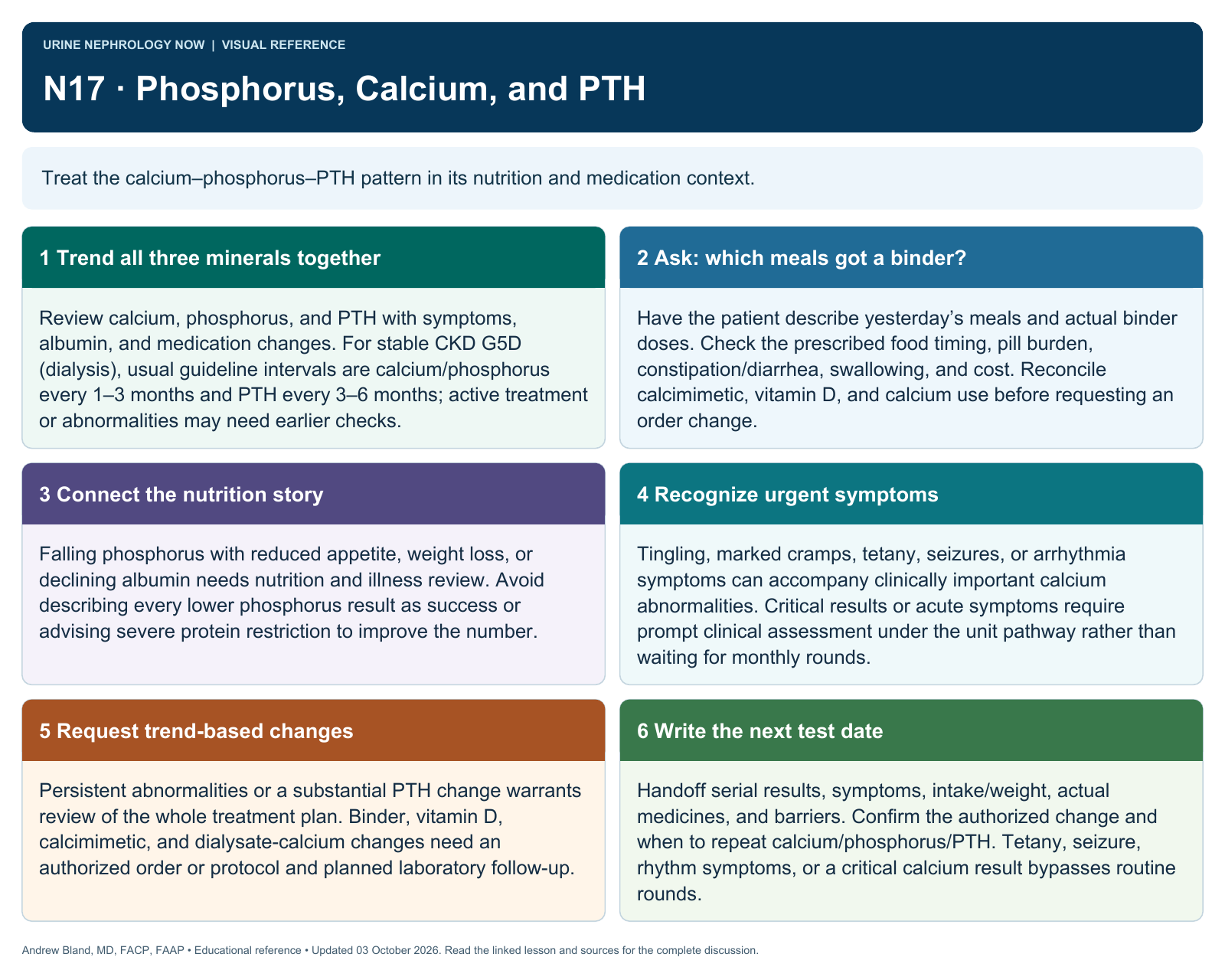
Text version
Trend all three minerals together
Review calcium, phosphorus, and PTH with symptoms, albumin, and medication changes. For stable CKD G5D (dialysis), usual guideline intervals are calcium/phosphorus every 1–3 months and PTH every 3–6 months; active treatment or abnormalities may need earlier checks.
Ask: which meals got a binder?
Have the patient describe yesterday’s meals and actual binder doses. Check the prescribed food timing, pill burden, constipation/diarrhea, swallowing, and cost. Reconcile calcimimetic, vitamin D, and calcium use before requesting an order change.
Connect the nutrition story
Falling phosphorus with reduced appetite, weight loss, or declining albumin needs nutrition and illness review. Avoid describing every lower phosphorus result as success or advising severe protein restriction to improve the number.
Recognize urgent symptoms
Tingling, marked cramps, tetany, seizures, or arrhythmia symptoms can accompany clinically important calcium abnormalities. Critical results or acute symptoms require prompt clinical assessment under the unit pathway rather than waiting for monthly rounds.
Request trend-based changes
Persistent abnormalities or a substantial PTH change warrants review of the whole treatment plan. Binder, vitamin D, calcimimetic, and dialysate-calcium changes need an authorized order or protocol and planned laboratory follow-up.
Write the next test date
Handoff serial results, symptoms, intake/weight, actual medicines, and barriers. Confirm the authorized change and when to repeat calcium/phosphorus/PTH. Tetany, seizure, rhythm symptoms, or a critical calcium result bypasses routine rounds.