Visual summary
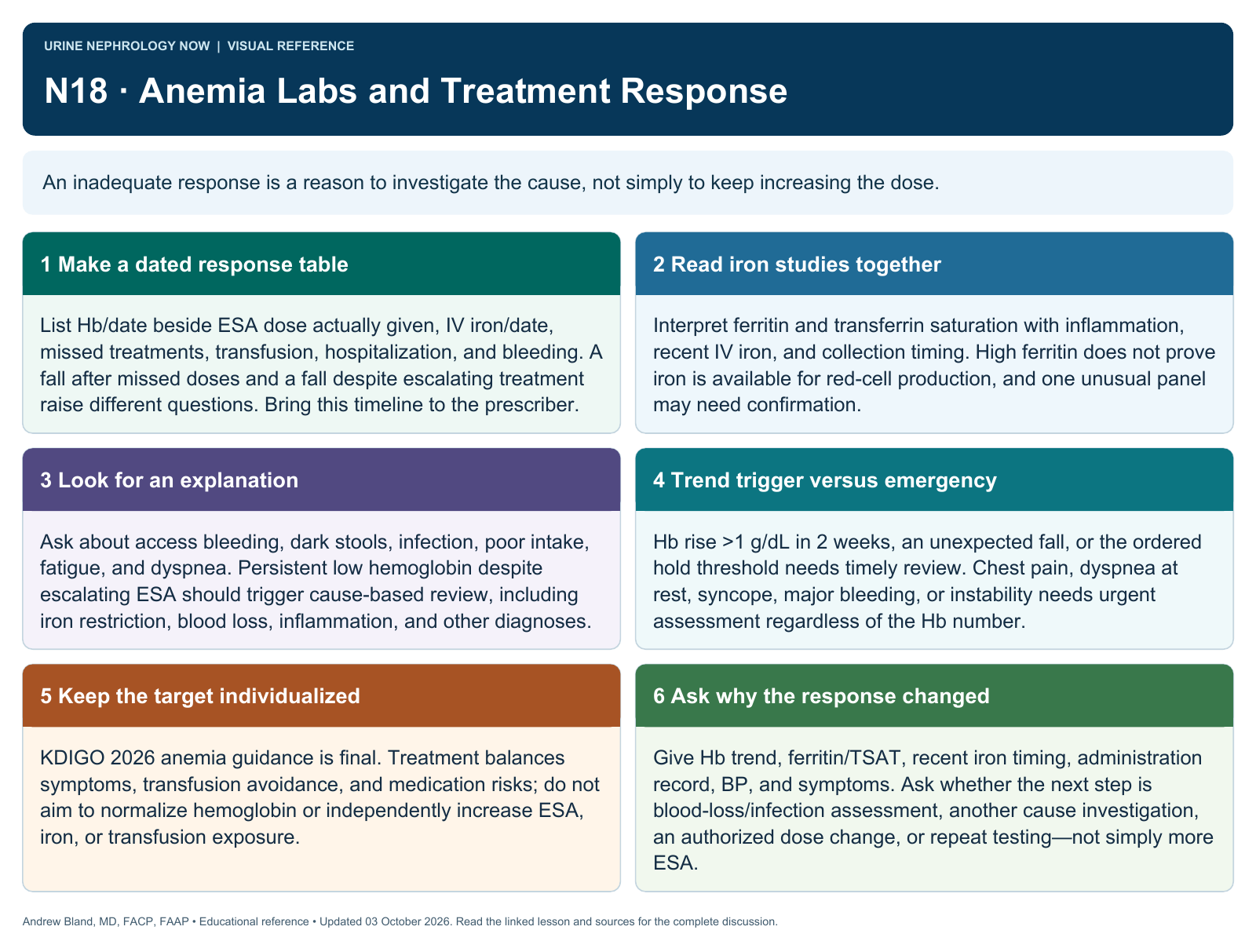
An inadequate response is a reason to investigate the cause, not simply to keep increasing the dose.
Text version
Make a dated response table
List Hb/date beside ESA dose actually given, IV iron/date, missed treatments, transfusion, hospitalization, and bleeding. A fall after missed doses and a fall despite escalating treatment raise different questions. Bring this timeline to the prescriber.
Read iron studies together
Interpret ferritin and transferrin saturation with inflammation, recent IV iron, and collection timing. High ferritin does not prove iron is available for red-cell production, and one unusual panel may need confirmation.
Look for an explanation
Ask about access bleeding, dark stools, infection, poor intake, fatigue, and dyspnea. Persistent low hemoglobin despite escalating ESA should trigger cause-based review, including iron restriction, blood loss, inflammation, and other diagnoses.
Trend trigger versus emergency
Hb rise >1 g/dL in 2 weeks, an unexpected fall, or the ordered hold threshold needs timely review. Chest pain, dyspnea at rest, syncope, major bleeding, or instability needs urgent assessment regardless of the Hb number.
Keep the target individualized
KDIGO 2026 anemia guidance is final. Treatment balances symptoms, transfusion avoidance, and medication risks; do not aim to normalize hemoglobin or independently increase ESA, iron, or transfusion exposure.
Ask why the response changed
Give Hb trend, ferritin/TSAT, recent iron timing, administration record, BP, and symptoms. Ask whether the next step is blood-loss/infection assessment, another cause investigation, an authorized dose change, or repeat testing—not simply more ESA.