Visual summary
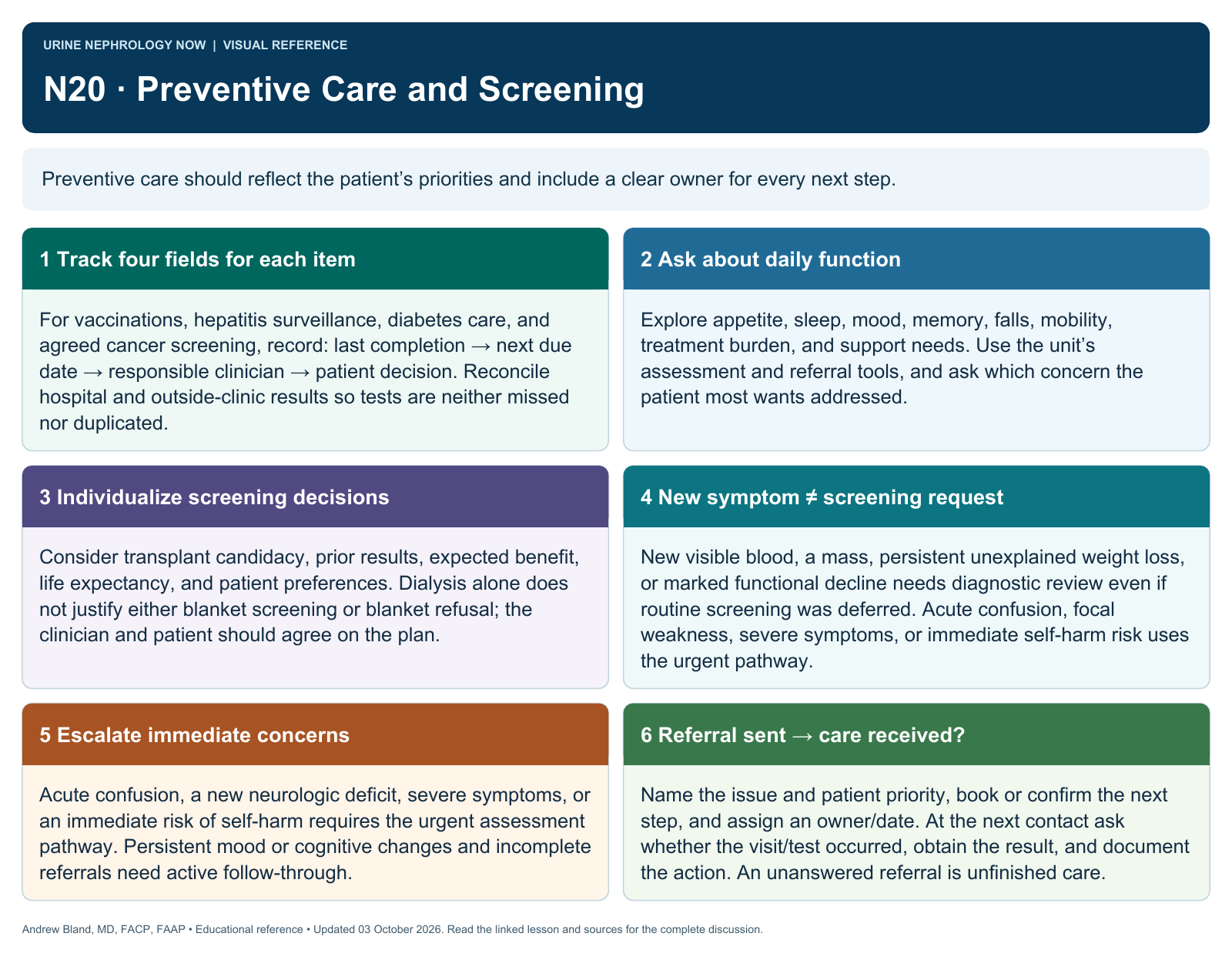
Preventive care should reflect the patient’s priorities and include a clear owner for every next step.
Text version
Identify the responsible team
At admission and care-plan reviews, record who follows vaccination, hepatitis status, diabetes, cancer screening, and other agreed preventive care. A test on a checklist is incomplete without a result and next action.
Ask about daily function
Explore appetite, sleep, mood, memory, falls, mobility, treatment burden, and support needs. Use the unit’s assessment and referral tools, and ask which concern the patient most wants addressed.
Individualize screening decisions
Consider transplant candidacy, prior results, expected benefit, life expectancy, and patient preferences. Dialysis alone does not justify either blanket screening or blanket refusal; the clinician and patient should agree on the plan.
Separate screening from symptoms
New bleeding, hematuria, a mass, persistent weight loss, or a marked functional change calls for diagnostic assessment. A previously deferred screening test is not a reason to dismiss a new clinical concern.
Escalate immediate concerns
Acute confusion, a new neurologic deficit, severe symptoms, or an immediate risk of self-harm requires the urgent assessment pathway. Persistent mood or cognitive changes and incomplete referrals need active follow-through.
Close the referral loop
Document the patient’s priority, decision, responsible clinician, appointment or test, and follow-up date. At the next contact, confirm completion and what happened; a referral sent is not the same as care received.
Continue learning
This graphic summarizes a topic. The full educational pages provide the broader discussion and references.