Visual summary
Pediatric BP care begins with an age-appropriate measurement and confirmation pathway, then investigates the individual child’s risk and cause.
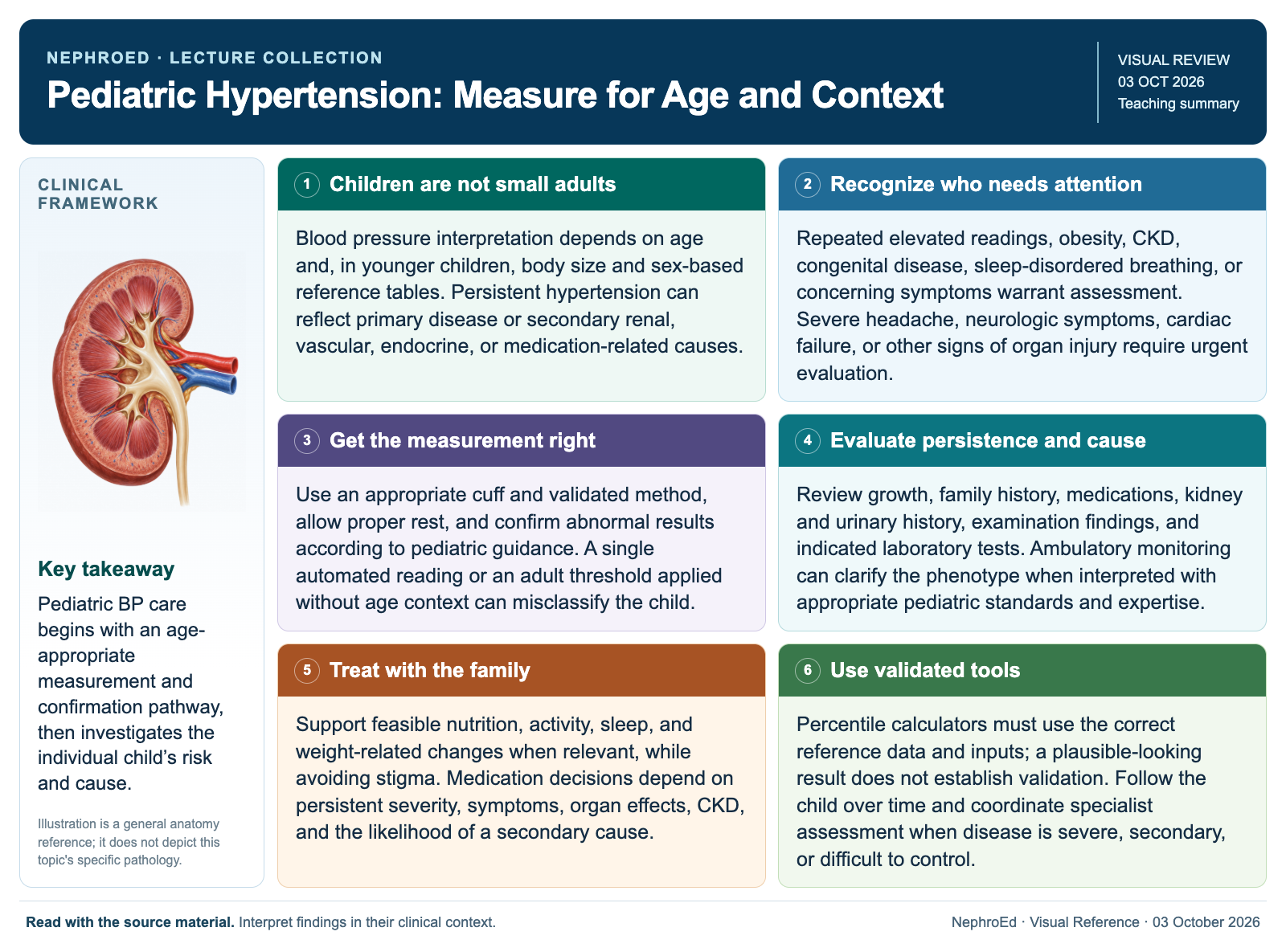
Text version
Children are not small adults
Blood pressure interpretation depends on age and, in younger children, body size and sex-based reference tables. Persistent hypertension can reflect primary disease or secondary renal, vascular, endocrine, or medication-related causes.
Recognize who needs attention
Repeated elevated readings, obesity, CKD, congenital disease, sleep-disordered breathing, or concerning symptoms warrant assessment. Severe headache, neurologic symptoms, cardiac failure, or other signs of organ injury require urgent evaluation.
Get the measurement right
Use an appropriate cuff and validated method, allow proper rest, and confirm abnormal results according to pediatric guidance. A single automated reading or an adult threshold applied without age context can misclassify the child.
Evaluate persistence and cause
Review growth, family history, medications, kidney and urinary history, examination findings, and indicated laboratory tests. Ambulatory monitoring can clarify the phenotype when interpreted with appropriate pediatric standards and expertise.
Treat with the family
Support feasible nutrition, activity, sleep, and weight-related changes when relevant, while avoiding stigma. Medication decisions depend on persistent severity, symptoms, organ effects, CKD, and the likelihood of a secondary cause.
Use validated tools
Percentile calculators must use the correct reference data and inputs; a plausible-looking result does not establish validation. Follow the child over time and coordinate specialist assessment when disease is severe, secondary, or difficult to control.
Continue learning
This graphic summarizes a topic. The full educational pages provide the broader discussion and references.