Visual summary
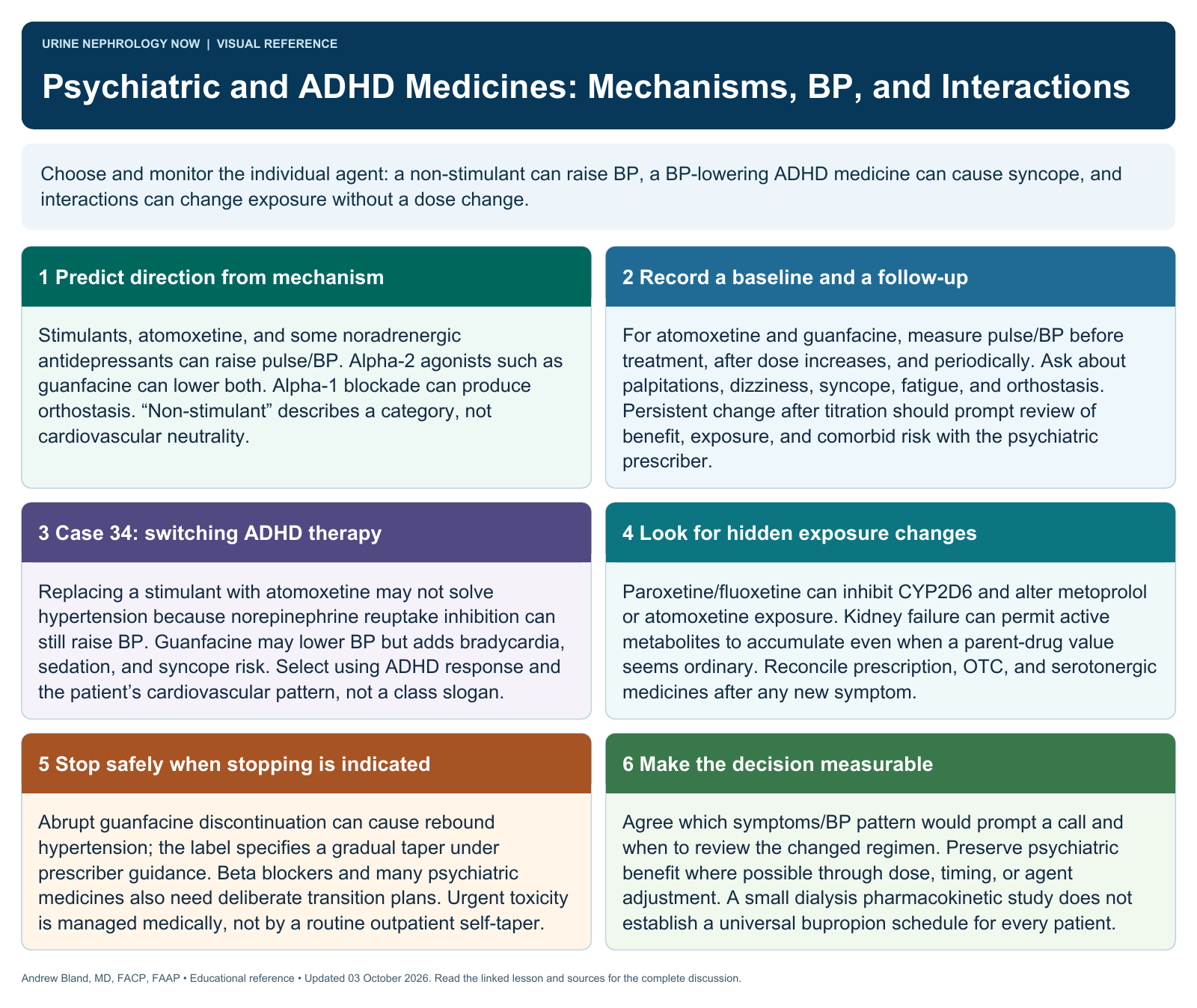
Choose and monitor the individual agent: a non-stimulant can raise BP, a BP-lowering ADHD medicine can cause syncope, and interactions can change exposure without a dose change.
Text version
Predict direction from mechanism
Stimulants, atomoxetine, and some noradrenergic antidepressants can raise pulse/BP. Alpha-2 agonists such as guanfacine can lower both. Alpha-1 blockade can produce orthostasis. “Non-stimulant” describes a category, not cardiovascular neutrality.
Record a baseline and a follow-up
For atomoxetine and guanfacine, measure pulse/BP before treatment, after dose increases, and periodically. Ask about palpitations, dizziness, syncope, fatigue, and orthostasis. Persistent change after titration should prompt review of benefit, exposure, and comorbid risk with the psychiatric prescriber.
Case 34: switching ADHD therapy
Replacing a stimulant with atomoxetine may not solve hypertension because norepinephrine reuptake inhibition can still raise BP. Guanfacine may lower BP but adds bradycardia, sedation, and syncope risk. Select using ADHD response and the patient’s cardiovascular pattern, not a class slogan.
Look for hidden exposure changes
Paroxetine/fluoxetine can inhibit CYP2D6 and alter metoprolol or atomoxetine exposure. Kidney failure can permit active metabolites to accumulate even when a parent-drug value seems ordinary. Reconcile prescription, OTC, and serotonergic medicines after any new symptom.
Stop safely when stopping is indicated
Abrupt guanfacine discontinuation can cause rebound hypertension; the label specifies a gradual taper under prescriber guidance. Beta blockers and many psychiatric medicines also need deliberate transition plans. Urgent toxicity is managed medically, not by a routine outpatient self-taper.
Make the decision measurable
Agree which symptoms/BP pattern would prompt a call and when to review the changed regimen. Preserve psychiatric benefit where possible through dose, timing, or agent adjustment. A small dialysis pharmacokinetic study does not establish a universal bupropion schedule for every patient.