Visual summary
Use RAAS blockade for a clear indication, monitor physiology, and distinguish an expected effect from clinically significant harm.
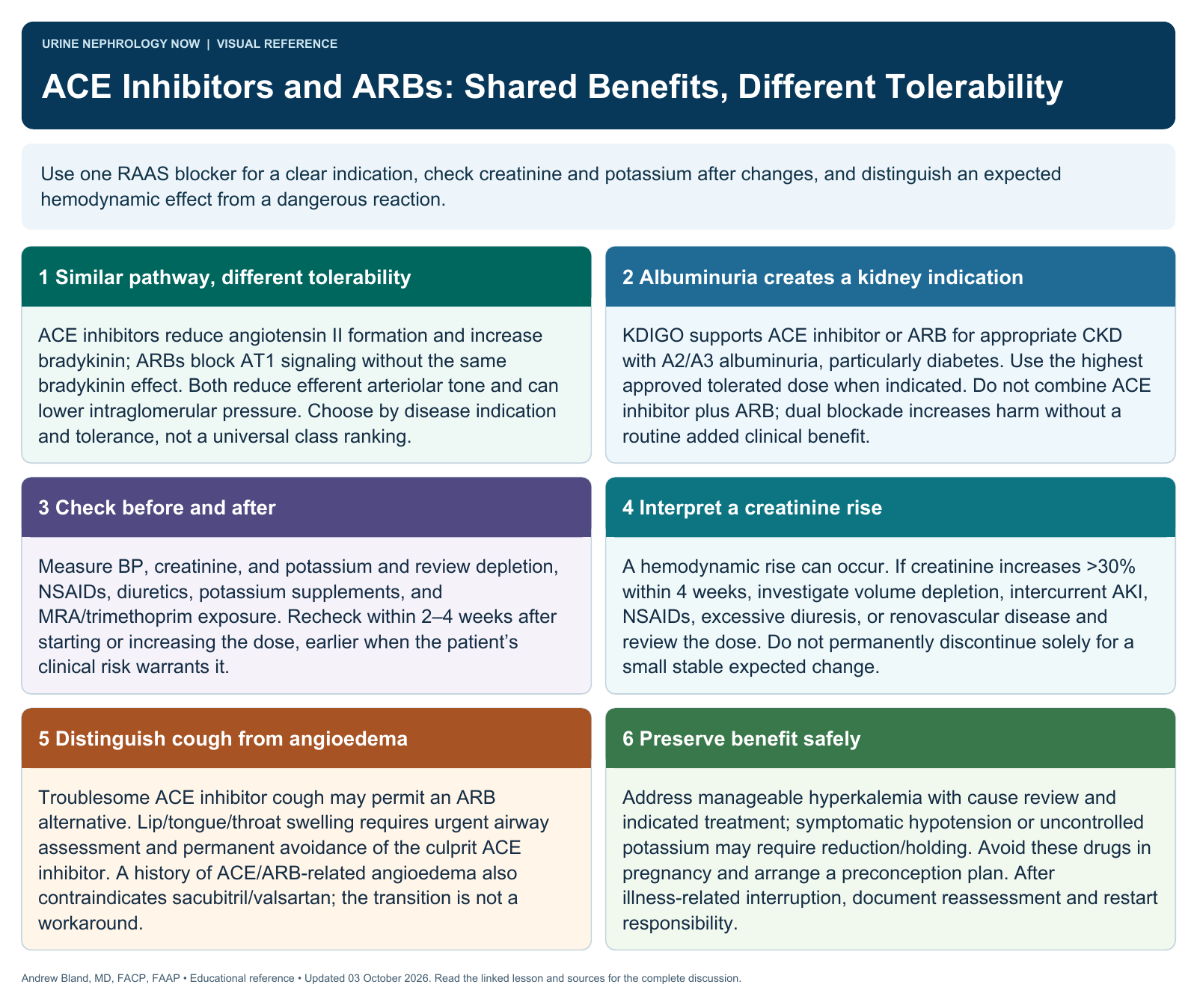
Text version
Modify angiotensin signaling
ACE inhibitors reduce formation of angiotensin II and affect bradykinin metabolism; ARBs block the angiotensin II type 1 receptor. Both can lower systemic and intraglomerular pressure and have important disease-specific indications.
Recognize expected and dangerous effects
A hemodynamic creatinine change can occur after initiation, while hyperkalemia and symptomatic hypotension require assessment. ACE inhibitor cough and angioedema involve different mechanisms; swelling affecting the airway is an emergency.
Assess before and after starting
Review volume status, kidney function, potassium, interacting medications, pregnancy potential, and relevant vascular disease. Recheck laboratory values and symptoms after initiation or titration using a schedule matched to the patient’s risk.
Choose for indication and tolerance
Use evidence for the relevant condition, such as albuminuric CKD or heart failure, while considering cough, previous reactions, access, and adherence. An ARB may be a useful alternative when ACE inhibitor intolerance makes it appropriate.
Respond to an abnormal trend
Investigate dehydration, NSAIDs, diuretics, renovascular disease, and other contributors when kidney function worsens substantially. Address manageable hyperkalemia where appropriate instead of reflexively abandoning beneficial therapy without reassessment.
Avoid unsafe overlap
Routine ACE inhibitor plus ARB combination adds risk and is generally avoided. Switching to an ARNI requires attention to the ACE inhibitor washout and contraindications. Do not treat one molecule’s metabolism or uricosuric effect as a class-wide property.
Self-check: What distinguishes a tolerable hemodynamic creatinine change from deterioration that needs investigation after RAAS blockade is started?
Continue learning
This graphic summarizes a topic. The full educational pages provide the broader discussion and references.