Visual summary
Withdraw a plausible trigger promptly; persistent dysfunction calls for a tissue-informed treatment decision rather than waiting for an allergic triad.
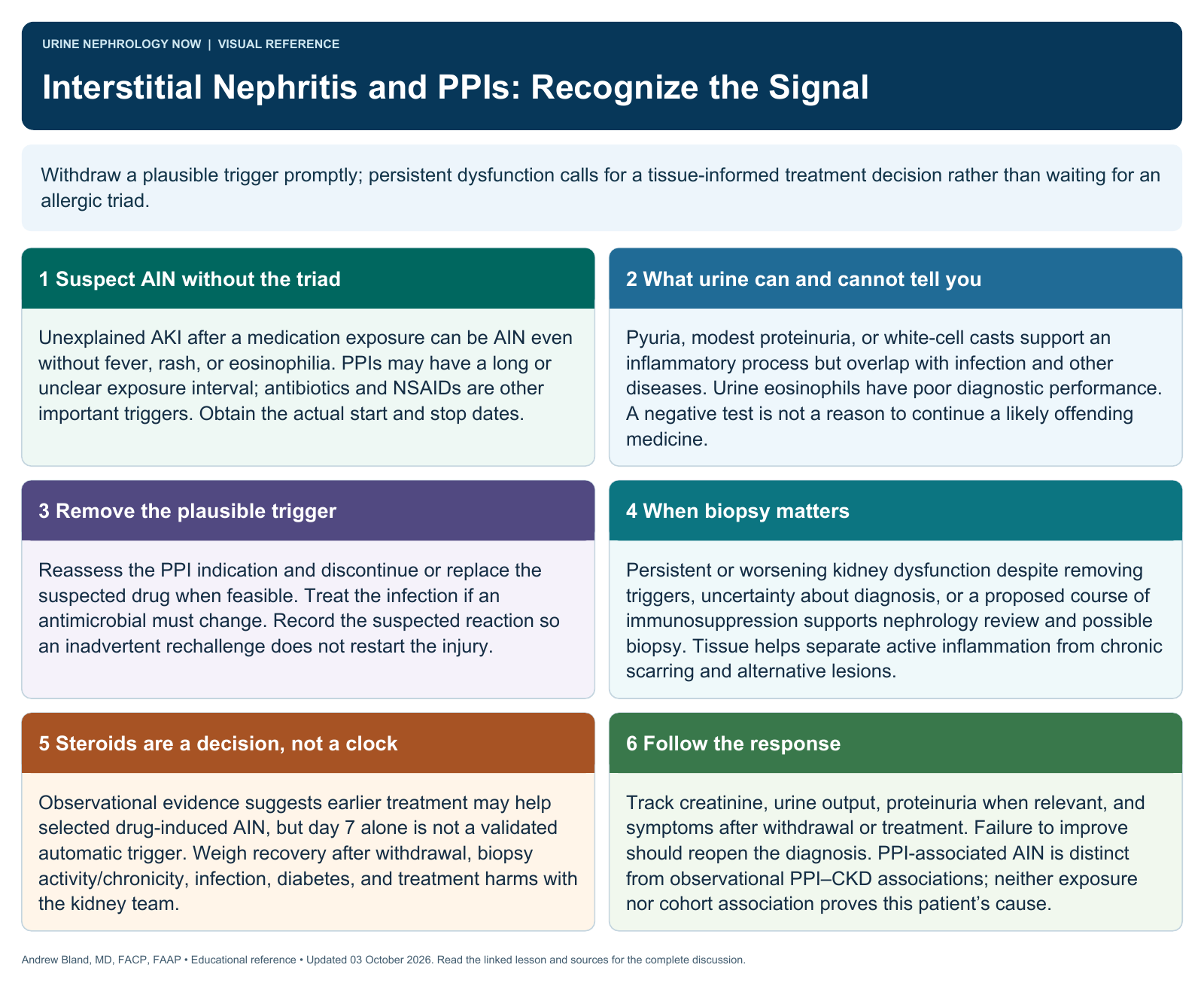
Text version
Suspect AIN without the triad
Unexplained AKI after a medication exposure can be AIN even without fever, rash, or eosinophilia. PPIs may have a long or unclear exposure interval; antibiotics and NSAIDs are other important triggers. Obtain the actual start and stop dates.
What urine can and cannot tell you
Pyuria, modest proteinuria, or white-cell casts support an inflammatory process but overlap with infection and other diseases. Urine eosinophils have poor diagnostic performance. A negative test is not a reason to continue a likely offending medicine.
Remove the plausible trigger
Reassess the PPI indication and discontinue or replace the suspected drug when feasible. Treat the infection if an antimicrobial must change. Record the suspected reaction so an inadvertent rechallenge does not restart the injury.
When biopsy matters
Persistent or worsening kidney dysfunction despite removing triggers, uncertainty about diagnosis, or a proposed course of immunosuppression supports nephrology review and possible biopsy. Tissue helps separate active inflammation from chronic scarring and alternative lesions.
Steroids are a decision, not a clock
Observational evidence suggests earlier treatment may help selected drug-induced AIN, but day 7 alone is not a validated automatic trigger. Weigh recovery after withdrawal, biopsy activity/chronicity, infection, diabetes, and treatment harms with the kidney team.
Follow the response
Track creatinine, urine output, proteinuria when relevant, and symptoms after withdrawal or treatment. Failure to improve should reopen the diagnosis. PPI-associated AIN is distinct from observational PPI–CKD associations; neither exposure nor cohort association proves this patient’s cause.