Visual summary
A chemistry panel is a set of linked clues; physiology, sample quality, and trends turn numbers into useful clinical information.
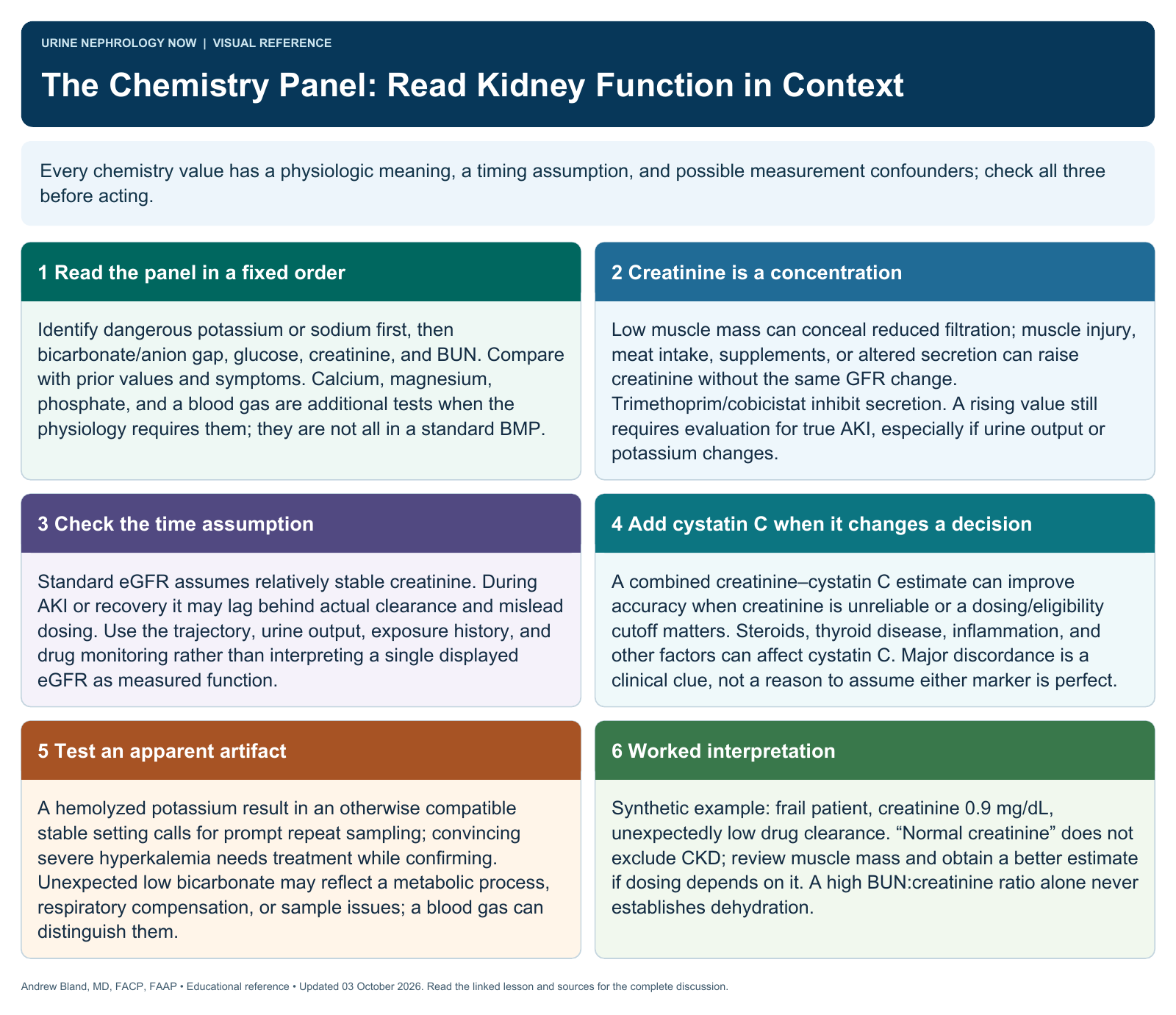
Text version
Filtration is a physiologic process
Glomerular pressure, plasma flow, filtration surface, and oncotic forces influence GFR. Creatinine reflects filtration plus generation and tubular handling, so a change in its concentration is not always a change in structural injury.
Scan for immediate danger
Review potassium, sodium, bicarbonate, glucose, creatinine, and the clinical setting before interpreting isolated values. Calcium, magnesium, and phosphate provide additional information when symptoms, medications, or disease mechanisms make them relevant.
Interpret trends and artifacts
Check the specimen, timing, previous results, medications, muscle mass, nutrition, and hydration. Hemolysis or other preanalytic problems may distort results, while a normal-looking creatinine can conceal reduced filtration in low muscle mass.
Use complementary markers
Cystatin C or a combined estimate can help when creatinine-based eGFR is unreliable; cystatin C has its own non-GFR influences. Measured clearance may be appropriate when a precise estimate will change an important decision.
Recognize dynamic states
Standard eGFR equations assume relative stability and can mislead during AKI or rapid recovery. Drugs that inhibit creatinine secretion can raise creatinine without the same degree of filtration change, but true injury still needs consideration.
Connect patterns to action
Interpret sodium as water balance, potassium with shifts and excretion, and bicarbonate with acid–base physiology. BUN:creatinine ratios, isolated reference ranges, and marker discordance require clinical explanation rather than automatic diagnostic labels.
Self-check: Explain how low muscle mass or reduced creatinine secretion can change a creatinine result without the same change in true filtration.
Continue learning
This graphic summarizes a topic. The full educational pages provide the broader discussion and references.