Visual summary
A useful BP target rests on reliable measurement, absolute risk, clinical tolerance, and a clear follow-up plan.
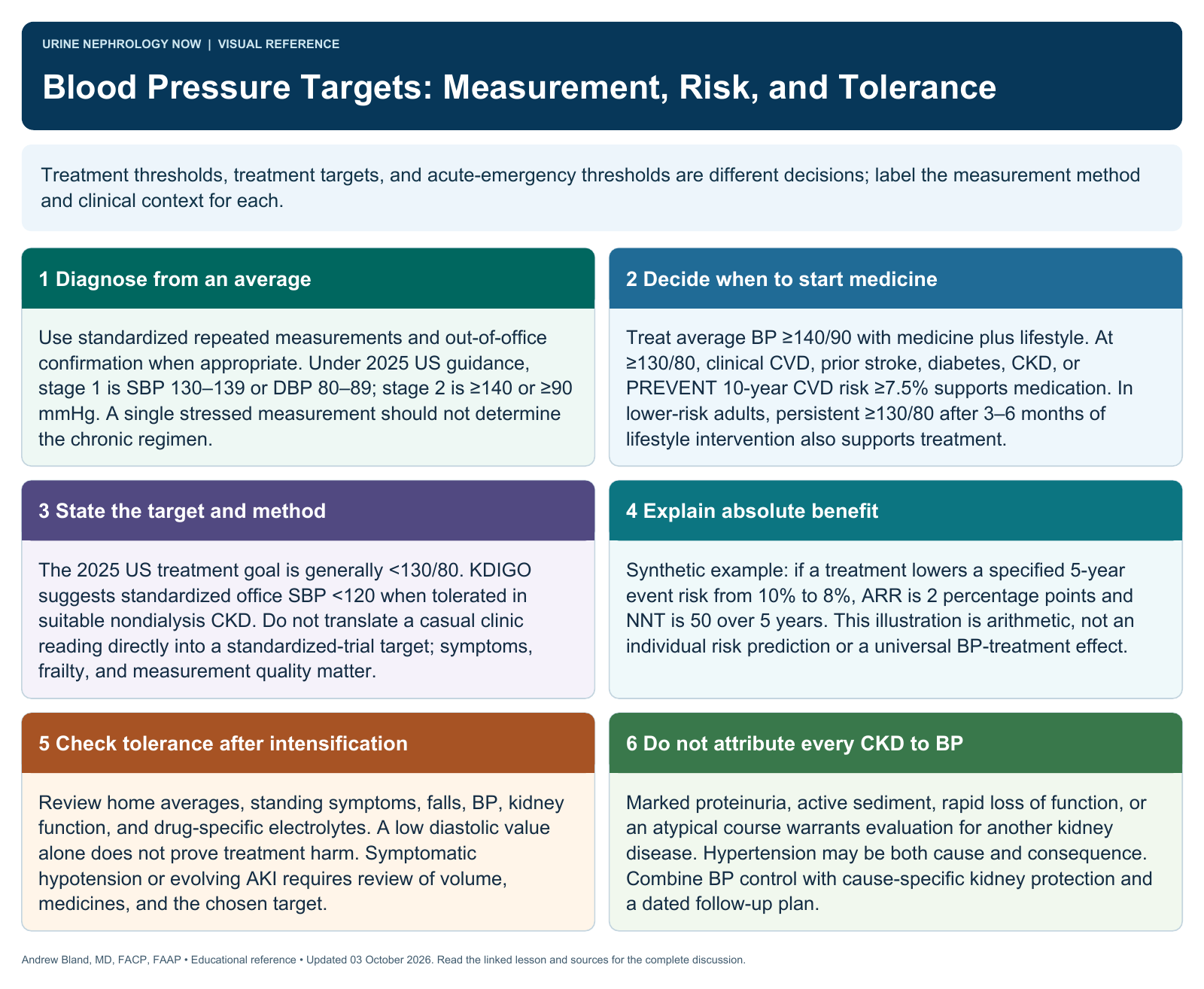
Text version
Pressure affects organs over time
Sustained hypertension increases cardiovascular and kidney risk, while treatment can cause adverse effects if poorly matched to the patient. Albuminuria, CKD, diabetes, vascular disease, and frailty influence the balance of benefit and burden.
Confirm what was measured
A standardized office result, home average, and ambulatory measurement are not interchangeable. Poor technique or a single stressed reading can lead to over- or undertreatment. Confirm persistent elevation using the appropriate measurement strategy.
Estimate risk transparently
Use a validated cardiovascular risk tool in an eligible population and review organ damage. Explain absolute benefit over a defined time horizon rather than quoting relative risk reduction without the patient’s baseline risk.
Choose and revisit the target
Apply current guideline and trial evidence with attention to measurement method, symptoms, orthostasis, comorbidity, and patient priorities. Intensify gradually when appropriate and review medication access, adherence, and monitoring capacity.
Kidney disease needs context
Hypertension can contribute to kidney injury, but hypertension plus CKD does not prove hypertensive nephropathy. Marked proteinuria, active sediment, abrupt decline, or an atypical history should prompt consideration of other kidney diseases.
Do not overread trial averages
Trial targets and adverse-event rates do not predict an individual outcome exactly. NNT depends on population, endpoint, and follow-up. Avoid treating low diastolic pressure or older age as an automatic reason to abandon systolic control.
Self-check: Explain absolute versus relative benefit, and describe how measurement technique, symptoms, and CKD affect a sensible BP target.
Continue learning
This graphic summarizes a topic. The full educational pages provide the broader discussion and references.