Visual summary
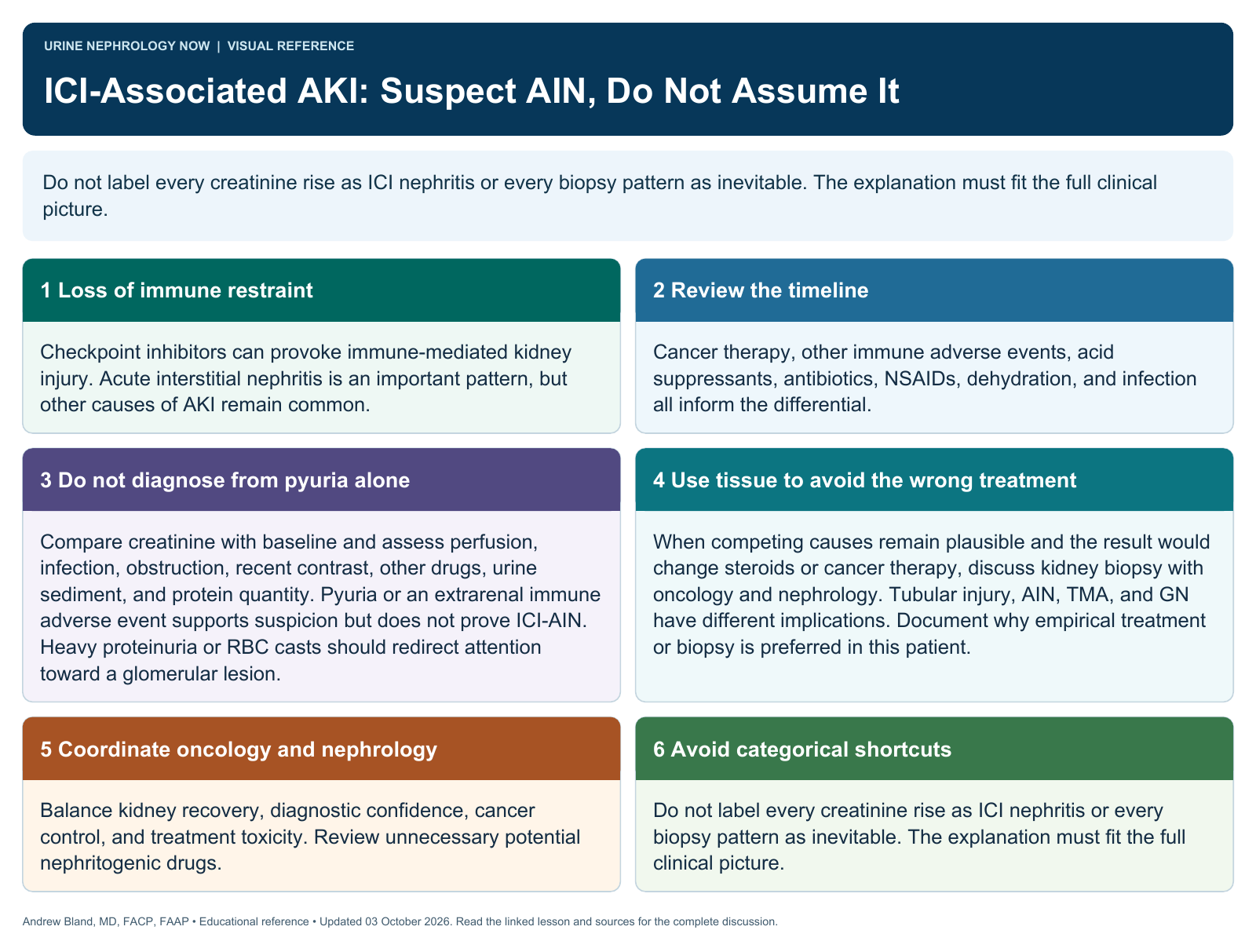
Do not label every creatinine rise as ICI nephritis or every biopsy pattern as inevitable. The explanation must fit the full clinical picture.
Text version
Loss of immune restraint
Checkpoint inhibitors can provoke immune-mediated kidney injury. Acute interstitial nephritis is an important pattern, but other causes of AKI remain common.
Review the timeline
Cancer therapy, other immune adverse events, acid suppressants, antibiotics, NSAIDs, dehydration, and infection all inform the differential.
Do not diagnose from pyuria alone
Compare creatinine with baseline and assess perfusion, infection, obstruction, recent contrast, other drugs, urine sediment, and protein quantity. Pyuria or an extrarenal immune adverse event supports suspicion but does not prove ICI-AIN. Heavy proteinuria or RBC casts should redirect attention toward a glomerular lesion.
Use tissue to avoid the wrong treatment
When competing causes remain plausible and the result would change steroids or cancer therapy, discuss kidney biopsy with oncology and nephrology. Tubular injury, AIN, TMA, and GN have different implications. Document why empirical treatment or biopsy is preferred in this patient.
Coordinate oncology and nephrology
Balance kidney recovery, diagnostic confidence, cancer control, and treatment toxicity. Review unnecessary potential nephritogenic drugs.
Avoid categorical shortcuts
Do not label every creatinine rise as ICI nephritis or every biopsy pattern as inevitable. The explanation must fit the full clinical picture.