Visual summary
Cancer treatment monitoring should look for the renal pattern each therapy can cause, not only a rise in creatinine.
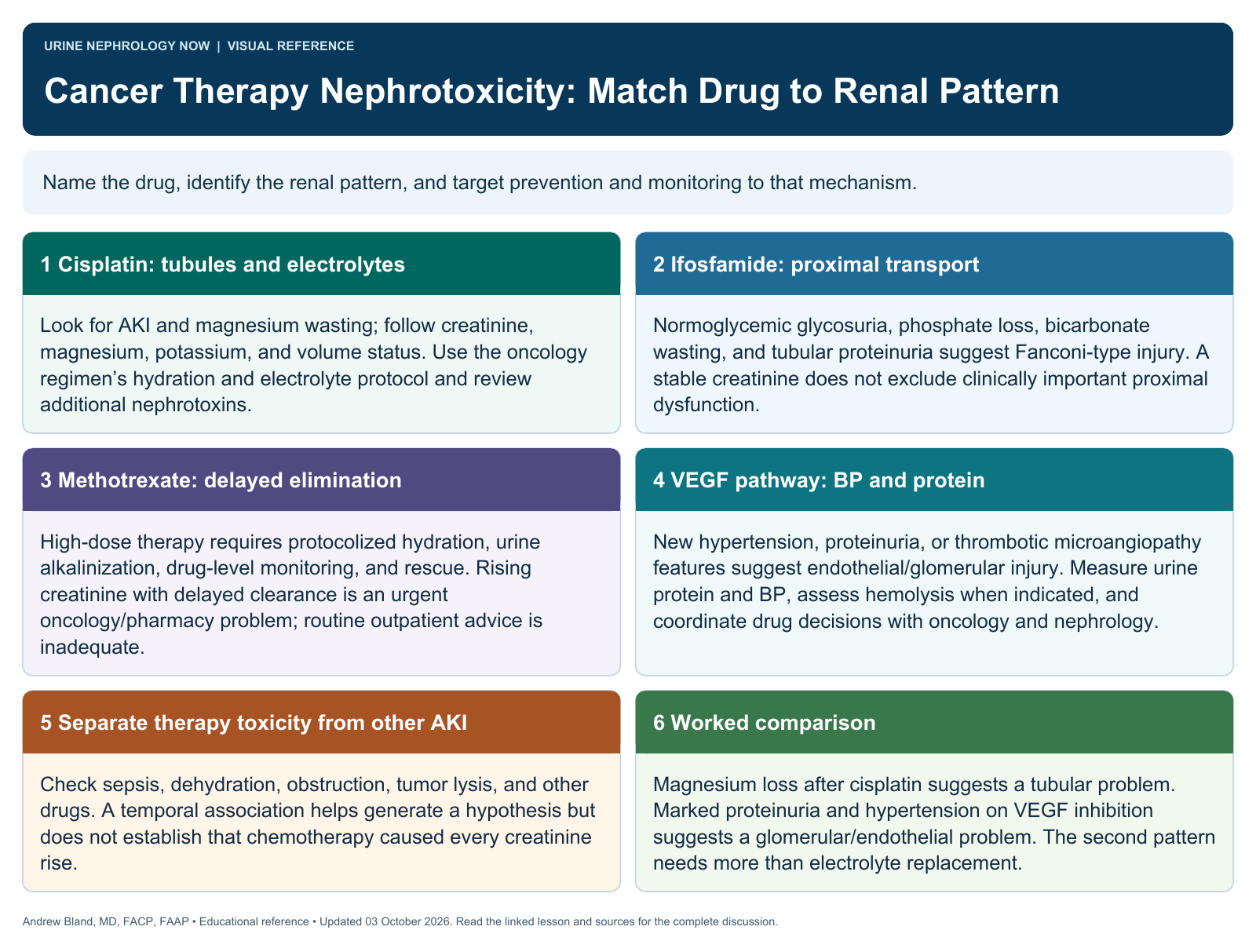
Text version
Therapies injure different targets
Platinum agents can injure tubules, selected drugs form crystals, and VEGF-pathway treatments can affect glomerular endothelium and BP. Cancer-related disease, infection, and metabolic complications may contribute simultaneously.
Recognize more than AKI
New hypertension, proteinuria, magnesium or other electrolyte loss, and thrombotic microangiopathy features can be early clues. A stable creatinine does not exclude clinically important treatment-related renal effects.
Establish baseline and timeline
Review kidney function, urine protein, BP, electrolytes, cumulative exposure, and concurrent nephrotoxins. Match the timing and pattern to plausible mechanisms while evaluating alternative causes of deterioration.
Prevent predictable injury
Use therapy-specific hydration, electrolyte management, dose selection, and monitoring when evidence supports them. Coordinate changes with oncology because reducing renal risk must be balanced with effective cancer treatment.
Respond to the observed lesion
Manage hemodynamic and metabolic complications, review causative agents, and consider specialist assessment or biopsy when needed. Proteinuric hypertension after VEGF inhibition requires a different approach from volume depletion or isolated tubular magnesium loss.
Avoid class-wide extrapolation
One platinum agent’s toxicity or prevention protocol does not automatically apply to all chemotherapy. State the drug, regimen, population, and outcome behind a recommendation, and reassess as kidney function changes.
Continue learning
This graphic summarizes a topic. The full educational pages provide the broader discussion and references.