Visual summary
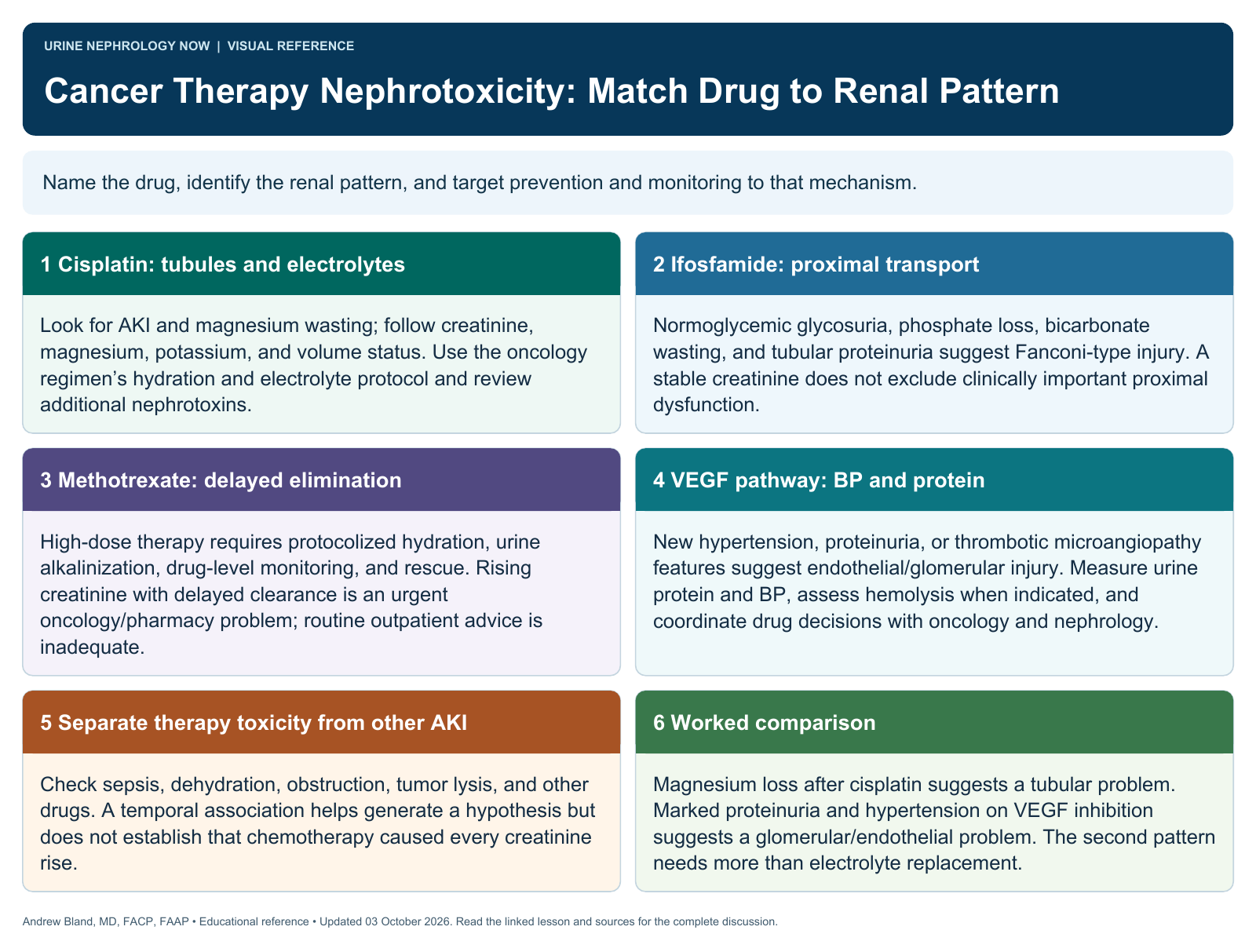
Name the drug, identify the renal pattern, and target prevention and monitoring to that mechanism.
Text version
Cisplatin: tubules and electrolytes
Look for AKI and magnesium wasting; follow creatinine, magnesium, potassium, and volume status. Use the oncology regimen’s hydration and electrolyte protocol and review additional nephrotoxins.
Ifosfamide: proximal transport
Normoglycemic glycosuria, phosphate loss, bicarbonate wasting, and tubular proteinuria suggest Fanconi-type injury. A stable creatinine does not exclude clinically important proximal dysfunction.
Methotrexate: delayed elimination
High-dose therapy requires protocolized hydration, urine alkalinization, drug-level monitoring, and rescue. Rising creatinine with delayed clearance is an urgent oncology/pharmacy problem; routine outpatient advice is inadequate.
VEGF pathway: BP and protein
New hypertension, proteinuria, or thrombotic microangiopathy features suggest endothelial/glomerular injury. Measure urine protein and BP, assess hemolysis when indicated, and coordinate drug decisions with oncology and nephrology.
Separate therapy toxicity from other AKI
Check sepsis, dehydration, obstruction, tumor lysis, and other drugs. A temporal association helps generate a hypothesis but does not establish that chemotherapy caused every creatinine rise.
Worked comparison
Magnesium loss after cisplatin suggests a tubular problem. Marked proteinuria and hypertension on VEGF inhibition suggests a glomerular/endothelial problem. The second pattern needs more than electrolyte replacement.