Visual summary
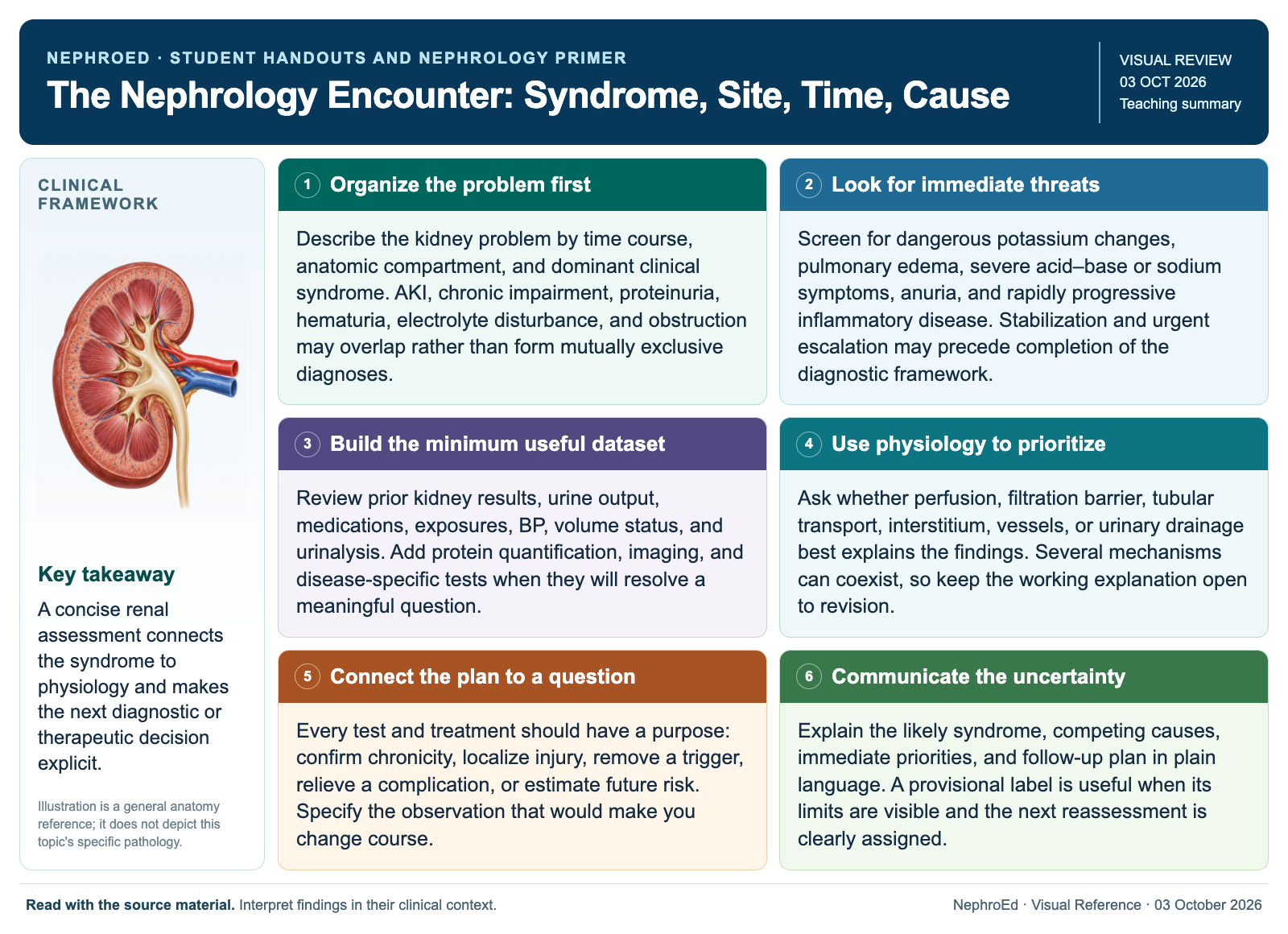
A concise renal assessment connects the syndrome to physiology and makes the next diagnostic or therapeutic decision explicit.
Text version
Organize the problem first
Describe the kidney problem by time course, anatomic compartment, and dominant clinical syndrome. AKI, chronic impairment, proteinuria, hematuria, electrolyte disturbance, and obstruction may overlap rather than form mutually exclusive diagnoses.
Look for immediate threats
Screen for dangerous potassium changes, pulmonary edema, severe acid–base or sodium symptoms, anuria, and rapidly progressive inflammatory disease. Stabilization and urgent escalation may precede completion of the diagnostic framework.
Build the minimum useful dataset
Review prior kidney results, urine output, medications, exposures, BP, volume status, and urinalysis. Add protein quantification, imaging, and disease-specific tests when they will resolve a meaningful question.
Use physiology to prioritize
Ask whether perfusion, filtration barrier, tubular transport, interstitium, vessels, or urinary drainage best explains the findings. Several mechanisms can coexist, so keep the working explanation open to revision.
Connect the plan to a question
Every test and treatment should have a purpose: confirm chronicity, localize injury, remove a trigger, relieve a complication, or estimate future risk. Specify the observation that would make you change course.
Communicate the uncertainty
Explain the likely syndrome, competing causes, immediate priorities, and follow-up plan in plain language. A provisional label is useful when its limits are visible and the next reassessment is clearly assigned.
Continue learning
This graphic summarizes a topic. The full educational pages provide the broader discussion and references.