Visual summary
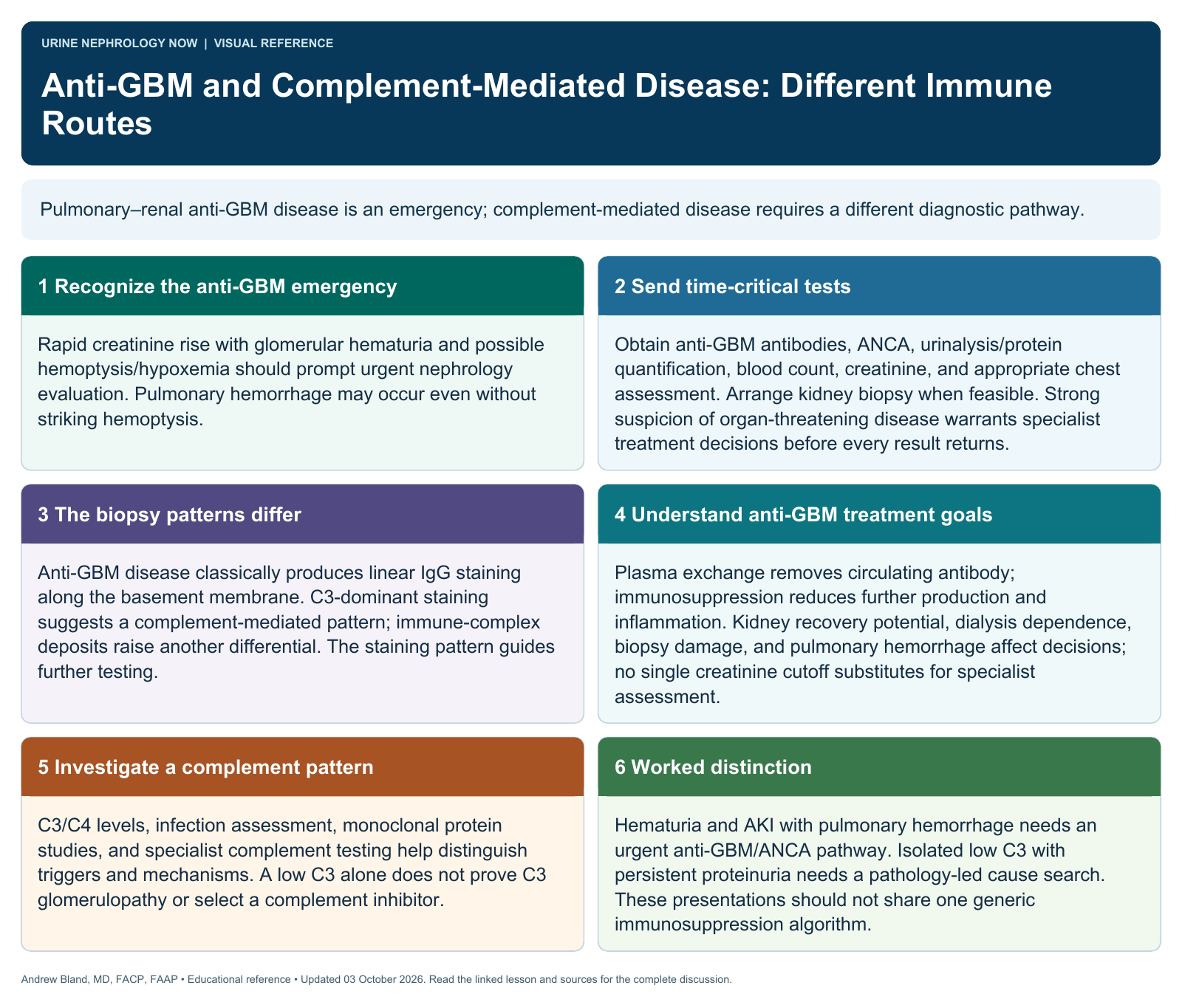
Pulmonary–renal anti-GBM disease is an emergency; complement-mediated disease requires a different diagnostic pathway.
Text version
Recognize the anti-GBM emergency
Rapid creatinine rise with glomerular hematuria and possible hemoptysis/hypoxemia should prompt urgent nephrology evaluation. Pulmonary hemorrhage may occur even without striking hemoptysis.
Send time-critical tests
Obtain anti-GBM antibodies, ANCA, urinalysis/protein quantification, blood count, creatinine, and appropriate chest assessment. Arrange kidney biopsy when feasible. Strong suspicion of organ-threatening disease warrants specialist treatment decisions before every result returns.
The biopsy patterns differ
Anti-GBM disease classically produces linear IgG staining along the basement membrane. C3-dominant staining suggests a complement-mediated pattern; immune-complex deposits raise another differential. The staining pattern guides further testing.
Understand anti-GBM treatment goals
Plasma exchange removes circulating antibody; immunosuppression reduces further production and inflammation. Kidney recovery potential, dialysis dependence, biopsy damage, and pulmonary hemorrhage affect decisions; no single creatinine cutoff substitutes for specialist assessment.
Investigate a complement pattern
C3/C4 levels, infection assessment, monoclonal protein studies, and specialist complement testing help distinguish triggers and mechanisms. A low C3 alone does not prove C3 glomerulopathy or select a complement inhibitor.
Worked distinction
Hematuria and AKI with pulmonary hemorrhage needs an urgent anti-GBM/ANCA pathway. Isolated low C3 with persistent proteinuria needs a pathology-led cause search. These presentations should not share one generic immunosuppression algorithm.