Visual summary
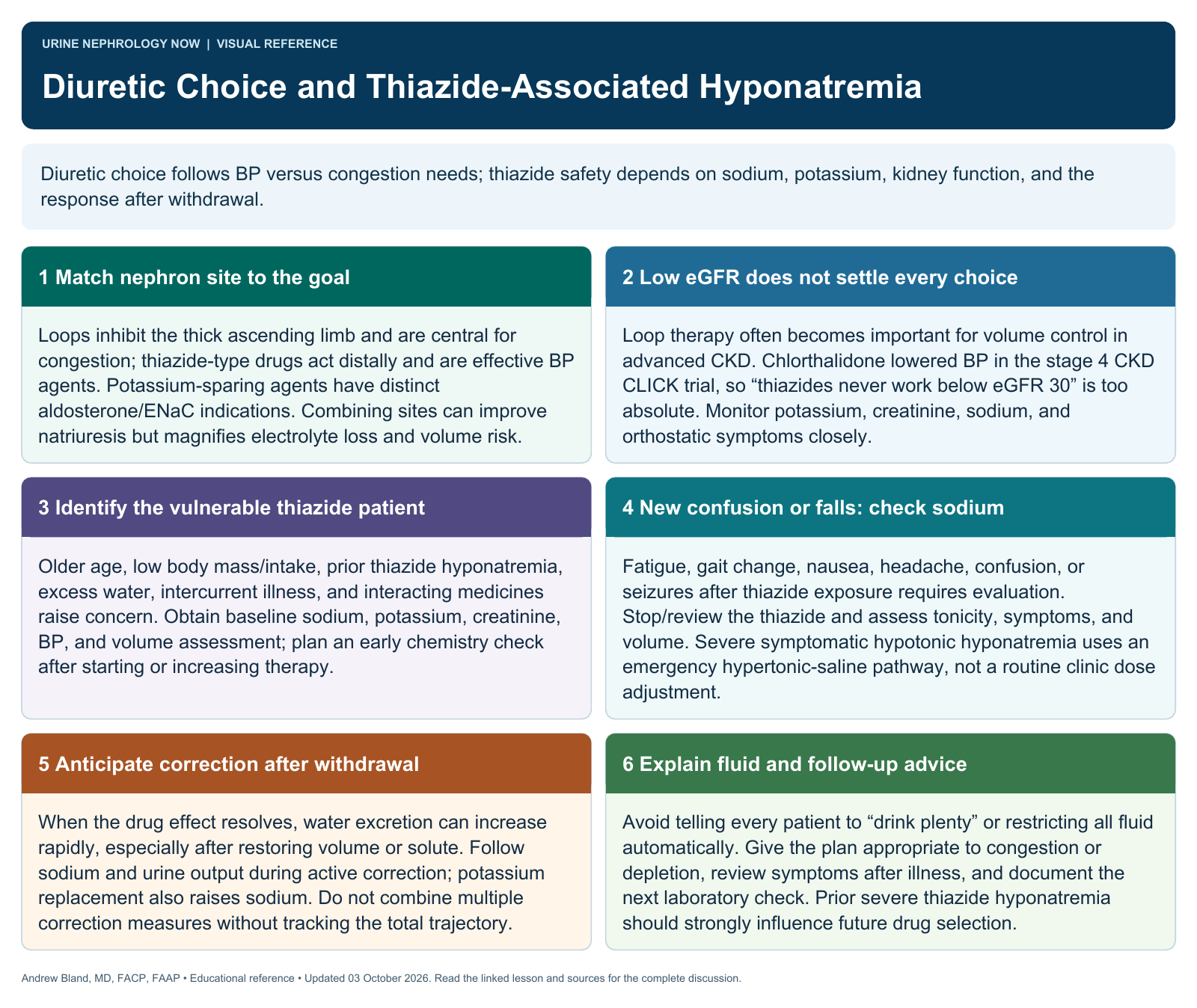
Diuretics require an explicit electrolyte-monitoring plan, and thiazide-related hyponatremia can appear after the prescription initially seemed well tolerated.
Text version
Different nephron targets
Loop, thiazide or thiazide-like, and potassium-sparing agents influence sodium handling at different sites. Their usefulness depends on the indication, kidney function, volume state, and the electrolyte consequences of combined therapy.
Recognize the adverse pattern
Thiazides can cause hyponatremia, hypokalemia, and other metabolic effects. Symptoms may include fatigue, gait change, confusion, or seizures. Older age, low intake, illness, and interacting medications can increase vulnerability.
Establish a baseline and plan
Review sodium, potassium, kidney function, BP, fluid intake, and concurrent medications before initiation or dose escalation. Specify follow-up and symptom triggers; a remote normal sodium does not guarantee ongoing safety.
Select the agent thoughtfully
Choose a drug and dose for the patient’s BP or congestion goal, not solely a claimed potency ranking. Sequential nephron blockade can improve natriuresis but increases the need for laboratory and clinical surveillance.
Respond to hyponatremia
Stop or reassess the implicated thiazide and evaluate tonicity, symptoms, volume status, and other contributors. Severe symptoms require emergency management, while resolution of the drug effect can create an overcorrection risk.
Make fluid advice specific
“Drink plenty of water” can be inappropriate with impaired water excretion, but universal fluid restriction is also unsuitable. Explain the individualized plan and arrange reassessment after illness, changing intake, or medication adjustments.
Self-check: Map the diuretic to its nephron site, then predict the potential changes in sodium, potassium, magnesium, and acid–base balance.
Continue learning
This graphic summarizes a topic. The full educational pages provide the broader discussion and references.