Visual summary
First determine what produced the FSGS lesion; only then can the treatment rationale and expected response be explained.
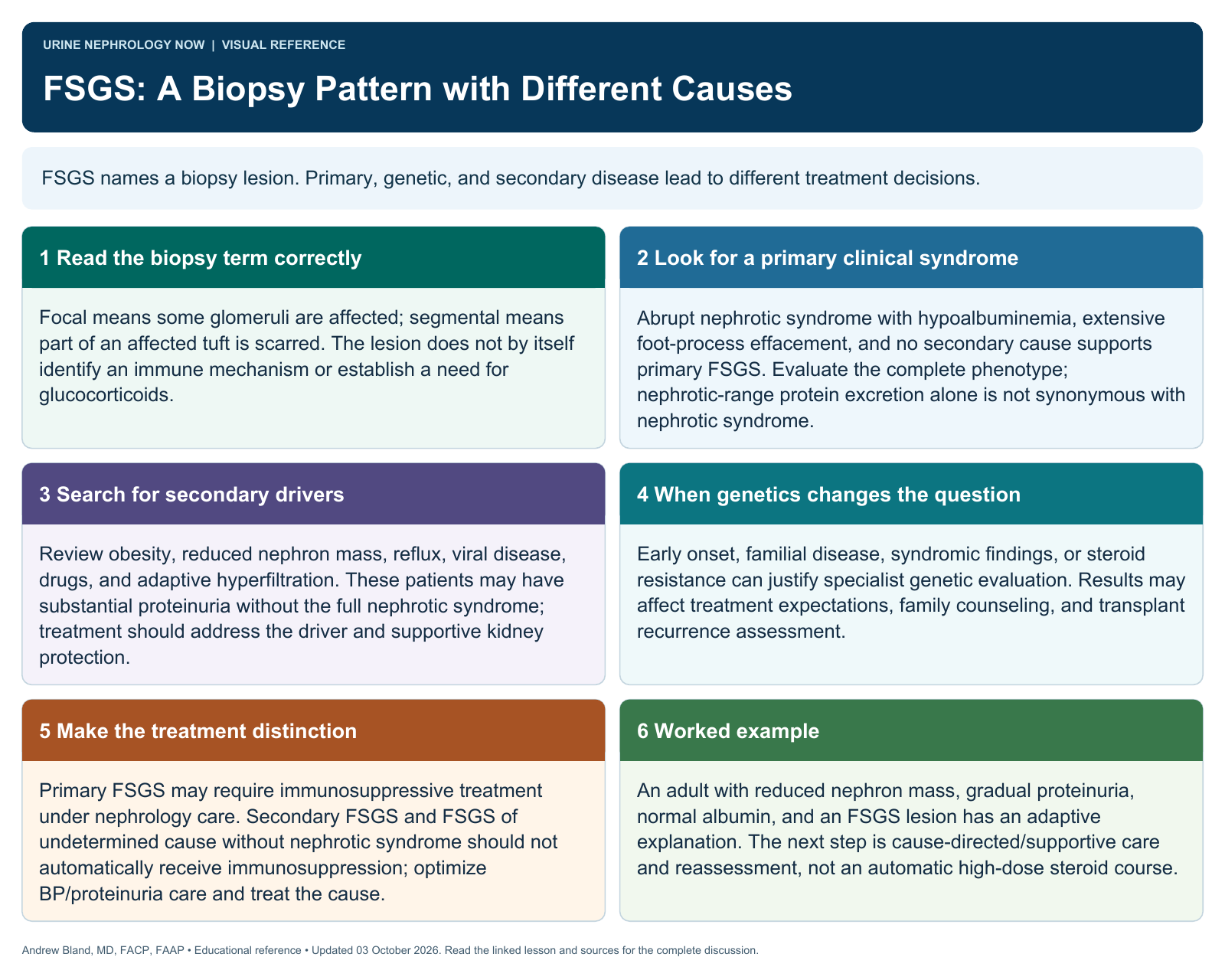
Text version
The name describes a lesion
Focal segmental glomerulosclerosis means sclerosis affects part of some sampled glomeruli. It can reflect primary, genetic, adaptive, medication-related, or other secondary processes, so the biopsy term alone is not a complete disease diagnosis.
Recognize the phenotype
Proteinuria and nephrotic syndrome can occur, but the degree of hypoalbuminemia, edema, and onset pattern help interpretation. Obesity, reduced nephron mass, infection, medications, and family history may suggest alternative mechanisms.
Integrate clinical and pathologic data
Review electron microscopy, the distribution of effacement, renal function, urinary protein, and secondary-cause evaluation. Biopsy sampling can miss focal lesions, and a histologic variant does not by itself establish the cause.
Choose mechanism-based management
Supportive proteinuria and BP care is important across many forms. Selected primary disease may justify immunosuppression, while adaptive or genetic disease often requires a different strategy and realistic counseling about expected response.
Consider genetic assessment
Early onset, family history, syndromic clues, or an atypical treatment response may support testing. Interpretation should consider pathogenicity, phenotype, and implications for relatives or transplantation rather than equating any variant with causation.
Avoid universal steroid expectations
Do not describe all FSGS as steroid-responsive or assume resistance proves nonadherence. Reassess diagnosis, chronic damage, and treatment burden when the expected response fails, using specialist guidance and current evidence.
Continue learning
This graphic summarizes a topic. The full educational pages provide the broader discussion and references.