Visual summary
FSGS names a biopsy lesion. Primary, genetic, and secondary disease lead to different treatment decisions.
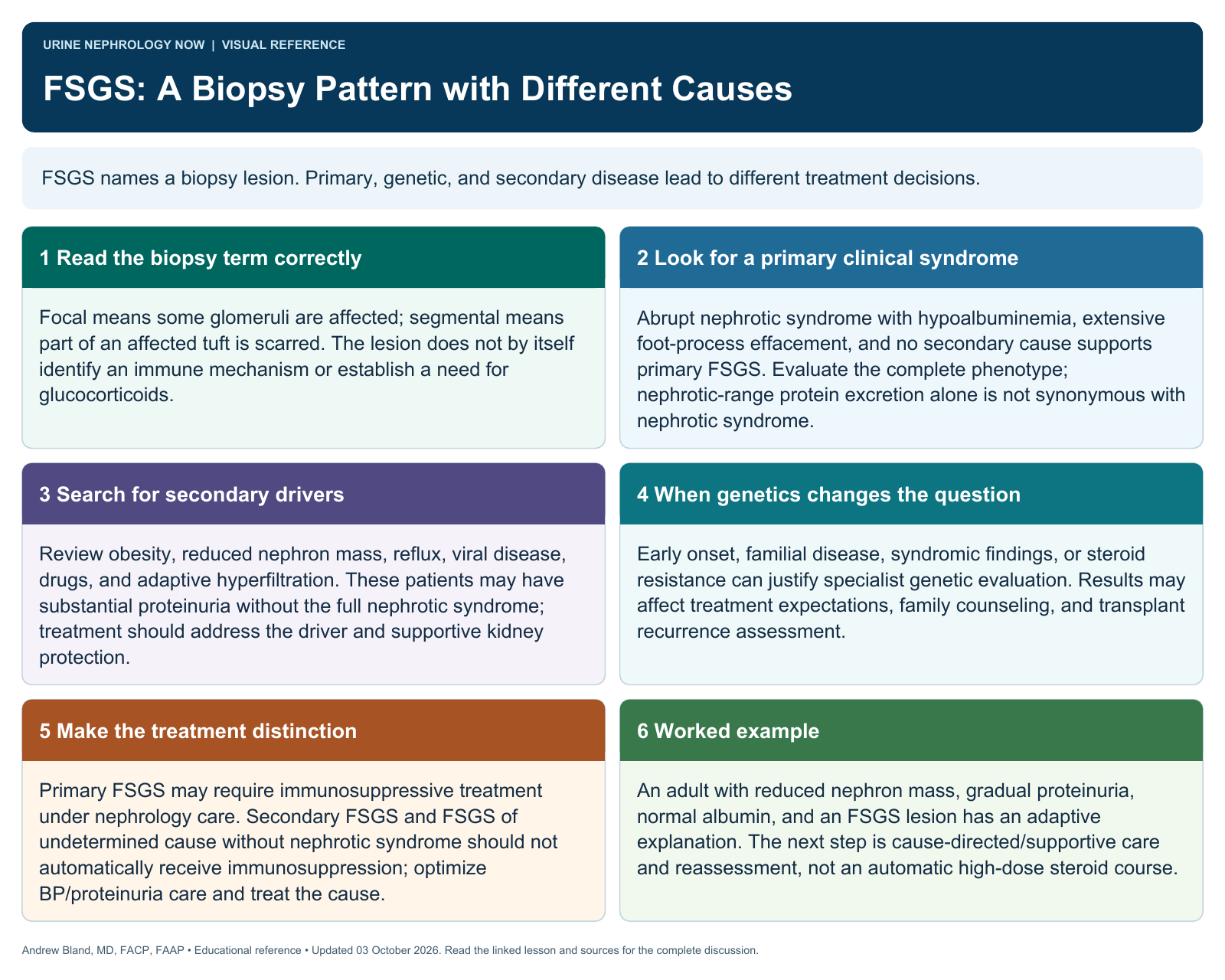
Text version
Read the biopsy term correctly
Focal means some glomeruli are affected; segmental means part of an affected tuft is scarred. The lesion does not by itself identify an immune mechanism or establish a need for glucocorticoids.
Look for a primary clinical syndrome
Abrupt nephrotic syndrome with hypoalbuminemia, extensive foot-process effacement, and no secondary cause supports primary FSGS. Evaluate the complete phenotype; nephrotic-range protein excretion alone is not synonymous with nephrotic syndrome.
Search for secondary drivers
Review obesity, reduced nephron mass, reflux, viral disease, drugs, and adaptive hyperfiltration. These patients may have substantial proteinuria without the full nephrotic syndrome; treatment should address the driver and supportive kidney protection.
When genetics changes the question
Early onset, familial disease, syndromic findings, or steroid resistance can justify specialist genetic evaluation. Results may affect treatment expectations, family counseling, and transplant recurrence assessment.
Make the treatment distinction
Primary FSGS may require immunosuppressive treatment under nephrology care. Secondary FSGS and FSGS of undetermined cause without nephrotic syndrome should not automatically receive immunosuppression; optimize BP/proteinuria care and treat the cause.
Worked example
An adult with reduced nephron mass, gradual proteinuria, normal albumin, and an FSGS lesion has an adaptive explanation. The next step is cause-directed/supportive care and reassessment, not an automatic high-dose steroid course.