Visual summary
Good geriatric renal care measures success in symptoms, function, and priorities as well as kidney and cardiovascular outcomes.
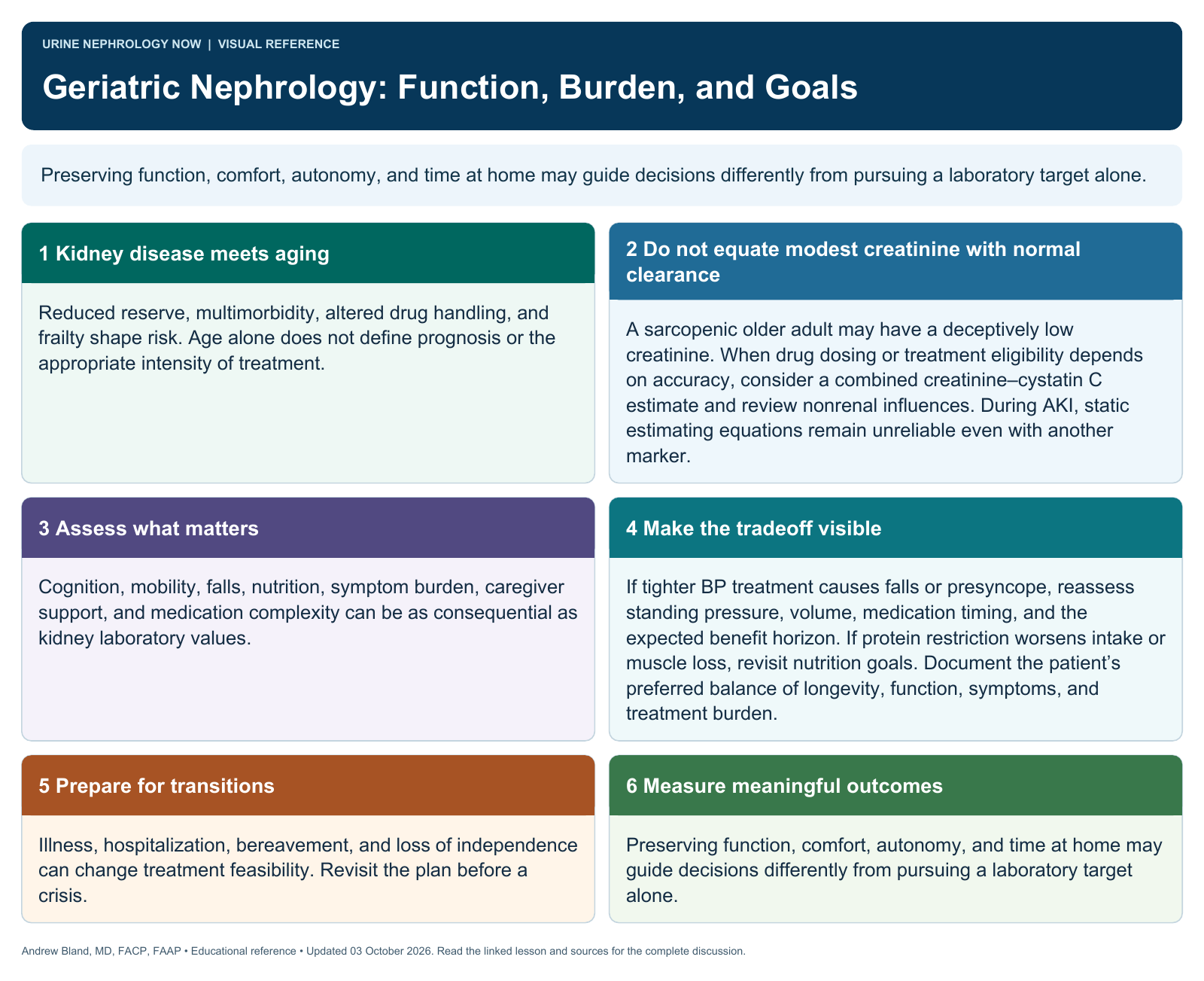
Text version
Age changes reserve and measurement
Kidney reserve, body composition, and drug handling change with aging, but clinically important kidney disease should not be dismissed as age alone. Low muscle mass can make creatinine appear misleadingly reassuring.
Recognize vulnerability
Falls, confusion, poor intake, functional decline, and medication intolerance may reveal renal or metabolic problems. Frailty and multimorbidity alter the burden of treatment and the consequences of acute illness.
Assess beyond eGFR
Review albuminuria, trajectory, symptoms, cognition, function, nutrition, medication burden, and social support. Cystatin C or a combined estimate may help when kidney function uncertainty affects a meaningful decision.
Individualize treatment intensity
Balance preventive benefit, time horizon, symptoms, and adverse effects with the person’s preferences. Review orthostasis and medication accumulation, and deprescribe thoughtfully when a drug’s burden outweighs its current benefit.
Plan for acute illness
Identify dehydration, infection, obstruction, and medication-related contributors to AKI. Clear contact and reassessment plans help prevent temporary holds or hospital medication changes from becoming permanent unintended discontinuations.
Avoid age-based shortcuts
Chronologic age alone should not determine referral, dialysis, or eligibility for useful therapy. Discuss realistic options and uncertainty, including supportive care, while preserving the older adult’s role in decisions.
Continue learning
This graphic summarizes a topic. The full educational pages provide the broader discussion and references.