Visual summary
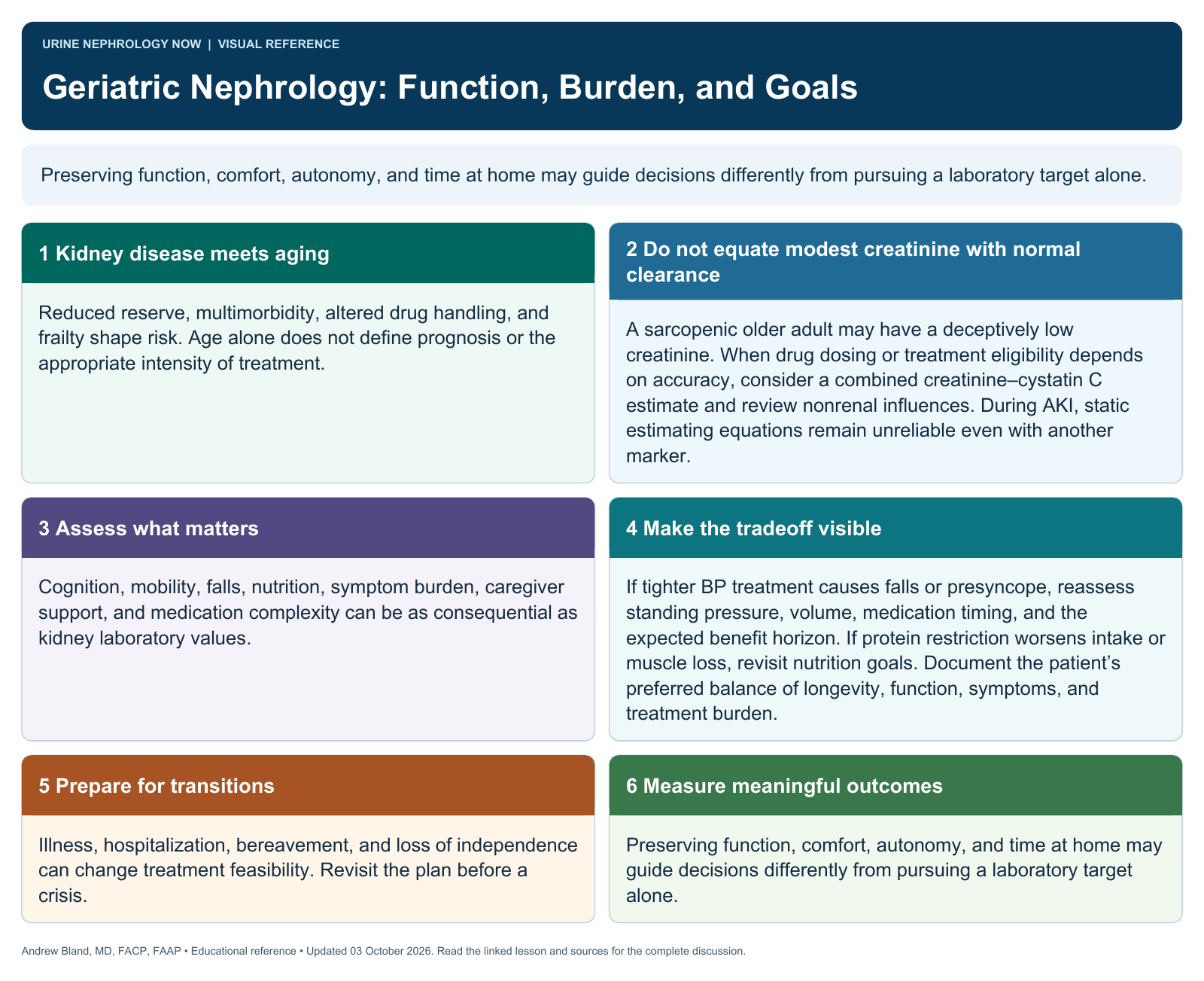
Preserving function, comfort, autonomy, and time at home may guide decisions differently from pursuing a laboratory target alone.
Text version
Kidney disease meets aging
Reduced reserve, multimorbidity, altered drug handling, and frailty shape risk. Age alone does not define prognosis or the appropriate intensity of treatment.
Do not equate modest creatinine with normal clearance
A sarcopenic older adult may have a deceptively low creatinine. When drug dosing or treatment eligibility depends on accuracy, consider a combined creatinine–cystatin C estimate and review nonrenal influences. During AKI, static estimating equations remain unreliable even with another marker.
Assess what matters
Cognition, mobility, falls, nutrition, symptom burden, caregiver support, and medication complexity can be as consequential as kidney laboratory values.
Make the tradeoff visible
If tighter BP treatment causes falls or presyncope, reassess standing pressure, volume, medication timing, and the expected benefit horizon. If protein restriction worsens intake or muscle loss, revisit nutrition goals. Document the patient’s preferred balance of longevity, function, symptoms, and treatment burden.
Prepare for transitions
Illness, hospitalization, bereavement, and loss of independence can change treatment feasibility. Revisit the plan before a crisis.
Measure meaningful outcomes
Preserving function, comfort, autonomy, and time at home may guide decisions differently from pursuing a laboratory target alone.