Visual summary
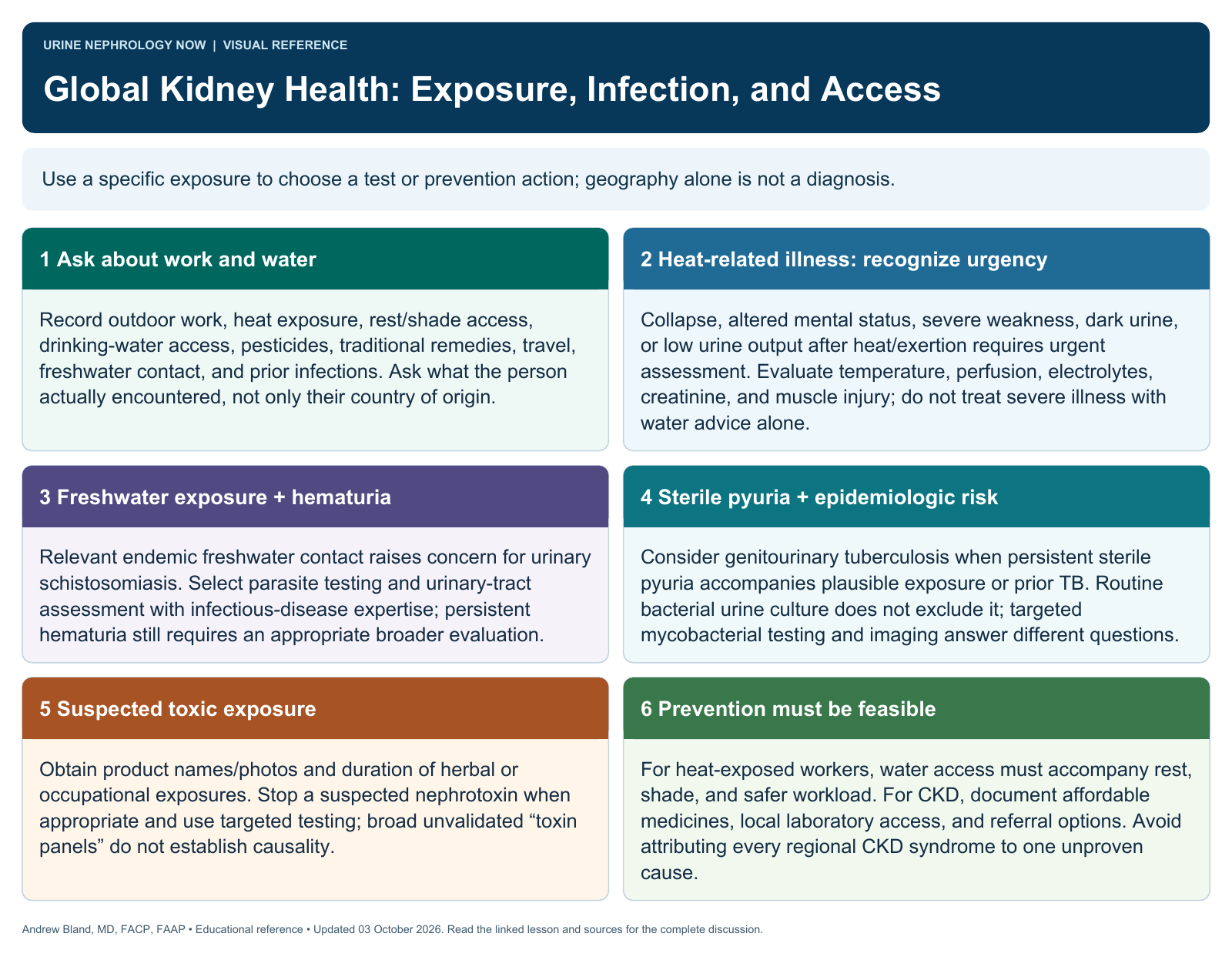
Use a specific exposure to choose a test or prevention action; geography alone is not a diagnosis.
Text version
Ask about work and water
Record outdoor work, heat exposure, rest/shade access, drinking-water access, pesticides, traditional remedies, travel, freshwater contact, and prior infections. Ask what the person actually encountered, not only their country of origin.
Heat-related illness: recognize urgency
Collapse, altered mental status, severe weakness, dark urine, or low urine output after heat/exertion requires urgent assessment. Evaluate temperature, perfusion, electrolytes, creatinine, and muscle injury; do not treat severe illness with water advice alone.
Freshwater exposure + hematuria
Relevant endemic freshwater contact raises concern for urinary schistosomiasis. Select parasite testing and urinary-tract assessment with infectious-disease expertise; persistent hematuria still requires an appropriate broader evaluation.
Sterile pyuria + epidemiologic risk
Consider genitourinary tuberculosis when persistent sterile pyuria accompanies plausible exposure or prior TB. Routine bacterial urine culture does not exclude it; targeted mycobacterial testing and imaging answer different questions.
Suspected toxic exposure
Obtain product names/photos and duration of herbal or occupational exposures. Stop a suspected nephrotoxin when appropriate and use targeted testing; broad unvalidated “toxin panels” do not establish causality.
Prevention must be feasible
For heat-exposed workers, water access must accompany rest, shade, and safer workload. For CKD, document affordable medicines, local laboratory access, and referral options. Avoid attributing every regional CKD syndrome to one unproven cause.